|
|||


 |
 |
 |
 |
|---|
Facts About Germany German History German Recipes |
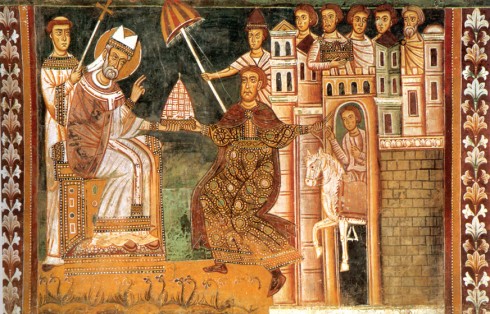
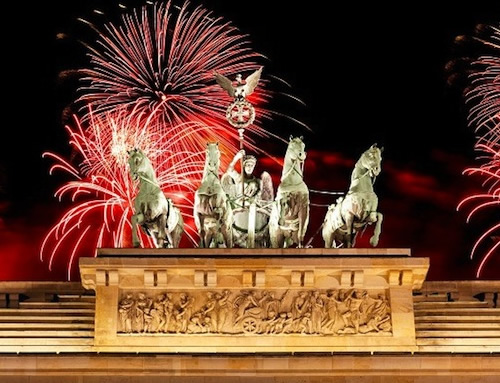
Tradition of Sylvester, or New Year's EveThe night of the Holy Sylvester, the last night of the year, has always been the night of fun. Every year Berlin hosts one of the largest New Year's Eve celebrations in all of Europe, attended by over a million people. The focal point is the Brandenburg Gate, where midnight fireworks are centered. Germans toast the New Year with a glass of Sekt (German sparkling wine) or champagne. The saint of this day, Pope Sylvester I, according to legend is the man who healed from leprosy and baptized the Roman Emperor Constantine the Great.
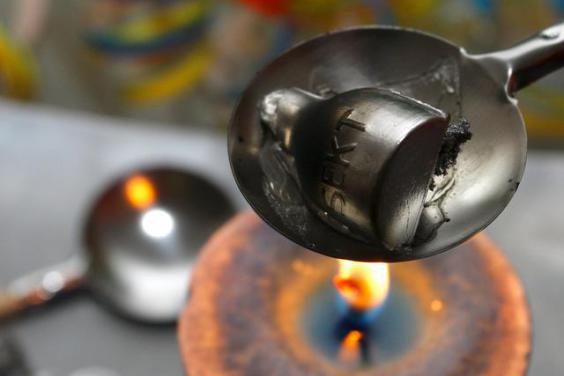
In many of the German-speaking areas the change of the year is celebrated noisily and merrily. Guests are invited, and groups attend a "Sylvester Ball." There is eating, drinking, dancing and singing. It may be accompanied by the popular "Sylvester" custom of Bleigiessen. A small piece of lead will be melted over a flame in an old spoon and dropped into a bowl of cold water. From the shape you can supposedly tell your fortune for the coming year. For instance, if the lead forms a ball (der Ball), that means luck will roll your way. The shape of an anchor (der Anker) means help in need. But a cross (das Kreuz) signifies death. At midnight, when the old year is almost gone and the new year is about to start, glasses are filled with champagne or wine, and toasts and hugs go with wishing each other "ein gutes neues Jahr". Some go out into the streets and listen to the bells ringing throughout the land. Others participate in shooting in the New Year, or put on their private fireworks.
See also: Christmas
in Germany |
|
|||||||||||
Powered by Website design company Alex-Designs.com