

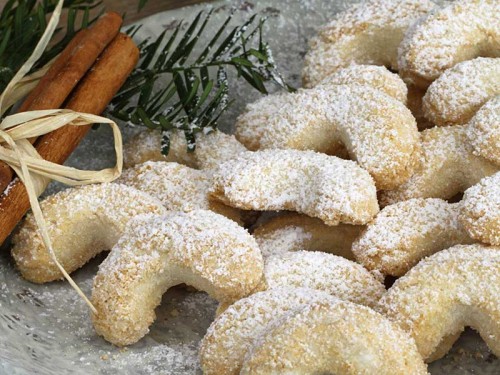
Among all the beloved Christmas biscuits of German-speaking Europe, few inspire as much nostalgia and affection as Vanillekipferl, also known in English as Vanilla Crescents. These delicate, crescent-shaped cookies are instantly recognizable: perfectly crumbly, melt-in-your-mouth tender, and coated generously in a fragrant vanilla sugar dusting. They are a staple of Advent baking in Germany, Austria, and parts of Central Europe, filling kitchens with the warm scent of vanilla, butter, and toasted nuts.
More than just a holiday treat, Vanillekipferl embody the comforting simplicity of winter baking. They require no fancy decoration, no icing, and no elaborate tools. Their elegance comes from their purity: quality butter, ground nuts, sugar, and vanilla. For many families, baking them marks the true beginning of the festive season. Children learn to shape the delicate crescents; adults guard their treasured recipes; and everyone enjoys the first bite of a freshly baked cookie that practically dissolves on the tongue.
In this guide, we explore the story behind these iconic Vanilla Crescents, outline the authentic ingredients that give them their unmistakable flavor, and walk you step by step through creating your own batch of perfect, buttery Vanillekipferl at home.
The Origins of Vanillekipferl
The beloved Vanillekipferl may be most closely associated with Germany and Austria today, but their history stretches deep into Central European culinary tradition. They are particularly linked to Vienna, where pastries and confections have been refined over centuries. Their crescent shape, however, hints at an even older story.
According to legend, Vanillekipferl were created in Vienna in the late 17th century to celebrate the victory of the Habsburg Empire over the Ottoman Turks during the Battle of Vienna. The crescent shape mimicked the crescent moon on the Ottoman flag, a symbolic way for Viennese bakers to commemorate the triumph. While historians debate the accuracy of this tale, the association with Vienna is undeniable. Many classic Kipferl recipes appear in Austrian cookbooks long before the modern German Christmas baking tradition emerged.
The cookies became more widespread in the 19th century as vanilla, once an exotic luxury, became more accessible in Europe. Vanilla added a new level of refinement to the rich nut-based dough, transforming simple Kipferl into the delicate Vanillekipferl we know today. In Germany, they became an essential part of Weihnachtsplätzchen – the treasured assortment of homemade Christmas cookies enjoyed throughout December.
Today, Vanillekipferl are found throughout Germany, Austria, Switzerland, Hungary, and the Czech Republic, each region adding subtle variations to the recipe. Yet everywhere, the core remains the same: a tender crescent cookie, delicately flavored with vanilla and nuts, and dusted generously with vanilla sugar.
Ingredients for Authentic Vanillekipferl
The secret to truly perfect Vanillekipferl lies in the balance of fat, flour, and finely ground nuts, along with the unmistakable aroma of vanilla. Thanks to their short ingredient list, quality makes all the difference.
Ingredients (makes 40 – 50 Vanilla Crescents):
- 250 g (2 cups) all-purpose flour
- 210 g (1 3/4 sticks) cold unsalted butter, cut into small cubes
- 100 g (1 cup) finely ground almonds or hazelnuts, lightly toasted
- 70 g (1/3 cup) granulated sugar
- 1 pinch salt
- 2 tsp vanilla extract or 2 packets vanilla sugar
For Rolling:
- 120 g (1 cup) powdered sugar
- 2 packets (or 2 tsp) vanilla sugar
Ingredient Notes:
- Toasting the nuts lightly enhances flavor and brings out their natural oils.
- Almonds are traditional in Austria; hazelnuts are more common in southern Germany. Both yield delicious results.
- Butter should be cold, not softened, to achieve the correct crumbly shortcrust texture.
- Vanilla sugar is a key feature of traditional German baking. You can buy it ready-made or make your own by storing a spent vanilla bean in a jar of sugar.
Optional Enhancements:
- Add grated lemon zest for a hint of brightness.
- Replace some of the almond flour with finely ground walnuts for an earthier flavor.
- Split and scrape a real vanilla bean into the dough for maximum aroma.
How to Make Vanillekipferl – Step-by-Step Recipe
Step 1: Prepare the Dough
Place flour, sugar, salt, vanilla, and finely ground nuts into a mixing bowl. Add the cold cubed butter. Rub the mixture between your fingers or use a pastry cutter to combine until sandy and crumbly. Continue working the dough just until it comes together. Avoid over-kneading, as this will make the cookies tough.
Shape the dough into a disk, wrap it in plastic wrap, and refrigerate for at least 1 hour. Resting helps the butter firm up and makes the dough easier to shape.
Step 2: Shape the Crescents
Preheat your oven to 175°C (350°F). Line two baking sheets with parchment paper.
Take small portions of chilled dough – each roughly the size of a walnut – and roll them gently between your hands into short logs. Taper the ends slightly, then bend each log into a crescent shape. The dough may feel delicate, but this fragility is what creates Vanillekipferl’s signature melt-in-your-mouth texture.
Place the shaped cookies on the baking sheet, leaving some space between them. They do not spread much, but they should not touch.
Step 3: Bake to Perfection
Bake the Vanillekipferl for 10 – 14 minutes, depending on size. They should remain pale on top but turn lightly golden on the bottom edges. Do not overbake – dryness ruins their delicate texture.
Allow them to cool for 2 – 3 minutes on the baking sheet. They are extremely fragile at this stage and will crumble if moved too soon.
Step 4: Coat in Vanilla Sugar
While still warm, gently lift each cookie using a small offset spatula or the tip of a knife. Carefully roll the crescents in the mixture of powdered sugar and vanilla sugar.
This step is crucial: the residual warmth helps the sugar adhere to the surface, forming the signature white, fragrant coating.
Place the coated cookies on a wire rack to cool completely. As they cool, the sugar layer sets, creating a soft, sweet veil.
Step 5: Store and Enjoy
Vanillekipferl taste even better after resting for a day as the flavors meld and the texture becomes even more tender. Store them in an airtight tin, separated by parchment layers to prevent breakage. Properly stored, they keep beautifully for two to three weeks.
How to Serve Vanillekipferl
Vanillekipferl are traditionally enjoyed throughout the Advent and Christmas season, often presented on festive platters alongside other favorites like Zimtsterne, Lebkuchen, and Spritzgebäck.
Serving Suggestions:
- Serve with hot chocolate for a comforting winter treat.
- Pair with black tea or strong coffee to balance the sweetness.
- Include them in a German Christmas cookie assortment for gifting.
- Dust them again lightly with powdered sugar before presenting to guests for an elegant finish.
Pairing Ideas:
- Vanilla Crescents pair beautifully with Glühwein, Kinderpunsch, or Eierlikör.
- For a lighter contrast, serve alongside fresh fruit such as mandarins or berries.
- For a luxurious dessert, crumble Vanillekipferl over vanilla ice cream or custard.
Variations and Regional Twists
Although the classic Vanillekipferl recipe remains beloved throughout Central Europe, many families and regions have added their own personal touches.
- Austrian Vanillekipferl: Often made with walnuts instead of almonds, producing a tender, almost fudgy texture.
- Bavarian Style: Uses hazelnuts and sometimes includes a hint of rum.
- Bohemian Crescents: Rolled in a mix of powdered sugar and cinnamon.
- Modern Variations:
- Chocolate-dipped ends
- Filled with almond paste
- Spiced with cardamom or tonka bean
Despite the variations, the essential character of the cookie remains unchanged: soft, buttery, and delicately perfumed with vanilla.
Common Mistakes to Avoid
- Overworking the dough: This leads to tough cookies instead of soft, crumbly ones.
- Using warm butter: The dough becomes greasy and loses its structure.
- Overbaking: Even slightly too long in the oven results in dry, brittle crescents.
- Rushing the sugar coating: If the cookies cool completely before rolling in sugar, the coating will not adhere properly.
- Storing while warm: This causes condensation and makes the cookies soggy.
Vanillekipferl – or Vanilla Crescents – remain one of the most cherished cookies of the German Christmas season. Their delicate texture, rich buttery flavor, and sweet vanilla aroma capture the essence of winter baking in its purest form. Simple yet elegant, they prove that the heart of festive cooking lies not in complexity but in tradition, care, and quality ingredients.
Whether you’re reviving a family recipe, discovering these classic cookies for the first time, or searching for the perfect addition to your holiday baking, Vanillekipferl offer a timeless combination of comfort and sophistication. With their crumbly texture, charming crescent shape, and irresistible sweetness, they are a treat you will return to year after year.
For more traditional German baking inspiration, explore our growing collection of winter recipes, including Stollen, Lebkuchen, and Zimtsterne – the classics that make the German holiday season truly unforgettable.