

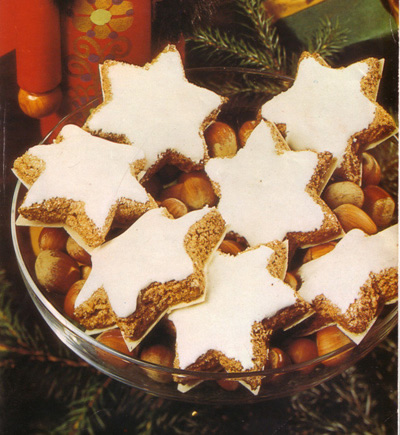
Among all the irresistible Christmas cookies baked across Germany during Advent, few are as iconic, aromatic, and unmistakably festive as Zimtsterne – the beautifully shaped German Cinnamon Stars. With their snowy white icing, deep almond flavor, and warm notes of cinnamon, these star-shaped cookies capture the magic of the holiday season in a single bite.
Zimtsterne are a staple on every German Christmas cookie plate (Plätzchenteller). Their texture is unlike that of most cookies: slightly crisp on the outside, wonderfully chewy inside, and intensely fragrant with ground almonds and cinnamon. They’re naturally gluten-free, too, thanks to their almond-based dough – a fact that many home bakers appreciate.
What truly sets Zimtsterne apart is their appearance. Each cookie is covered with a glossy white meringue topping that bakes into a delicate, snowy glaze. When arranged on a festive platter, Zimtsterne look like tiny edible stars scattered across a winter sky – a symbol of celebration, coziness, and childhood memories.
In this complete recipe guide, you’ll learn the origins of Zimtsterne, discover the authentic ingredients behind their distinctive flavor, and follow clear, step-by-step instructions to make perfect Cinnamon Stars at home.
The Origins of Zimtsterne
The tradition of baking Zimtsterne stretches back to at least the 16th century, when almonds, cinnamon, and sugar were luxury ingredients reserved for festive and religious celebrations. Cinnamon in particular had become a prized spice across Europe, associated with wealth, warmth, and Christmas baking.
These cookies first gained popularity in Swabia, in southwestern Germany, where nut-based pastries were a regional specialty. Over time, the recipe spread throughout the German-speaking world – Germany, Switzerland, Austria – and became a beloved element of December baking.
Historically, the star shape was symbolic. Stars were associated with the Star of Bethlehem, making Zimtsterne especially popular for Advent and Christmas Eve celebrations. The white icing resembled snow, adding to their festive charm.
Several regional traditions developed:
-
In Switzerland, Zimtsterne are often slightly drier and spicier.
-
In Bavaria, the dough is sweeter and uses more almonds.
-
Some German families add a hint of vanilla or lemon zest for a bright aroma.
Despite these variations, the essential flavor and appearance of Zimtsterne have remained remarkably consistent for centuries. They embody a sense of continuity, nostalgia, and culinary artistry that defines German Christmas baking.
Ingredients for Authentic Zimtsterne
The ingredient list for Zimtsterne is beautifully simple. The magic lies in the quality of the almonds, the balance of cinnamon, and the gentle handling of the meringue glaze.
Ingredients (makes about 35–45 cookies):
-
3 large egg whites
-
250 g (2 cups) powdered sugar
-
350 g (3 cups) finely ground almonds (almond flour)
-
1–2 tsp ground cinnamon
-
1 tsp lemon juice
-
1 tsp vanilla extract or 1 packet vanilla sugar
-
Additional ground almonds for rolling
Ingredient Notes:
-
Ground almonds should be finely milled but not greasy; homemade almond meal may be too coarse.
-
Cinnamon strength varies: start with 1 teaspoon and adjust to taste.
-
Powdered sugar creates the signature smooth glaze; do not substitute granulated sugar.
-
A hint of lemon balances the sweetness and enhances the aroma.
Optional Additions:
-
Lemon zest for brightness
-
A pinch of clove or nutmeg for a deeper spice profile
-
Almond extract for a stronger marzipan-like flavor
Tools You’ll Need:
-
Electric mixer
-
Rolling pin
-
Star-shaped cookie cutter
-
Baking sheet with parchment
-
Spatula or pastry brush
How to Make Zimtsterne (Step-by-Step Recipe)
Zimtsterne require a bit more patience than some other cookies, but the results are worth every moment. Here is the traditional method used in German homes for generations.
Step 1: Make the Meringue Glaze
Place the egg whites in a clean, grease-free bowl. Add the lemon juice and whip with an electric mixer until soft peaks form.
Gradually sift in 250 g powdered sugar while continuing to beat. After a few minutes, you’ll have a thick, glossy, marshmallow-like meringue.
Reserve about one-third of this meringue in a small bowl – this will become the icing that coats the tops of the cookies.
Step 2: Make the Almond-Cinnamon Dough
Gently fold the ground almonds, cinnamon, vanilla, and remaining meringue together until a sticky dough forms. Depending on humidity and the almonds used, you may need to add a little more almond meal. The dough should be soft but workable.
Wrap the dough in plastic wrap and refrigerate for at least 1 hour. Chilling helps firm the dough and makes shaping easier.
Step 3: Roll Out the Dough
Sprinkle ground almonds on your work surface (never flour – it ruins the texture). Place the chilled dough on top and cover it with a sheet of parchment paper. This prevents sticking and helps you achieve an even thickness.
Roll the dough out to about 1 cm (⅜ inch) thickness. If the dough becomes too soft, refrigerate again briefly.
Step 4: Cut Out the Stars
Use a star-shaped cutter to press out cookies. Between cuts, dip the cutter in powdered sugar or almond meal to prevent sticking.
Place each star on a parchment-lined baking sheet. Leave a little space between them; they won’t spread much, but they need airflow.
Step 5: Add the Icing
Using a small spatula, spoon, or pastry brush, spread a thin layer of the reserved meringue icing onto each star. This step gives Zimtsterne their classic snowy appearance.
Take your time: neat icing equals beautiful cookies.
Step 6: Bake Gently
Preheat your oven to 140-150°C (285-300°F). Zimtsterne require low heat to preserve their pale, snowy tops and chewy interior.
Bake for 12-15 minutes, depending on size. The icing should remain white and dry, while the cookies should be set but still soft in the center.
Let cool completely before handling; they firm up as they cool.
How to Serve Zimtsterne
Zimtsterne are a must-have on a German Christmas cookie platter and pair beautifully with winter beverages and holiday desserts.
Serving Ideas:
-
Arrange on festive plates with other Christmas Cookies such as Vanillekipferl, Spritzgebäck, and Lebkuchen.
-
Serve with coffee, black tea, or spiced chai to complement the cinnamon.
-
Pair with hot chocolate for children or mulled wine (Glühwein) for adults.
-
Use as edible decorations on holiday dessert tables – Zimtsterne are stunning arranged around cakes or Advent wreaths.
Storing:
Store in airtight tins lined with parchment paper. They keep for up to three weeks and taste even better after resting for a few days as the flavors develop.
Gifting:
Packed in small cellophane bags or festive cookie tins, Zimtsterne make wonderful handmade gifts for neighbors, teachers, and colleagues.
Common Mistakes to Avoid
To ensure your Zimtsterne turn out beautifully every time, watch for these common pitfalls:
- Overbaking: This causes them to turn dry and hard. Gentle heat is essential.
- Adding flour: Only use ground nuts for rolling; flour changes texture dramatically.
- Icing too thick: Thick icing cracks during baking. Keep it thin and smooth.
- Not chilling the dough: Warm dough sticks terribly and loses its shape.
- Using coarse nut meal: Coarse almonds produce a gritty cookie. Choose finely ground almonds.
Zimtsterne, the beloved German Cinnamon Stars, are far more than just cookies – they are symbols of warmth, tradition, and the joyful anticipation of Christmas. With their fragrant aroma, snowy white tops, and tender almond centers, they bring elegance to every holiday table and evoke cherished memories of festive seasons past.
Learning to make Zimtsterne at home not only reconnects you with centuries of German baking tradition but also fills your kitchen with the scents and flavors that define winter comfort. They are a perfect addition to any Christmas cookie collection and an unforgettable treat to share with friends and family.
So gather your almonds, cinnamon, and powdered sugar, and take part in one of Germany’s oldest and most cherished holiday baking rituals. Once you taste your first homemade Zimtstern, you’ll understand why these Cinnamon Stars continue to shine so brightly in the world of festive baking.