

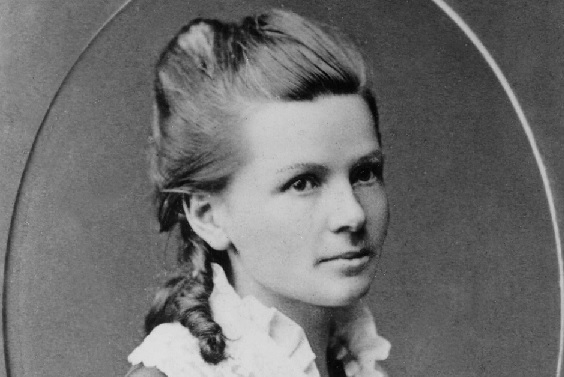
Before sunrise on 5 August 1888, a woman quietly pushed a strange three-wheeled machine out of a workshop in Mannheim. She had two teenage sons with her, a note for her husband on the kitchen table, and no permission from the authorities. By the time her husband read the note, she was already on the road.
Her name was Bertha Benz, and the machine was her husband’s Patent-Motorwagen, the first practical automobile. Until that morning, nobody had driven one farther than a short test run. Her destination was her mother’s house in Pforzheim, about 106 kilometers away. By the evening, she had completed the world’s first long-distance car journey, and she had done it largely to prove a point.
The Woman Behind the Inventor
Bertha Benz was born Bertha Ringer in 1849 in Pforzheim, the daughter of a well-off family. In 1872, she married Karl Benz, an engineer with big ideas and not much money. Accounts agree that Bertha was far more than a supportive spouse: her dowry and savings largely financed the development of his engine and vehicle, and she was a partner in the work.
In January 1886 Karl Benz patented his motor vehicle, and in July of that year he presented the Patent-Motorwagen to the public in Mannheim. It was a lightweight tricycle with a single-cylinder engine producing about three horsepower. It worked, but the public wasn’t convinced. People saw it as a noisy curiosity that might never leave the city. Karl tested it mainly on short trips, and rival Gottlieb Daimler was also working on engines. Bertha believed that what the car needed was a demonstration that it could cover real distances.
The Drive: 5 August 1888
Bertha set out early in the morning in the third Patent-Motorwagen, accompanied by her sons Eugen and Richard, then teenagers. Neither Karl nor the authorities had been told. The distance from Mannheim to her mother’s home in Pforzheim was about 106 kilometers, mostly on rough wagon tracks, and there were no gas stations, no road maps in the modern sense, and certainly no roadside assistance.
Along the way, the problems piled up, and Bertha solved them on the spot.
- Fuel. The car ran on a petroleum solvent called ligroin, which was sold by pharmacists, not at fuel stops. When the tank ran low, she stopped at the Stadt-Apotheke in Wiesloch and bought several liters. The pharmacy is today recognized as the world’s first filling station.
- A blocked fuel line. She cleared it with her hatpin.
- A broken ignition. She used her garter to insulate a damaged wire.
- A broken chain. A blacksmith helped her repair it.
- Brakes. The wooden brake blocks wore down and failed. A cobbler was asked to cover them with leather, and Bertha is credited with inventing the first brake lining.
- Hills. The engine was too weak for steep slopes, so the family reportedly had to push on the worst hills, and Bertha later suggested that the car needed an extra, lower gear.
The trip took about 13 hours. When she reached Pforzheim, she sent her husband a telegram announcing that they’d arrived safely. After several days with her family, she drove back to Mannheim.
Why It Mattered
The drive was more than an adventure. It served as the first field test of the automobile and a public demonstration of its reliability. The journey drew press attention, and soon afterward Benz & Cie. began to receive its first orders for the Patent-Motorwagen. Bertha’s feedback on gears and brakes also led to practical improvements.
Her journey also reframed a story. Cars weren’t just a mechanical curiosity. They could be a means of getting from one town to another. That idea shaped the next century of German industry, from the company that became Mercedes-Benz to the country’s car culture today.
Later Life
Bertha Benz continued to live in the family home near Ladenburg after Karl’s death in 1929, and she lived to the age of 95, dying in 1944. She stayed a respected figure in the history of the company she had helped build.
Follow Her Route Today
In 2008, the Bertha Benz Memorial Route was officially recognized as a route of industrial heritage. It follows her journey with signposts, covering about 194 kilometers from Mannheim via Heidelberg to Pforzheim, at the edge of the Black Forest, and back.
Highlights along the way include:
- Mannheim. The starting point of the 1888 drive.
- Wiesloch. The Stadt-Apotheke, known as the first filling station, is a regular stop on the route.
- Pforzheim. Bertha’s birthplace and the destination of her trip.
- Ladenburg. The Dr. Carl Benz Automuseum, which shows Benz’s vehicles and history.
- London. A Benz Patent-Motorwagen No. 3, possibly the oldest surviving car and perhaps the one Bertha drove, is displayed at the Science Museum.
The route is well signposted and can be driven, cycled, or covered in stages. Check opening hours of the museums and sights before you set out. For the story of Germany’s engineering heritage and its other great inventors, see our collection of famous Germans.
FAQ
Who was Bertha Benz?
The wife and business partner of car pioneer Karl Benz, who in August 1888 made the first long-distance journey in an automobile.
How far did Bertha Benz drive?
About 106 kilometers from Mannheim to Pforzheim, and then back a few days later.
What was the first filling station?
The Stadt-Apotheke (town pharmacy) in Wiesloch, where Bertha bought ligroin to fuel the car.
What did Bertha Benz repair with a hatpin and a garter?
She cleared a blocked fuel line with her hatpin and used her garter to insulate a faulty ignition wire.
Related articles:
Safety on the Autobahn
Why Do Germans Love Their Cars? A Cultural Deep Dive