

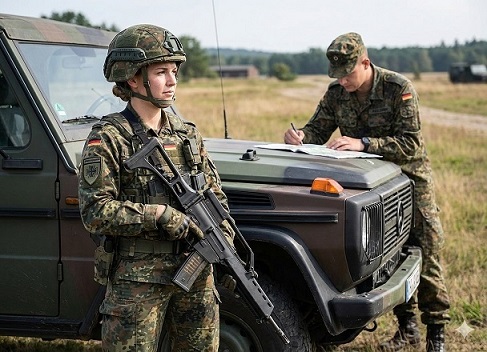
When we speak of women in the German army, we are talking about more than a statistic, more than a policy change, and more than uniforms and duties. We are talking about a story of social transformation, of legal evolution, of courage under fire, and of cultural negotiation between tradition and equality. For much of modern German history, women were formally excluded from combat roles. Yet throughout that history, women have found ways – in auxiliary units, medical corps, administrative positions, and finally in full combat service – to shape military life and redefine what it means to serve.
To truly understand this evolution, we must take a cultural and historical journey: from the World War II era with its auxiliary corps, through the cautious opening of the Bundeswehr to female medical officers in the 1970s, to the decisive legal changes that allowed women to serve without restrictions by 2001. We must also look at the modern German army’s growth, the challenges women still face, and how female soldiers today are reshaping Germany’s military identity.
Today, as approximately 23,000 women serve in the Bundeswehr across all roles including combat positions, Germany represents one of Europe’s more gender-integrated militaries.
Historical Precedents: Women and German Military Traditions
The relationship between women and German military institutions stretches back centuries, though almost entirely in auxiliary and supportive rather than combat roles. Understanding this history provides essential context for why women’s full military integration proved so controversial and challenging in late 20th-century Germany.
In Prussia and the various German states that preceded unification, women’s relationship to military affairs remained strictly circumscribed by gender ideologies that positioned men as warriors and protectors while women embodied domesticity, nurturing, and the values soldiers ostensibly defended. This division wasn’t unique to German territories – it reflected broader European patterns – but German military culture developed particularly strong associations between masculinity and military service, partly due to Prussia’s militaristic traditions and the central role military institutions played in German state formation.
Women’s involvement with German armed forces predates the sectioned openings of formal military roles. During World War II, for example, millions of women were mobilized in support capacities throughout the Third Reich’s war effort. Though the regime publicly stated that women should not be combat soldiers, the wartime reality saw large numbers of women in auxiliary roles.
Women served as telephone and telegraph operators, administrative clerks, and support personnel across the Wehrmacht, Luftwaffe and Kriegsmarine. By 1945, roughly 500,000 women served as uniformed auxiliaries in the armed forces, filling gaps left by men at the front and taking essential support roles within the system. They worked not only in Germany but in territories under occupation, serving as operators, signal personnel, and anti-aircraft helpers. These roles were technically auxiliary, not combat, but they marked important early forms of women’s military participation and set a precedent for future expansion.
Post-War Germany: Constitutional Frameworks and Cold War Context
The Basic Law (Grundgesetz) – West Germany’s constitution adopted in 1949 – established frameworks that would shape debates about women in military service for half a century. Article 12a, added in 1956 when West Germany rearmed and established the Bundeswehr, specifically addressed military service and conscription in ways that created both barriers and eventual pathways for women’s integration.
The constitutional framework established universal male conscription while simultaneously prohibiting women from serving in roles involving the use of weapons. Women could serve only in the Medical Service and the Military Music Service – carefully limited roles that aligned with traditional gender expectations about women as healers and cultural bearers rather than warriors. This constitutional restriction reflected broader societal consensus that military combat represented an inherently masculine domain and that women’s exclusion from this sphere was natural, appropriate, and even protective.
The Cold War context significantly influenced these arrangements. West Germany’s frontline position in potential East-West conflict created intense focus on military readiness and effectiveness. The Bundeswehr’s role in NATO collective defense meant German military policy existed within broader alliance frameworks and international military culture that, during this period, similarly excluded women from combat roles across most Western militaries.
The women’s movement of the 1970s and 1980s began challenging these arrangements, both in broader society and specifically regarding military service. Feminist perspectives on military service were complex and sometimes contradictory. Some feminists viewed military integration as essential equality – arguing that full citizenship required equal access to all state institutions, including the military. Others opposed military service entirely on pacifist grounds, arguing that women should resist militarism rather than seeking integration into military institutions. Still others questioned whether combat exclusion was truly protective or rather a paternalistic limitation that reinforced women’s second-class citizenship.
The Turning Point: European Law and German Reform
The first real opening for women occurred in 1975, when policy changes allowed women to join the Bundeswehr in professional capacities, beginning with the medical services. That year, the Defence Ministry approved a proposal to accept female officers as medics, dentists, veterinarians, and pharmacists, placing them in the Sanitätsdienst (medical corps). These women received basic weapon handling training for self-defence but were not considered combatants.
This shift was both symbolic and functional. It acknowledged that women could serve professionally in roles integral to military operations, even if combat was off-limits. Those early female officers helped transform internal cultures and demonstrated how women could flourish in structured military life. The presence of women in uniform, even within restricted roles, began slowly to normalize their place in the armed services.
In 1988 women were permitted to join other non-combat branches such as military music and logistics, continuing the gradual expansion of roles. By 1994, for example, Verena von Weymarn became the first woman in German military history to be promoted to a general officer rank, as a medical officer – a milestone that showed how far women’s participation had already developed.
Integration and Institutional Change: 2001-Present
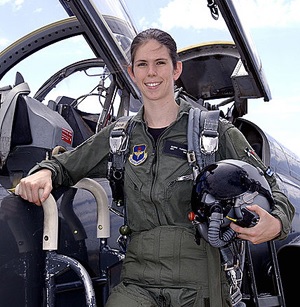
The 2001 constitutional amendment began a profound institutional transformation that continues today. Integrating women into previously all-male military spaces required far more than simply changing recruitment policies – it demanded comprehensive reforms of training, facilities, culture, leadership, and the military’s self-conception.
Infrastructure presented practical challenges. Barracks, training facilities, and ships designed for all-male populations required retrofitting with appropriate facilities. Field equipment, uniforms, and body armor needed to accommodate different body types. These logistical challenges, while solvable, required investment and planning that wasn’t always prioritized.
Ursula von der Leyen’s tenure as Defense Minister (2013-2019) brought renewed focus to gender integration and military culture reform. Her ministry implemented policies addressing work-life balance, childcare support, and flexible service options – reforms aimed at making military service compatible with family life for both men and women. She also confronted the military’s handling of sexual harassment and right-wing extremism cases, pushing for cultural change that went beyond formal policy.
The end of conscription in 2011 created new dynamics for gender integration. With an all-volunteer force, the Bundeswehr actively recruits women to meet personnel needs. Women now comprise approximately 12% of military personnel (about 23,000 of roughly 184,000 total), with higher percentages in medical services and lower percentages in combat arms. While these numbers remain below recruitment targets, they represent substantial growth from the early 2000s.
Contemporary Reality: Achievements and Ongoing Challenges
Today’s Bundeswehr presents a mixed picture regarding gender integration – significant achievements alongside persistent challenges that reveal how difficult institutional culture change truly is.
On the achievement side, women now serve in virtually all military roles, including combat positions, special forces, submarines, and leadership positions up to general officer rank. The first woman achieved general officer rank in 2012, and women continue advancing through military hierarchies. Female soldiers have deployed to Afghanistan, Mali, and other operational theaters, demonstrating combat capability and earning respect through performance. The military has developed more sophisticated understanding of gender integration challenges and implemented policies addressing many practical concerns.
Physical standards represent an ongoing negotiation. The Bundeswehr maintains that standards for specific positions should reflect job requirements rather than being arbitrarily gender-based. However, some positions require physical capabilities that more men than women meet, creating statistical disparities in certain roles. Debates continue about whether standards are genuinely job-related or unnecessarily exclude qualified women, and whether accommodations for pregnancy and other gender-specific needs constitute special treatment or necessary adjustments for equal opportunity.
Sexual harassment and assault remain serious concerns. Like militaries worldwide, the Bundeswehr struggles with these issues, which undermine unit cohesion, damage victims, and perpetuate cultures of discrimination. The military has implemented reporting systems, prevention training, and support services, but cultural change remains incomplete. High-profile cases continue emerging, suggesting that despite policy improvements, cultural transformation lags behind formal equality.
Recruitment remains challenging. The Bundeswehr struggles to attract sufficient women to meet integration goals, partly due to persistent perceptions of military service as masculine and partly because alternative career paths may seem more welcoming. The military competes with civilian employers increasingly focused on gender equality and work-life balance, areas where military service presents unique challenges.
The Future: Continuing Evolution
The future of women in the German army will likely involve continuing evolution rather than stable endpoints. Several trends and challenges will shape coming decades.
Demographic pressures will likely drive continued emphasis on female recruitment. Germany’s aging population and low birth rates create recruitment challenges for an all-volunteer military. Women represent an essential recruitment pool that the Bundeswehr cannot afford to neglect if it wishes to maintain force strength.
Technological change may facilitate integration by reducing the importance of physical strength in many military roles. As warfare becomes increasingly technical, cyber-focused, and dependent on sophisticated systems, physical capabilities that show gender disparities may become less central to military effectiveness. However, certain roles will likely continue requiring physical capabilities that more men than women meet, maintaining some statistical disparities.
Cultural change will continue, though generational turnover will be crucial. Younger Germans generally accept gender equality more thoroughly than older generations, and as younger people populate military ranks and leadership positions, integration-resistant attitudes should diminish. However, military culture’s particular characteristics mean it may lag behind civilian society in gender equality even as it progresses.
Work-life balance and family policies will likely receive continued attention as the military seeks to attract and retain talented personnel in competition with civilian employers. This may benefit both male and female soldiers as the military adapts to societal changes in gender roles and parenting expectations.
Transformation and Ongoing Negotiation
The story of women in the German army represents a remarkable institutional transformation accomplished in just over two decades – from categorical constitutional exclusion to service in all military roles, including combat positions and senior leadership. This achievement reflects broader societal changes in gender roles, successful legal challenges to discrimination, and the courage of individual women who insisted on their right to serve.
The experience offers broader lessons about gender integration in traditionally male institutions. Success requires not just formal policy change but sustained leadership commitment, cultural transformation, infrastructure adaptation, and willingness to confront uncomfortable realities about discrimination and resistance. It requires balancing practical concerns about effectiveness with equality commitments, and recognizing that integration challenges arise from institutional culture rather than women’s limitations.
For Germany specifically, women’s military integration intersects with fundamental questions about the nation’s relationship to military force, the meaning of citizenship and equality, and how democratic values shape military institutions. The presence of women in German military uniforms symbolizes that the Bundeswehr is meant to be fundamentally different from German militaries of the past – more democratic, more inclusive, more reflective of contemporary society’s values.
As approximately 23,000 women currently serve in the Bundeswehr, they stand on the shoulders of those who fought legal battles for the right to serve, endured hostile work environments, and proved women’s military capability through performance. Their service continues reshaping one of Germany’s most traditional institutions and demonstrating that gender equality requires ongoing commitment, cultural change, and willingness to challenge assumptions about capability, propriety, and tradition.