

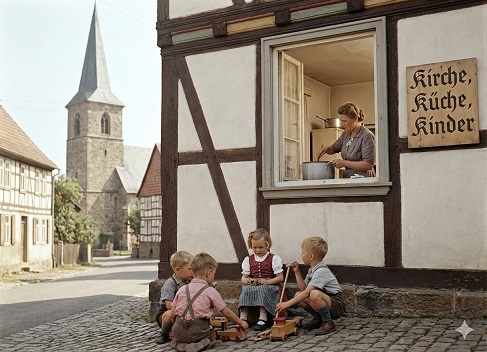
Few phrases capture the essence of traditional gender ideology quite as succinctly as the German expression “Kinder, Küche, Kirche” – children, kitchen, church. These three K’s, often cited in varying orders, have encapsulated for over a century a particular vision of women’s proper sphere: domestic, maternal, and subordinate to both family and religious authority. Yet this seemingly simple slogan carries a complex history, reflecting not just attitudes about gender but broader questions about German national identity, modernity, class divisions, and the relationship between tradition and progress.
The phrase emerged during a period of dramatic social transformation in late 19th-century Germany, when industrialization, urbanization, and the first waves of feminist organizing challenged traditional gender arrangements. The three K’s represented a conservative response to these changes – an attempt to define and defend “proper” women’s roles against perceived threats from women’s education, workforce participation, and political activism. Understanding this slogan requires examining not just what it explicitly says but what it implicitly reveals about anxieties surrounding gender, modernity, and social order in German-speaking societies.
Today, “Kinder, Küche, Kirche” functions primarily as a historical artifact and cautionary phrase, invoked to critique rather than celebrate traditional gender restrictions.
Historical Origins: Defining Women’s Sphere in Imperial Germany
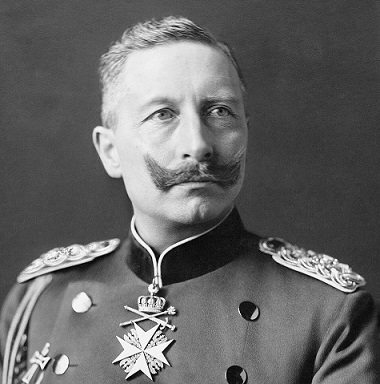
The phrase “Kinder, Küche, Kirche” emerged during the German Empire (1871-1918), a period of rapid industrialization and social transformation that fundamentally challenged traditional social structures. While the exact origin remains disputed – some attribute it to Kaiser Wilhelm II, others to broader conservative discourse – the slogan crystallized during the 1890s as a conservative response to the growing women’s movement and social changes that were redefining gender relations.
Late 19th-century Germany experienced dramatic transformations that created new possibilities and anxieties around gender roles. Industrialization drew increasing numbers of working-class women into factories and domestic service, challenging the ideal of women’s confinement to private domestic spaces. Middle-class women began organizing for educational access, professional opportunities, and eventually political rights. The first German women’s organizations emerged in the 1860s and gained strength through the following decades, advocating for everything from improved girls’ education to married women’s property rights.
The phrase’s three elements each carried specific meaning within late 19th-century German social thought. “Kinder” (children) emphasized women’s biological and social destiny as mothers. Conservative ideology positioned motherhood as women’s highest calling and most important contribution to the nation. This wasn’t merely personal preference but nationalist imperative – raising the next generation of Germans was framed as women’s patriotic duty, particularly given concerns about birth rates and demographic competition with other European powers.
“Küche” (kitchen) represented the broader domestic sphere where women supposedly belonged. The kitchen symbolized women’s work as homemakers – cooking, cleaning, managing households, caring for husbands and children. Middle-class ideology particularly emphasized this domestic confinement, as having a wife who didn’t need paid employment demonstrated a man’s economic success and social status. The cult of domesticity that emerged during this period positioned skilled homemaking as a science requiring women’s full attention, justifying their exclusion from public life.
“Kirche” (church) connected women’s subordination to religious authority and traditional moral values. Conservative Christianity provided theological justification for patriarchal family structures, teaching that God ordained male leadership in both family and society. Women’s religious devotion, while encouraged, was to be expressed through private piety, charitable works, and moral influence within families rather than through theological authority or church leadership.
The Weimar Republic: Challenging the Three K’s
The Weimar Republic (1918-1933) brought dramatic challenges to traditional gender ideology, creating one of the most progressive periods for women’s rights in German history – and correspondingly fierce backlash from conservatives who rallied around the three K’s as symbols of threatened traditional order.
The November Revolution of 1918 that ended Imperial Germany and established the Weimar Republic brought immediate gains for women’s rights. The new constitution granted women full political equality, including voting rights and the ability to hold office. Women entered universities in unprecedented numbers, pursued professional careers previously closed to them, and participated in public life with new visibility and confidence. The “New Woman” emerged as a cultural type – urban, educated, sexually liberated, professionally ambitious, everything the three K’s ideology rejected.
The Nazi movement, building strength throughout the late Weimar period, made restoration of traditional gender roles central to their appeal. Nazi ideology promised to return Germany to “proper” order where men dominated public life and women fulfilled their “natural” roles in the private sphere. The three K’s became a Nazi slogan, though they sometimes added a fourth K – “Kleider” (clothing/dress) – or modified the phrase in various ways while maintaining its essential meaning.
The Nazi Period: Ideological Instrumentalization
The Nazi regime (1933-1945) transformed “Kinder, Küche, Kirche” from conservative slogan to state ideology, though with significant contradictions and pragmatic modifications as the regime’s needs evolved. Understanding Nazi gender policy requires recognizing both their ideological commitment to traditional gender roles and their willingness to violate these principles when military and economic necessity demanded.
Upon taking power, the Nazis immediately began implementing policies designed to return women to traditional roles. They dismissed women from civil service positions, restricted female university admissions, provided financial incentives for women to leave the workforce, and created programs encouraging early marriage and high birth rates. The regime celebrated motherhood through propaganda, medals for prolific mothers, and Mother’s Day ceremonies that positioned childbearing as women’s primary contribution to the Nazi racial state.
Nazi women’s organizations, particularly the NS-Frauenschaft (Nazi Women’s League), promoted a vision of women’s roles centered on the three K’s interpreted through racial ideology. Women were to be mothers of the racial community, domestic managers creating proper Germanic households, and supporters of Nazi ideology (replacing traditional church authority). The regime’s volkisch ideology celebrated idealized German peasant traditions, positioning the three K’s as expressions of authentic Germanic values against “rootless” modernity.
The Nazi instrumentalization of the three K’s left a poisoned legacy. Post-war Germany’s necessary repudiation of Nazi ideology made any invocation of traditional gender roles suspect, tainted by association with a murderous regime. This complicated post-war debates about women’s roles, as defenders of traditional arrangements had to navigate the fact that Nazis had championed similar positions.
Post-War Division: Two Germanies, Different Gender Regimes
Germany’s post-war division created two distinct systems with dramatically different approaches to women’s roles, though both grappled with the three K’s legacy in complex ways.
West Germany (FRG) initially embraced relatively traditional gender ideology, though within a democratic rather than authoritarian framework. The Basic Law guaranteed gender equality in principle, but social practice and legal structures maintained significant traditional elements. The male breadwinner model dominated – married women typically didn’t work outside the home, or worked part-time, while husbands earned family wages.
West German feminism explicitly targeted the three K’s as symbol of oppressive gender ideology. The slogan became shorthand for everything feminists opposed – the confinement of women to domestic roles, the denial of professional opportunities, the subordination to male authority rationalized through religious tradition. Feminist demonstrations, publications, and activism challenged each element of the three K’s, demanding access to education, careers, political power, and reproductive autonomy.
East Germany (GDR) pursued dramatically different policies rooted in socialist ideology that emphasized women’s workforce participation as both economic necessity and ideological imperative. The state provided extensive childcare, encouraged full-time female employment, and officially rejected the three K’s as bourgeois ideology. Women worked at high rates, pursued professional careers, and participated in public life more visibly than West German counterparts.
German reunification in 1990 brought these different gender regimes into collision. East German women entered a system that many perceived as less supportive of working mothers, with reduced childcare availability and stronger cultural emphasis on maternal care. West German women confronted East German women’s different expectations about work, motherhood, and gender equality. These tensions continue influencing contemporary German debates about women’s roles, work-life balance, and family policy.
Contemporary Germany: Legacy and Transformation
In contemporary Germany, “Kinder, Küche, Kirche” functions primarily as a historical artifact and critical term rather than an aspirational ideal. Yet the social realities it described – tensions between women’s caregiving responsibilities and workforce participation, debates about “proper” gender roles, and questions about balancing tradition and equality – remain highly relevant.
Modern German discourse invokes the three K’s most often critically, as shorthand for outdated gender ideology that contemporary society has supposedly transcended. Feminists cite it to critique persisting traditionalism, politicians invoke it to demonstrate commitment to gender equality, and progressives use it to mark how far society has progressed. The phrase has become a negative reference point – what modern Germany explicitly rejects.
Contemporary debates about work-life balance, parental leave, and childcare policy implicitly grapple with questions the three K’s raised about women’s primary identities and responsibilities. Should policy enable women to combine careers and motherhood equally, or should it support women who choose to prioritize childcare? Are gender differences in caregiving natural and worth accommodating, or social constructions that policy should challenge? These questions echo older debates, though framed in more egalitarian language.
The church element has transformed most dramatically. Germany has become increasingly secular, with church attendance declining and religious authority carrying far less social weight than in earlier periods. However, religious organizations – both Christian churches and Islamic communities – continue debating women’s proper roles, creating contemporary versions of older tensions between religious tradition and gender equality.
The Persistence of the “Küche” Problem
Of the three K’s, the “Küche” element – representing domestic labor and caregiving – remains most persistently problematic in contemporary Germany. While women have gained access to education, professions, and public life, the unequal distribution of domestic labor persists as a major barrier to full gender equality.
Time-use studies consistently show German women performing significantly more housework and childcare than men, even when both partners work full-time. This domestic labor gap creates what researchers call the “second shift” – women work paid jobs then return home to disproportionate shares of unpaid domestic work. This double burden affects women’s career advancement, earnings, leisure time, and overall wellbeing.
The “Küche problem” reflects deeper questions about how societies value care work and domestic labor. Feminist economists note that the three K’s ideology positioned women’s domestic work as “natural” expressions of maternal instinct rather than as economically valuable labor deserving recognition and compensation. This devaluation of domestic work continues affecting policy debates about parental leave, childcare provision, and how to support families.
A Phrase That Won’t Quite Die
“Kinder, Küche, Kirche” persists in German consciousness more than a century after its emergence, transformed from conservative rallying cry to cautionary phrase but remaining relevant because the tensions it expressed haven’t fully resolved. The phrase reminds us that gender equality isn’t simply achieved through legal reform or changed rhetoric but requires transforming deep structures of social organization, cultural expectation, and individual practice.
The history of the three K’s reveals how gender ideology connects to broader social anxieties about modernity, national identity, and social change. Conservative invocations of the three K’s were never just about women’s proper roles but about defending entire social orders perceived as threatened by industrialization, urbanization, and democratization. Understanding this broader context helps explain why gender equality remains contentious – it challenges not just specific gender arrangements but entire systems of power and privilege.
Contemporary Germany has undoubtedly transformed dramatically from the Imperial era when the three K’s emerged. Women vote, hold political office including the chancellorship, pursue any career, and enjoy legal equality. No major political party explicitly endorses confining women to children, kitchen, and church. Progress is real and substantial.
Perhaps the most important lesson from the three K’s history is that gender equality requires sustained commitment, structural change, and cultural transformation beyond legal reform. Challenging the three K’s ideology was necessary but insufficient – transforming the social structures that made that ideology seem natural and inevitable requires ongoing effort. As contemporary Germany continues this work, the old phrase serves as a reminder of how far women’s roles have evolved and how much further they must still go before the three K’s legacy is fully overcome.
Related articles:
Women in German Army: Historical Evolution
German Women – Scientists and Inventors
German Power Women that Have Changed the World
Women in Nazi Germany
Women in Post-War Germany
Women In German Society