

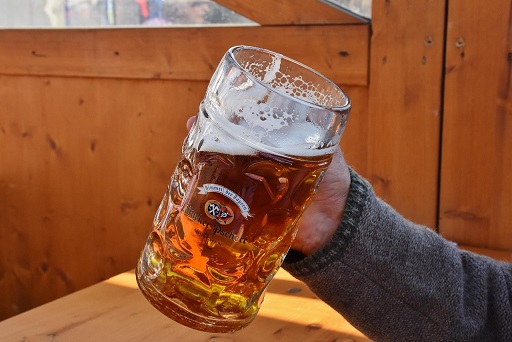
Ask most people outside Germany to picture German beer culture and you’ll probably get the same image: a crowded tent, a brass band, someone in lederhosen holding two liter-sized steins at once. That’s real, and it’s fun, but it’s also about two and a half weeks a year in one city. The other fifty weeks tell a much richer story, one involving a five-hundred-year-old purity law, thousands of small regional breweries, and a genuinely different relationship with beer than what most visitors expect.
German beer culture isn’t loud novelty. It’s closer to something like wine culture in France: regional, historically rooted, and taken seriously by people who’ve never set foot in an Oktoberfest tent in their lives.
The Reinheitsgebot: A Law That Shaped an Entire Industry
Germany’s beer identity is inseparable from the Reinheitsgebot, the beer purity law first issued in Bavaria in 1516. The original version was strict and specific: beer could only be made from water, barley, and hops (yeast wasn’t formally added to the list until later, once its role in fermentation was better understood). No additives, no shortcuts, no cheap substitutes to stretch a batch further.
What started as a regional Bavarian regulation eventually became a national standard as Germany unified, and while modern German and EU law has loosened some of the technical requirements over the centuries, the Reinheitsgebot remains a genuine point of pride in the brewing industry. Many German breweries still advertise that they brew according to the purity law, treating it less as a legal obligation and more as a badge of quality, a signal to drinkers that nothing’s been cut with fillers or artificial ingredients.
Beer Styles Vary More Than Most Visitors Expect
A lot of visitors assume German beer means one thing, usually picturing the pale lager style that dominates in Oktoberfest tents. In reality, Germany has a wide range of regional beer styles, each tied closely to where it comes from.
Kölsch, a light, crisp, top-fermented beer, is specific to Cologne and legally protected there, meaning a beer can only be labeled Kölsch if it’s brewed within the city or its immediate surroundings. It’s traditionally served in small, slender 200-milliliter glasses, refilled quickly and repeatedly rather than nursed slowly, which changes the whole pace of a night out compared to drinking from a full liter stein.
Alt, a darker, more bitter style, comes from Düsseldorf, just up the Rhine from Cologne, and the rivalry between Kölsch and Alt drinkers is a genuinely long-running bit of regional pride, half joke and half serious loyalty depending on who you ask. Weissbier or Hefeweizen, the cloudy wheat beer often served with a slice of lemon, is strongly associated with Bavaria and tends to be sweeter and fruitier than other German styles. Then there’s Pilsner, technically originating just across the border in the Czech Republic but adopted so thoroughly into German brewing that it’s now one of the most common styles found nationwide.
The Brewery Pub Tradition
One of the more distinctly German experiences is the Brauereigasthof, a brewery attached to its own restaurant or pub, often family run for generations, serving beer that never travels further than the building it was brewed in. Bamberg, a town in Bavaria with an unusually high concentration of small breweries for its size, is a particularly good example of this tradition still functioning at a genuinely local, everyday level rather than as a tourist spectacle.
These aren’t flashy destinations built around beer tourism. They’re neighborhood institutions, the kind of place where regulars have their usual table and the brewer might be the person who just handed you your glass.
Everyday Beer Drinking Looks Different Than You’d Think
German beer culture isn’t defined by heavy drinking or constant celebration. Beer is treated as a normal part of daily life rather than something reserved for big occasions, which shows up in small ways: a beer with lunch isn’t unusual in some regions, beer gardens (Biergärten) function as casual, family-friendly outdoor spaces rather than bars in the typical sense, and it’s common for people to bring their own food to a Biergarten as long as they buy their drinks there, a custom that dates back to Bavarian laws from the 1800s designed to protect brewers’ interests while still letting people eat what they liked.
Pace matters too. Beer in Germany tends to be sipped and savored over a long conversation rather than consumed quickly, and rounds of drinks aren’t typically bought for a whole table the way they might be elsewhere. Everyone generally settles their own tab, which surprises visitors used to a more communal round-buying custom.
Regional Differences Beyond Bavaria
It’s worth pushing back gently on the assumption that German beer culture equals Bavarian beer culture, since Bavaria gets an outsized share of international attention thanks to Oktoberfest. Northern Germany has its own strong beer identity, including regions known for Pilsner production and distinct local breweries that have little to do with Bavarian traditions. Berlin has its own quirky specialty, Berliner Weisse, a sour, lightly carbonated wheat beer historically served with a shot of fruit syrup, woodruff or raspberry, to balance the tartness, a style that nearly disappeared before experiencing a genuine craft revival in recent years.
Younger Germans, particularly in bigger cities, have also driven a noticeable craft beer movement over the past decade, experimenting with styles well outside the traditional Reinheitsgebot framework, including IPAs and other internationally influenced beers that would have been unusual in a traditional German brewery a generation ago.
A Few Practical Tips for Drinking Beer Like a Local
If you find yourself at a German bar or Biergarten, a few habits will help you blend in rather than stand out as a tourist. Order beer by its regional name when you can, since asking generically for “a beer” in Cologne without specifying Kölsch might get you a slightly bemused look. Don’t expect free refills or a server topping off your glass unprompted, since drinks are ordered and paid for individually. And if you’re at a Biergarten with the communal wooden tables, don’t be surprised if strangers sit down at your table once the seats fill up. That’s normal, not an intrusion.
Why This Culture Runs So Deep
German beer culture holds up as more than just Oktoberfest because it’s built on centuries of regional identity, a genuine respect for brewing craft, and a set of everyday habits that have nothing to do with big tents or brass bands. It’s a Kölsch loyalist in Cologne who wouldn’t touch an Alt, a family running the same small brewery in Bamberg for five generations, a lunchtime beer treated as completely unremarkable rather than a big deal. Oktoberfest might be the version that travels well internationally, but it’s really just the loudest chapter in a much longer, quieter story.
FAQ
What is the Reinheitsgebot? It’s the German beer purity law, first introduced in Bavaria in 1516, originally limiting beer ingredients to water, barley, and hops. It remains a point of pride in German brewing today.
Is Kölsch the same as regular German lager? No. Kölsch is a specific, legally protected style brewed only in and around Cologne, served in small glasses and known for being lighter and crisper than typical lagers.
Do Germans drink beer with meals regularly, not just at festivals? Yes. Beer is often treated as a normal part of everyday meals in many regions, quite different from the festival-only image many visitors have.
What’s the difference between Bavarian beer culture and beer culture elsewhere in Germany? Bavaria is known for styles like Weissbier and its brewery pub traditions, while other regions have their own distinct identities, such as Kölsch in Cologne, Alt in Düsseldorf, and Berliner Weisse in Berlin.
Related articles:
Oktoberfest Beyond the Beer
Oompah Bands and Beer Tents: The Soundtrack of Oktoberfest
The Role of Beer in German Society
How to Taste German Beer