


Potatoes are one of the most versatile and beloved ingredients in German cuisine. While the potato itself may be simple, German cooks have transformed it into an extraordinary range of dishes that reflect regional history, local ingredients, and everyday eating habits. Traditional German potato dishes are rarely flashy, but they are deeply satisfying, practical, and rooted in centuries of culinary tradition.
Understanding these dishes offers a direct window into German food culture and the values behind it.
Bratkartoffeln

Bratkartoffeln are among the most iconic German potato dishes. At their core, they are sliced potatoes fried in a pan until golden and crisp. Yet this simplicity is deceptive. Proper Bratkartoffeln require patience, the right fat, and careful timing.
Traditionally, the potatoes are boiled first, then sliced and fried in butter or lard, often with onions and sometimes bacon. The result is crispy on the outside, soft on the inside, and rich in flavor. Bratkartoffeln are commonly served with fried eggs, sausages, or pickled vegetables, making them a staple of both home cooking and tavern menus.
Kartoffelsalat
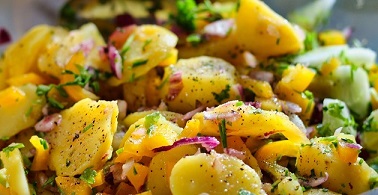
Few dishes reveal Germany’s regional diversity as clearly as Kartoffelsalat. There is no single German potato salad, but rather two dominant traditions that divide the country.
In southern Germany, especially in Bavaria and Swabia, potato salad is typically made with a warm vinegar-based dressing, onions, and broth. It is light, tangy, and designed to accompany sausages and meat dishes without overwhelming them.
In northern and western Germany, Kartoffelsalat is usually creamy, made with mayonnaise, pickles, and sometimes apples or eggs. This version is richer and often served chilled. Debates over which style is superior can become surprisingly passionate and are often treated as matters of regional loyalty.
Kartoffelpuffer
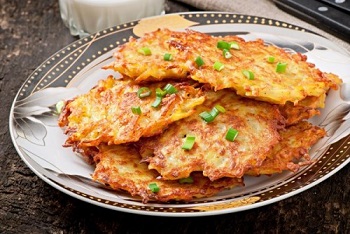
Kartoffelpuffer, also known as Reibekuchen or Kartoffelpfannkuchen depending on the region, are grated potato pancakes fried until crisp. They are one of the most recognizable street foods in Germany, especially at Christmas markets and festivals.
The basic mixture includes grated potatoes, onion, egg, and flour, seasoned simply with salt. Kartoffelpuffer are traditionally served with applesauce, a combination that balances savory and sweet flavors. In some regions, they are also paired with sour cream or smoked salmon.
This dish reflects German cuisine at its most direct and comforting.
Kartoffelsuppe
Kartoffelsuppe is a classic example of German home cooking. It is thick, hearty, and deeply practical. While recipes vary, the foundation usually includes potatoes, onions, carrots, and leeks, simmered and partially blended to create a creamy texture without relying on cream.
Many versions include sausages such as Wiener or Bockwurst, while others add bacon or croutons. Kartoffelsuppe is especially popular in colder months and is closely associated with rural cooking and family meals.
It is not elegant food, but it is deeply nourishing.
Kartoffelknödel
Kartoffelknödel, or potato dumplings, are a cornerstone of southern German cuisine. They are most commonly found in Bavaria, Franconia, and parts of Austria, served alongside roast meats and rich gravies.
These dumplings are made from either cooked potatoes, raw grated potatoes, or a combination of both. The mixture is shaped into large balls and boiled until tender. When prepared well, Kartoffelknödel are light yet filling, designed to soak up sauces and balance heavy dishes.
They reflect a culinary tradition where potatoes replace bread as the primary starch.
Himmel und Erde
Himmel und Erde, meaning heaven and earth, is a traditional dish from the Rhineland and western Germany. It combines mashed potatoes with stewed apples, usually served with blood sausage or fried onions.
The name refers to apples growing in trees and potatoes growing underground. The dish captures the German fondness for contrasting flavors and making full use of local produce. Sweet and savory elements coexist without one overpowering the other.
Though unfamiliar to many outside Germany, Himmel und Erde is a deeply traditional comfort food.
Schupfnudeln
Schupfnudeln are potato-based noodles associated with southern Germany, particularly Swabia and Bavaria. They are made from a dough of mashed potatoes and flour, shaped into short, tapered rolls.
Traditionally, Schupfnudeln are pan-fried until lightly crisp and served with sauerkraut, bacon, or onions. In some modern versions, they appear in sweet dishes with sugar and poppy seeds.
This dish shows how potatoes in German cuisine often cross the boundary between side dish and main course.
Bauernfrühstück
Bauernfrühstück, or farmer’s breakfast, is a hearty dish made from leftover boiled potatoes fried with onions, bacon, and eggs. It is typically served with pickles and sometimes cheese.
Originally designed as a practical way to use leftovers, Bauernfrühstück has become a classic in its own right. It reflects a key principle of traditional German cooking: waste nothing, and make food filling enough for physical labor.
Despite its name, it is eaten at any time of day.
Why Potato Dishes Matter in German Cuisine
Traditional German potato dishes are not about refinement or novelty. They are about reliability, adaptability, and making the most of what is available. Potatoes appear in nearly every context, from street food to holiday meals, from quick suppers to elaborate roasts.
These dishes also highlight how German cuisine values regional identity. The same ingredient becomes something entirely different depending on geography, climate, and local history.
A Foundation of German Food Culture
To know German cuisine is to know its potato dishes. They are not side notes or background elements, but foundational foods that have shaped daily life for generations.
From crispy Bratkartoffeln to comforting Kartoffelsuppe, traditional German potato dishes continue to define how Germany eats, cooks, and remembers its past. They prove that a humble ingredient, handled with care and tradition, can become a cultural symbol.
Related Articles:
Potatoes in German Culture
The Role of Potatoes in German Cuisine
Brägele – Fried Potatoes
Schupfnudeln – German Potato Dumplings