

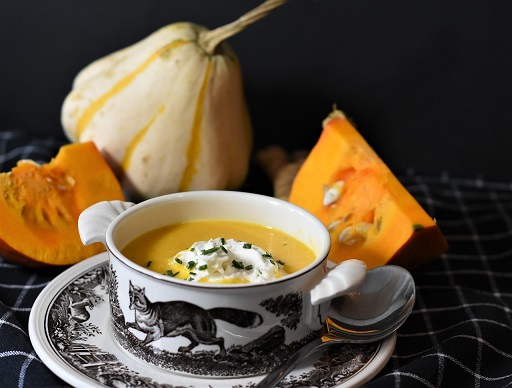
Ask a German what they cook with pumpkin in October and the answer is almost always the same: soup. A smooth, orange Kürbissuppe, finished with a swirl of cream and a few drops of dark green seed oil, is the dish that defines German pumpkin season. It’s warming, quick, and uses a vegetable that’s cheap and everywhere from September onward.
Pumpkin has a long history on the German table, well before Halloween pushed it into the spotlight. These German pumpkin recipes start with the classic soup, then move through a few regional ideas worth trying.
Which Pumpkin Do Germans Cook With?
The most popular variety by far is the Hokkaido (also called red kuri squash). It’s small, bright orange, and has a big practical advantage: the skin turns soft when cooked and is edible, so you don’t have to peel it. Other common choices include the Butternut (Butternusskürbis) for sweeter, smoother dishes and the Muskatkürbis (musquee de Provence), a large, deeply ribbed pumpkin with sweet flesh.
Skip the big carving pumpkins. Their flesh is watery and stringy, and they’re grown for size rather than flavor.
Classic Kürbissuppe (German Pumpkin Soup)
Serves 4 | Prep: 15 minutes | Cook: 25 to 30 minutes
Ingredients:
- 1 Hokkaido pumpkin (about 800 to 1,000 g)
- 1 onion
- 2 cloves garlic
- 1 carrot
- A thumb-sized piece of fresh ginger (optional)
- 2 tablespoons butter or neutral oil
- 700 ml vegetable stock
- 150 ml cream (Sahne) or coconut milk
- Salt, black pepper, and freshly grated nutmeg
- 1 teaspoon lemon juice or apple cider vinegar
- To serve: pumpkin seed oil, toasted pumpkin seeds, a little extra cream
Method:
- Prep the vegetables. Wash the pumpkin, cut it in half, scoop out the seeds, and chop it into chunks. Keep the skin on. Dice the onion, mince the garlic, and chop the carrot and ginger.
- Sweat the base. Heat the butter in a large pot and cook the onion, garlic, carrot, and ginger over medium heat for 3 to 4 minutes, until soft but not browned.
- Add the pumpkin and stock. Stir in the pumpkin and pour in the stock. Bring to a boil, then reduce the heat and simmer for 15 to 20 minutes, until the pumpkin is completely tender.
- Blend. Use an immersion blender (Stabmixer) to puree the soup until smooth.
- Finish. Stir in the cream, then season with salt, pepper, nutmeg, and the lemon juice. Add a splash of water or stock if it’s too thick.
- Serve. Ladle into bowls and top with a few drops of pumpkin seed oil, toasted seeds, and a swirl of cream. A slice of dark bread on the side is traditional.
Tips: Roasting the pumpkin chunks first at 200 °C for 25 minutes gives a deeper, sweeter flavor. For a vegan version, use oil and coconut milk.
Styrian Pumpkin Seed Oil (Kürbiskernöl)
The finishing touch in a German pumpkin soup is often Kürbiskernöl, a dark green, almost black oil pressed from roasted pumpkin seeds. It comes from Styria (Steiermark) in southern Austria, where it’s protected as a regional specialty, and it’s widely used in southern Germany too.
It has a nutty, toasty flavor and is meant to be used cold, as a dressing rather than a cooking oil. Drizzle it on soup, potato salad, or cheese, and in a classic Austrian trick, even over vanilla ice cream. A small bottle goes a long way, so store it in a cool, dark place.
Eingelegter Kürbis (Sweet-and-Sour Pickled Pumpkin)
Before refrigerators, pickling was how Germans preserved pumpkin for the winter, and sweet-and-sour pickled pumpkin is still found in regional home cooking, especially in northern and eastern Germany. Cubes of pumpkin are simmered briefly in a spiced vinegar and sugar syrup, often with cloves, cinnamon, or bay leaf, then jarred.
It’s served as a side dish with roast meat, sausages, or cold cuts, in the same spirit as pickled gherkins or beet. If you’re a fan of sweet-sour flavors, it’s worth seeking out at a farm stand or autumn market.
Kürbis-Maultaschen
Maultaschen are the Swabian cousin of ravioli, large pasta pockets from Baden-Württemberg usually filled with meat and spinach. In autumn you’ll find pumpkin versions, filled with a creamy pumpkin puree and often served in broth or fried in butter with onions. They’re a regular on the menu at Ludwigsburg’s famous pumpkin exhibition, which you can read about in our guide to German pumpkin festivals.
Roasted Pumpkin Wedges
The simplest German-style pumpkin dish is also one of the best. Cut a Hokkaido into wedges, toss with oil, salt, pepper, and herbs like thyme or rosemary, and roast at 200 °C for 25 to 30 minutes until the edges caramelize. Serve with a dollop of quark or sour cream, a drizzle of seed oil, and crumbled sheep’s cheese or toasted nuts.
Pumpkin Bread and Cakes
Sweet pumpkin baking has grown in popularity in Germany, partly under American influence, with pumpkin bread, muffins, and spiced cakes appearing in bakeries each autumn. For a recipe, see our Halloween recipes, including pumpkin bread.
Autumn Pairings
German autumn food is a collection of seasonal staples that often appear together. In wine regions, Federweißer (young, partially fermented wine) is traditionally served with Zwiebelkuchen (onion tart) in early autumn, and pumpkin soup fits easily into the same season. Later in autumn, markets and Martinstag celebrations bring roast goose and other hearty dishes, which you can read about in our guide to St. Martin’s Day.
Practical Tips
- Buy Hokkaido for soup. No peeling, great flavor, and easy to find in supermarkets and farm stores.
- Save the seeds. Rinse, dry, toss with oil and salt, and roast at 160 °C for about 15 minutes for a crunchy topping.
- Season at the end. Nutmeg, lemon, and a pinch of salt right before serving brighten the flavor.
- Look for regional markets. Autumn farm stands often sell several pumpkin varieties, and vendors are usually happy to recommend one for soup or baking.
For the wider cultural picture of the season, see our guide to Halloween in Germany.
FAQ
What is the most popular pumpkin in Germany for cooking?
The Hokkaido, because its skin is edible and doesn’t need peeling, and its flesh is sweet and creamy.
What is Kürbiskernöl?
A dark green pumpkin seed oil from Styria in Austria, used cold as a dressing on soups, salads, and desserts.
Can you eat the skin of a pumpkin?
You can with Hokkaido, which becomes tender when cooked. Other varieties, like Butternut or large carving pumpkins, usually need peeling.
What do Germans serve with pumpkin soup?
Typically dark bread or a crusty roll, with pumpkin seed oil and toasted seeds on top.