

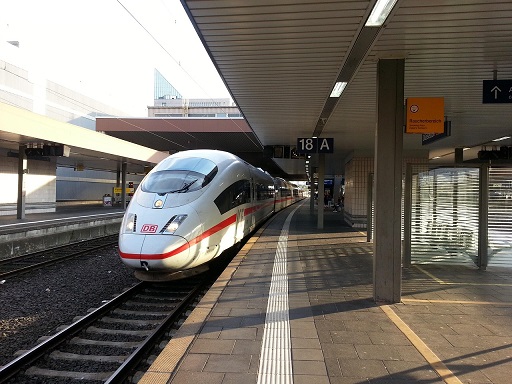
Here’s a mistake that almost every first-time visitor to Germany makes. You’ve bought the famous nationwide pass, you board a gleaming white high-speed train, and a conductor walks down the aisle asking for your ticket. Your pass looks fine on your phone. It isn’t valid on that train.
Germany has two rail worlds that look similar but run on different rules, and the sooner you understand the split, the more money and stress you’ll save. This guide explains the Deutschlandticket, how Deutsche Bahn (DB) tickets work, what happens when trains run late, and how to plan a trip around Germany by rail.
Two Rail Worlds: Regional and Long-Distance
Germany’s trains fall into two broad groups, and the tickets for each are separate.
| Regional and local transport (Nahverkehr) | Long-distance transport (Fernverkehr) | |
|---|---|---|
| Trains | RB, RE, S-Bahn, plus U-Bahn, trams, and buses | ICE, IC, EC |
| Best for | Short and medium trips, commuting, day trips | Fast travel between big cities |
| Deutschlandticket valid? | Yes | No (with a few exceptions) |
| Typical tickets | Local fares, day tickets, Deutschlandticket | Flexpreis, Sparpreis, Super Sparpreis |
| Reservations | Not needed | Optional, in most cases |
Regional trains are slower and make more stops, but for many routes, including the scenic ones in our guides to the Black Forest, the Romantic Road, and Lake Constance, they’re all you need.
The Deutschlandticket
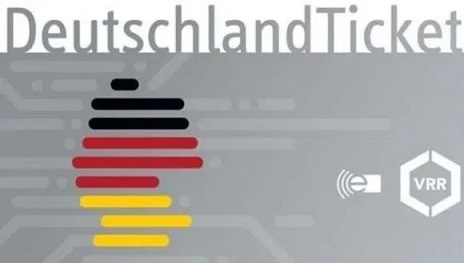
The Deutschlandticket (also called the Deutschland-Ticket) is a monthly pass for local and regional public transport across the whole country. It launched on 1 May 2023 at 49 euros a month, rose to 58 euros in January 2025, and has cost 63 euros per month since 1 January 2026. The price is fixed for 2026, but what happens after that is still uncertain, so check before you plan a long stay.
Where it works:
- Regional trains (RB and RE) and S-Bahn
- U-Bahn, trams, and city buses
- Many local ferries run by transport associations
Where it doesn’t work:
- Long-distance trains (ICE, IC, and EC), with a few listed exceptions on specific routes
- FlixTrain and FlixBus
- Mountain railways and some island ferries
How to get it:
- It’s sold as a monthly subscription, and you can buy it from Deutsche Bahn and from local transport companies. Deutsche Bahn only offers it digitally, through the DB Navigator app, while many local operators also issue a chip card.
- It’s personalized and not transferable, so carry photo ID in case an inspector asks.
- The subscription renews automatically, and you can cancel monthly. According to DB, a cancellation by the 10th of the month ends the subscription at the end of that month. It can be used for a single calendar month if you cancel in time.
- Payment options differ between providers, so if you don’t have a German bank account, check which providers accept your payment method before you buy.
What it doesn’t include: There’s no free bike carriage, and BahnCard discounts do not apply to it. Employers can offer a Jobticket version with a small discount if they cover at least a quarter of the price.
Is it worth it? If you’ll ride local trains and buses on many days of the month, it often pays for itself quickly. For two or three day trips, a single ticket or a regional day pass, such as the Bayern-Ticket in Bavaria, may be cheaper.
Long-Distance Tickets: Flexpreis, Sparpreis, and BahnCard
For ICE, IC, and EC trains, DB uses a pricing system that changes with demand.
- Flexpreis. The standard, flexible fare. It has no fixed train (no Zugbindung), you can change it until shortly before departure, and BahnCard discounts apply.
- Sparpreis and Super Sparpreis. Discounted fares, cheaper the earlier you book, but tied to a specific train. They’re often the best value if your plans are fixed.
- BahnCard 25, 50, and 100. Discount cards that give 25 percent, 50 percent, or unlimited travel on long-distance fares. The BahnCard 25 pays off from roughly 120 euros of discountable fares a year, and the BahnCard 50 costs around 230 euros a year in 2026, with occasional promotions.
- City-Ticket. A local transport add-on at your start and destination stations. It’s included with Flexpreis and available as an extra for saver fares on some routes.
DB didn’t raise long-distance fares or BahnCard prices at the December 2025 timetable change, though prices can change at any time. Seat reservations are optional on most trains, but worth considering on busy routes and holidays. Check the cost when you book.
Delays and Your Rights
Let’s be honest about punctuality. DB counts a train as “on time” if it arrives less than six minutes late, and by that measure, long-distance trains have been on time roughly 60 to 63 percent of the time in recent years, with February 2026 at 59.4 percent. Regional trains do better, at around 90 percent.
Your rights are strong, and they apply under EU rules:
- 60 minutes late at your destination: 25 percent of the fare for that single journey.
- 120 minutes late: 50 percent of the fare.
- 20 minutes or more expected delay, or a cancellation: your saver-fare train restriction (Zugbindung) is lifted, and you can take another train.
- Late-night arrival: if you’d arrive between midnight and 5 a.m. with at least 60 minutes of delay, DB covers a taxi, usually capped at 80 euros.
- Compensation applies when DB is responsible and the amount exceeds 4 euros. Claim it with the company that issued your ticket, and keep your ticket and booking confirmation.
Missed connections caused by delay are also covered, since you can take the next available train at no extra cost. The DB Navigator app shows alternatives and lets you start a refund claim.
Using the System Day to Day
- Download DB Navigator. It’s the key tool for timetables, tickets, platform changes, and delay alerts.
- Check the platform and carriage order. Long-distance trains show the layout, called Wagenreihung, in the app and on station screens, which helps you find your coach and seat.
- Check platform changes. They happen frequently, so look again shortly before departure.
- Respect the quiet coach. Some carriages are marked as quiet zones, where phones and loud conversation are discouraged.
- Always carry a valid ticket. Fare dodging is taken seriously, and a typical fine is around 60 euros. Digital tickets on your phone are normal, so keep your battery charged.
- Holiday timetables. On public holidays, local transport often runs on reduced Sunday schedules. See our guide to Christmas in Germany 2026 for dates.
Planning Tips
- Mix and match. Use ICE trains for the long hops between big cities and regional trains or the Deutschlandticket for everything else.
- Book saver fares early if your dates are fixed, and flexible fares if they aren’t.
- Leave buffer time. If you have a flight or a booked event, don’t schedule tight connections.
- Buy tickets before you board where possible, and note that some regional lines have no ticket office.
- Pack light. Stations often involve stairs, and luggage space can be limited.
- Don’t forget Sunday. Shops and some services are closed, and timetables are thinner. See our guide to Sunday closing in Germany.
For more on getting around in daily life, see our guides to German supermarkets and the Pfand system.
FAQ
How much is the Deutschlandticket in 2026?
63 euros per month since 1 January 2026, as a monthly cancellable subscription.
Can I use the Deutschlandticket on an ICE?
No. It’s valid on local and regional transport only, though a few specific long-distance routes are listed as exceptions.
Can tourists buy the Deutschlandticket?
It’s sold as a subscription by DB and local transport companies. Payment options vary by provider, so check which accept your method.
How much compensation do I get for a delayed train in Germany?
25 percent of the single fare for a delay of 60 minutes or more at your destination, and 50 percent for 120 minutes or more.