

The patron of all kids
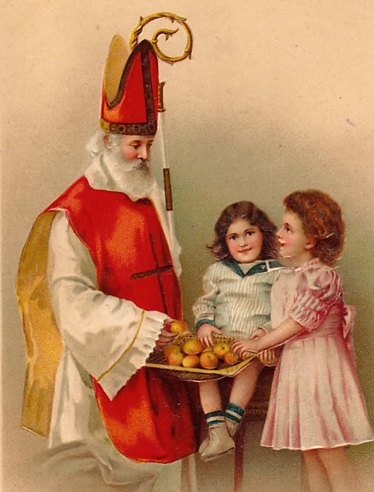
To understand why 6 December remains so important in German culture, we begin with the figure at the center of it all: St. Nicholas of Myra. Born around the third century in what is now Turkey, Nicholas became known throughout Europe for his generosity, his protection of the vulnerable, and his miraculous acts. Medieval texts celebrated him as a patron of sailors, merchants, and above all, children.
Christian missionaries brought his legend to the German-speaking world during the early Middle Ages. By the tenth century, monasteries in Bavaria and the Rhineland were already holding St. Nicholas Day processions. By the thirteenth, Nicholas had become one of the most popular saints in Central Europe. His feast day on 6 December was marked by charitable giving, food distribution to the poor, and special school festivities led by monks or priests.
It is from these early church rituals that the German custom of Nicholas visiting children evolved. Medieval clergy often selected a boy from their choir to play the role of Bischof Nikolaus – Bishop Nicholas – who would inspect students, praise their good behaviour, and encourage them to improve their studies. The idea that Nicholas rewarded virtue and corrected mischief was established long before Christmas trees, advent calendars, or Santa Claus entered the scene.
How St. Nicholas Day Became a German Family Tradition

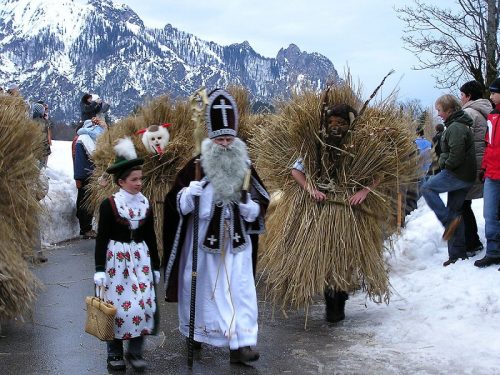
St Nicholas Making his Rounds- creative commons photo by-Gamsjaga
Although Nicholas began as a church figure, by the early modern period he had moved firmly into domestic life. Parents adopted the clergy’s tradition of rewarding well behaved children, and the concept of Nicholas visiting homes spread rapidly. By the seventeenth century, most German regions celebrated 6 December in some way, whether through small gifts, sweets, or symbolic blessings.
This transformation from saintly ritual to household celebration was helped by the Reformation. While Protestant regions no longer emphasised the veneration of saints, St. Nicholas proved surprisingly resilient. Many families simply kept the tradition on cultural rather than religious grounds. Over time, Nicholas shifted from a holy bishop to a folkloric figure – dignified, kind, and wise, but far less explicitly tied to Catholic theology.
This cultural flexibility ensured that St. Nicholas Day survived political upheavals, shifting religious landscapes, and the arrival of new Christmas customs in the nineteenth century. Even as Germany later embraced Christmas trees, advent wreaths, and the figure of the Weihnachtsmann – the Santa Claus inspired gift bringer – St. Nicholas remained a beloved figure. For many German families, he continues to occupy a position distinct from the commercialized winter holiday that came later.
What Happens on St. Nicholas Day in Germany
Although customs vary between regions, a few key elements define the celebration nationwide. These form the essential structure of St. Nicholas Day as it is lived in contemporary Germany.
Polishing Shoes on the Night of 5 December
The most iconic tradition takes place on the evening of 5 December, when children clean their boots and place them outside their bedroom doors or on a windowsill. The act of cleaning the shoes is symbolic: it represents readiness, good behaviour, and respect for the visitor. Parents often speak of it as a small ritual of responsibility – a way to encourage children to take pride in caring for their belongings.
Overnight, St. Nicholas visits the home and fills the polished shoes with small treats. These typically include:
• clementines
• walnuts or hazelnuts
• chocolate coins
• marzipan
• gingerbread
• small toys or decorations
The contents are deliberately modest. St. Nicholas Day is not meant to replace Christmas gifts. Instead, it serves as a warm, anticipatory moment that whets children’s excitement for the rest of Advent.
Meeting St. Nicholas In Person
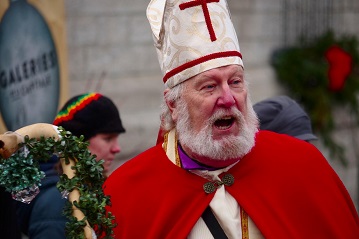
In some towns, Nicholas also appears at public events, kindergartens, or school assemblies. These visits, though less formal, maintain the theme of positive reinforcement. Nicholas praises kindness, cooperation, and helpfulness, framing moral values in an encouraging, story like way.
The Companion Figure: Knecht Ruprecht
In many German regions, St. Nicholas does not travel alone. He is accompanied by Knecht Ruprecht, a dark coated helper who interacts with the children before Nicholas steps forward. Ruprecht’s role varies across time and place, but traditionally he represents the stern counterpart to Nicholas’s kindness. He may ask children whether they have been obedient or whether their rooms are tidy.
Over the past century, the tone of Ruprecht’s role has softened significantly. He no longer threatens to punish misbehaving children. Instead, he often carries a bell, sack, or staff and plays a theatrical role that adds a touch of old world drama to the visit.
In northern regions, similar characters appear under different names, including:
• Hans Muff
• Klaubauf
• Ruppelz
Each of these figures reflects local folklore, yet all serve the same purpose: to highlight the moral dimension of the tradition while keeping it playful and symbolic.
Regional Variations Across Germany
Germany’s federal structure and long history of local traditions mean that St. Nicholas Day looks different depending on where you are. These variations make the holiday especially fascinating for cultural observers.
Bavaria and Southern Germany
Southern Germany maintains some of the most elaborate St. Nicholas customs. Here, families often book a visiting Nicholas and Ruprecht who arrive in full costume. These visits follow a structured format:
• the companion knocks
• Nicholas enters solemnly
• he reads from the goldene Buch – the golden book
• children recite poems or songs
• Nicholas offers encouragement and advice
• treats are distributed
In Alpine areas, the tradition merges with ancient winter spirits. In some villages, Klausentreiben or Klauschlaufen features masked, bell wearing figures accompanying Nicholas in processions. Though visually striking, these customs are more folklore than fright, and local families treat them as an exciting seasonal event.
Rhineland and Western Germany
In the Rhineland, St. Nicholas often visits schools, kindergartens, and neighborhood parades. The region’s Catholic heritage is visible in his costume, which retains a clearly ecclesiastical style. At home, children eagerly await the morning discovery of filled boots, often accompanied by handwritten notes from Nicholas.
Some cities, especially Düsseldorf and Cologne, also host Nikolausmärkte – markets dedicated to St. Nicholas rather than Christmas as a whole.
Northern Germany
Northern Germany differentiates more clearly between St. Nicholas and the Weihnachtsmann. While Nicholas still fills shoes with nuts and sweets, visits to homes are less common. Schools may host small events, but the tradition remains simple, modest, and centered on the morning surprise.
In Hamburg and Bremen, children sometimes sing little verses or rhymes on the evening of 5 December, asking Nicholas to visit. These verses have been passed down orally for generations.
Eastern Germany
In former East German regions, St. Nicholas Day survived the twentieth century with impressive resilience, even though state policy discouraged religious holidays. Families maintained the shoe tradition privately, and today the custom has regained its public visibility. Schools, childcare canters, and even workplaces often hold small St. Nicholas events for younger children.
The Difference Between St. Nicholas and the Weihnachtsmann
One of the most important aspects of St. Nicholas Day is its distinction from Santa Claus. To an outsider, the overlap may seem obvious – both bring gifts in winter – yet in Germany the two figures are culturally separate.
St. Nicholas
• arrives on 6 December
• is based on a real historical figure
• appears as a bishop
• gives small treats
• values generosity, kindness, and moral reflection
• often interacts directly with children
Weihnachtsmann
• arrives on Christmas Eve
• is a modern figure inspired by American Santa Claus
• represents the festive, secular side of the holiday
• brings larger presents
• has no specific moral authority
Many German families deliberately maintain both traditions because each plays a different role. St. Nicholas Day fosters gentleness, gratitude, and anticipation, while Christmas Eve focuses on joy, family togetherness, and the culmination of the season.
St. Nicholas in German Schools and Kindergartens
Schools and kindergartens across Germany treat St. Nicholas Day as a delightful educational opportunity. Activities often include:
• baking gingerbread
• crafting paper bishop hats or golden books
• learning folk songs
• reading stories about Nicholas’s life
• hosting a visit from Nicholas
For educators, the day provides a moment to teach values such as generosity, empathy, and good manners. Children learn not through lectures, but through the warmth of tradition and shared excitement.
The Foods Associated with St. Nicholas Day
Food plays an important role in German winter celebrations, and St. Nicholas Day is no exception. While not a full feast day, it introduces many flavours associated with Advent.
German gingerbread is closely tied to St. Nicholas, who historically protected bakers and merchants. Many bakeries release special St. Nicholas shaped gingerbread around 6 December.
Mandarins and Nuts
These classic shoe fillers recall historical traditions. In the nineteenth century, mandarins were a precious winter luxury, and nuts symbolised strength and nourishment.
This sweet dough figure – shaped like a man and sometimes holding a clay pipe – is particularly popular in the west. Bakers sell them in the days leading up to 6 December, and children often receive them in their boots.
Hot Chocolate and Advent Cookies
Families frequently mark the evening of 6 December with warm drinks and homemade Advent biscuits known as Plätzchen. The mood is calm, domestic, and comforting.
Why St. Nicholas Day Still Matters in Modern Germany
With so many modern traditions competing for attention, why has St. Nicholas Day remained essential to German culture? The answer lies in its emotional and cultural function.
- It Preserves a Sense of Ritual
St. Nicholas Day maintains a clear structure that families look forward to each year. The ritual of cleaning shoes, waiting overnight, and discovering small surprises gives children a feeling of anticipation and continuity.
- It Encourages Gratitude Over Consumerism
Because gifts are small and symbolic, the day offers a counterbalance to the material intensity of Christmas. Children learn to appreciate simple pleasures – a chocolate coin, a mandarin, a handwritten note.
- It Connects Generations
Parents often repeat the exact customs they experienced in childhood. When Nicholas visits a home, he reminds both children and adults of long standing cultural patterns that give the holiday season its depth.
- It Blends Religion, Folklore, and Culture
St. Nicholas is one of the rare figures who comfortably bridges religious heritage and secular tradition. His story reminds families of timeless themes – kindness, justice, and compassion – while allowing full participation regardless of belief.
- It Marks the True Beginning of Advent
In Germany, Advent is not just a countdown to gifts; it is a cultural season. St. Nicholas Day signals that winter has begun in earnest, that Christmas baking should start, and that festive lights and markets will soon brighten the short days.
St. Nicholas Day in Modern German Media and Society
The tradition appears widely in German films, children’s books, advertisements, and school curricula. December programming on public broadcasters often features stories about Nicholas or educational segments about his origins. Many popular children’s series – including Die Sendung mit der Maus – devote special episodes to explaining the custom.
Retailers also embrace the day, though German families tend to resist over commercialization. Shoe filling materials become seasonal displays, but the spirit of the holiday remains culturally protected. Unlike Christmas, St. Nicholas Day has not become a large scale shopping event. It retains its identity as a gentle, child centered celebration.
How International Visitors Experience the Tradition
Expats living in Germany often encounter St. Nicholas Day for the first time through school announcements, neighborhood notices, or the excitement of local friends. For many foreigners, the day offers a glimpse into the cultural texture of German life – the balance between order and warmth, modesty and symbolism, family life and community tradition.
International visitors frequently find the celebration refreshing. It is neither overwhelming nor commercial, and it provides an accessible way to participate in German seasonal culture. For families with children, it often becomes one of the most cherished traditions they adopt during their time in Germany.
The Cultural Significance of St. Nicholas Today
Ultimately, St. Nicholas Day endures because it speaks to core German values. Its emphasis on preparation, responsibility, kindness, and moral reflection mirrors the German cultural focus on structure and meaningful behaviour. Yet its customs are soft, warm, and deeply human.
The day also reinforces the rhythm of the German year. In a society that values seasonal traditions, St. Nicholas serves as a bridge between late autumn and the full Christmas period. It grounds the season in story, history, and community, rather than commercial spectacle.
Most importantly, St. Nicholas Day remains an emotional anchor in family life. Long after toys are forgotten, adults recall the smell of mandarins, the rustle of boots filled with nuts, and the quiet thrill of a nighttime visit from a wise and gentle figure. In a rapidly changing world, these small, intimate memories keep the tradition alive.
Related articles:
Christmas Stories
St. Andreas’ Day
St. Barbara’s Day
St. Lucia’s Day
St. Martin’s Day (Martinstag) – November 11
St. Thomas’ Day
Three Kings and Epiphany
Christkind in Germany
Krampus in Germany: Origins and Traditions