German Culture

All about Germany

  • Home
  • Learn German
    • German Language Basics
    • German Grammar & Vocabulary
    • German Learning Tips
    • German Idioms & Expressions
    • German Quizzes & Exercises
  • Articles
    • Famous Germans
    • German Holidays
    • German Cuisine
    • How To In Germany
    • Daily Life in Germany
    • German Facts
    • German Traditions
  • Facts About Germany
  • German History
    • Early History of Germany
    • Middle Ages in German History
    • German Reformation Period
    • 19th Century and German Unification
  • German Recipes
    • German Baking Recipes
    • German Bread Recipes
    • German Christmas Recipes
    • Desserts
    • German Easter Recipes
    • Halloween Recipes
    • Main Dishes
    • German Salad Recipes
    • German Salads
    • Sauerkraut Recipes
  • Travel to Germany
  • Contact

February 6 in German History

February 6

Feast Day of St. Amandus von Maastricht (? – ca. 680) St. Amandus was born near Nantes (modern France) in the late 6th century. Resisting his family’s desire of a secular life for him he fled and entered a monastery. After years living in isolation as a hermit/monk he was consecrated as a missionary bishop. His first work was in Flanders. Later he worked among the pagans in Tirol and Kärnten (modern Austria). In 649 he was made the Bishop of Maastricht. After a number of years in that position he again took up his missionary activity, now among the Basques. Amandus died in about 680 in the area which is now Belgium. His designation as a saint predates the practice of canonization by a pope. His feast day is February 6.


February 6, 1834
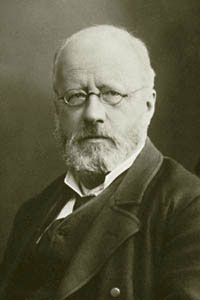
klebs

Birth of Edwin Klebs (1834-1913) in Königsberg, Germany (now in Russia). A physician, Klebs joined with Friedrich Löffler in research leading to the discovery of the diptheria bacillus, the “Klebs-Löffler bacillus”.

February 6, 1872

Birth of Robert Maillart in Bern, Switzerland. Maillart was a bridge engineer who introduced a number of innovations into Alpine bridge building. His new uses of reinforced concrete was his greatest contribution to the science.

February 6, 1875
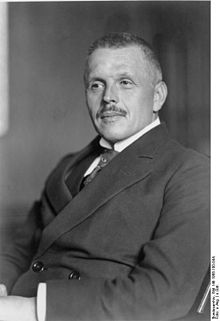
Otto_Karl_Gessler

Birth of Otto Gessler (1875-1955) in Ludwigsburg, Germany. After World War I Gessler was a founding member of the Deutsche Demokratische Partei, served as minister of reconstruction from 1919-1920, and became minister of war in 1920. In 1944 he was suspected of participating in the assassination conspiracy against Hitler and spent the last months of the war in a concentration camp. After the war he became the head of the German Red Cross.

February 6, 1894

Death of Theodor Billroth in Abbazia, Austria-Hungary (now Croatia), the founder of modern abdominal surgery.

February 6, 1912

eva-braun

Birth of Eva Braun (1912-1945) in Munich, Germany. Braun was the companion, and at the end, the wife of Adolf Hitler. She met Hitler originally on business, in that she worked in the studio of Hitler’s photographer. Braun and Hitler were married on April 29, 1945 and committed suicide the next day.

February 6, 1958

Erich Honecker becomes a member of the Politburo in East Germany (DDR).


Back to Today in German History Calendar

You might also like:

  • The Investiture Controversy
    The Investiture Controversy
  • German Colonial Ambitions
    German Colonial Ambitions
  • What Germans Believe Today: Faith, Values, and Identity
    What Germans Believe Today: Faith, Values, and Identity
  • The Golden Bull of 1356
    The Golden Bull of 1356
  • St. Martin’s Day in Germany: The Luminous Tradition of Martinstag
    St. Martin’s Day in Germany: The Luminous Tradition of…
  • The Holy Roman Empire
    The Holy Roman Empire
  • The Holy Roman Empire: An Epoch of European History
    The Holy Roman Empire: An Epoch of European History
  • Frederick the Great of Prussia
    Frederick the Great of Prussia

Recent Posts

German wedding Tracht represents the most meaningful ways modern couples honor their cultural heritage.

German Wedding Tracht: History and Cultural Meaning

The History of Traditional German Clothing

The History of Traditional German Clothing

Krampus is the shadow to Saint Nicholas's light.

Krampus in Germany: Origins, Folklore, and Traditions

German Advent traditions, their history and customs.

Deep Guide to German Advent Traditions

How Lent Shaped German Culture

Lent in Germany: Traditions, History, and Rituals

Discover Spritzgebäck history, authentic ingredients, and step-by-step recipe

Spritzgebäck – A Traditional German Christmas Cookie

German Santa Claus - Weihnachtsmann

The German Santa Claus – Weihnachtsmann

Christkind tradition in Germany

Christkind in Germany

Copyright © 2025 · German Culture

Go to mobile version