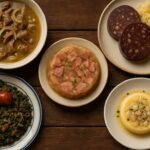
German Cuisine: A Guide to Dishes, Regions and Food Traditions
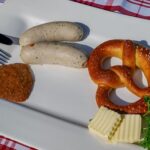
Ask a German what’s for dinner, and the answer often depends on the postcode. In Bavaria it might be a pair of white sausages with a pretzel. On the North Sea coast, a bread roll stuffed with herring. In Swabia, cheese noodles. In Bremen in January, a plate of kale and smoked sausage that people walk several kilometers to earn.
That’s the first thing to know about German cuisine: it isn’t one cuisine. It’s a patchwork of regional food cultures held together by a few shared habits, such as bread at nearly every meal, potatoes in a hundred forms, and a deep respect for the seasons. This page is your map. Use it to find recipes, understand the traditions behind them, and discover what to eat, where, and when.
How Germans Eat Through the Day
Mealtimes in Germany follow a rhythm that surprises many visitors. Breakfast (Frühstück) is typically bread or rolls with cheese, cold cuts, or jam. Lunch (Mittagessen) has traditionally been the main hot meal, and in many workplaces you’ll hear colleagues greet each other with “Mahlzeit!” around midday, a word that has its own page in our Mahlzeit! German food guide. Around three or four o’clock comes the afternoon ritual of coffee and cake, explained in our guide to Kaffee und Kuchen. And dinner is often Abendbrot, literally “evening bread,” a light meal of bread, cold cuts, and cheese. For the full story of why bread matters so much, read German bread culture.
For a general overview of the national kitchen, see our German food article.
The Staples: Potatoes, Sausage, and Cabbage
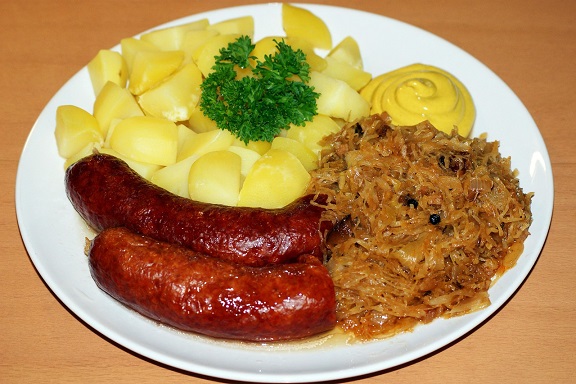
Three ingredients carry a surprising share of German cooking.
The classic plate that ties several of these together is schnitzel, served with a lemon wedge and potato salad.
Eating by Region
The easiest way to understand German food is to travel through it.
The north. Herring, kale, and maritime flavors dominate. Our guide to Northern German dishes covers the coast, and the recipe for Königsberger Klopse shows the creamy, caper-spiked side of northern cooking. In winter, the north has its own tradition, the walk-and-feast ritual explained in our article on the Kohlfahrt and Grünkohl.
Bavaria. The south is the land of Weisswurst, the creamy cheese spread Obatzda, and the pretzel, all at their best in a beer garden.
Hesse. The Frankfurt region is known for apple wine. Our complete guide to Apfelwein explains how to order it.
Saxony. Dresden is the home of the protected Christstollen, and the story behind it is in our Dresden Stollen guide.
One more thing worth knowing: the same pastry or bread roll can have a different name in every region. If you’ve ever been confused by a Berliner, a Pfannkuchen, and a Krapfen, our guide to German food words by region will help.
Street Food and Snacks
Germany’s quick food is shaped by migration, and some of its most famous dishes have surprisingly short histories. Our German street food guide explains where the Döner and the Currywurst came from, how to order them, and what else to try, from Fischbrötchen to Reibekuchen. For late-night snacks and corner-shop culture, see our article on Späti, Kiosk, and Büdchen.
Wine comes mostly from the Rhine and Mosel valleys, and our guide to German wine is a good starting point. In winter, the drink of choice is Glühwein, served at the Christmas markets.
Food Through the Year
German food follows the calendar more closely than most cuisines. A rough guide:
Summer. Fruit tarts, strawberry cakes, and the cherry dessert.
Easter. Lamb, eggs, and sweet breads. See our Easter recipes.
Vegetarian and Plant-Based Eating
Vegetarian and vegan options are easy to find in German cities, where supermarkets and restaurants increasingly carry plant-based versions of sausages and schnitzel. Many traditional dishes can also be meat-free or adapted, such as Käsespätzle, potato pancakes, and many salads, though it’s worth checking whether a dish is cooked with broth or bacon. Our German salad recipes are a good place to start.
German cuisine rewards curiosity. Every dish has a region, a season, and usually an argument about the right way to make it. Pick a thread that interests you, whether it’s a sausage, a cake, or a winter tradition, and follow it. And when you’re ready to eat, do as the Germans do and say Mahlzeit! or Guten Appetit!