German Culture

All about Germany

  • Home
  • Learn German
    • German Language Basics
    • German Grammar & Vocabulary
    • German Learning Tips
    • German Idioms & Expressions
    • German Quizzes & Exercises
  • Articles
    • Famous Germans
    • German Holidays
    • German Cuisine
    • How To In Germany
    • Daily Life in Germany
    • German Facts
    • German Traditions
  • Facts About Germany
  • German History
    • Early History of Germany
    • Middle Ages in German History
    • German Reformation Period
    • 19th Century and German Unification
  • German Recipes
    • German Baking Recipes
    • German Bread Recipes
    • German Christmas Recipes
    • Desserts
    • German Easter Recipes
    • Halloween Recipes
    • Main Dishes
    • German Salad Recipes
    • German Salads
    • Sauerkraut Recipes
  • Travel to Germany
  • Contact

April 18 in German History

April 18, 1679

Death of Christian Hofmann von Hofmannswaldau in Breslau, Silesia (now Poland). Hofmannswaldau was one of the leading poets of the Baroque period in German literature.

April 18, 1819

Birth of Franz von Suppe in Spalato, Austrian Empire (now in Croatia). Suppe was a conductor and composer of comic operas in Vienna. Among his operas are Leichte kavallerie (1866), Fatinitza (1876) and Boccaccio (1879).

April 18, 1863

Birth of Leopold Graf von Berchtold in Vienna, Austria. Berchtold was the foreign minister of Austria-Hungary who presented an ultimatum to Serbia in 1914 after the assassination of Franz Ferdinand with such terms that Serbian rejection was assured. (He sought a preventive war with Serbia.) The subsequent conflict between Austria-Hungary and Serbia ignited World War I.

April 18, 1873
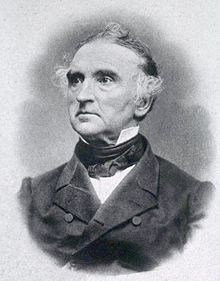
Justus_von_Liebig

Death of the chemist Justus von Liebig (1803-1873) in Darmstadt, Germany. Von Liebig studied with Karl Wilhelm Gottlob Kastner at the universities of Bonn and Erlangen. Von Liebig became a teacher at the University of Giessen, where he established the first laboratory to teach the methods of chemical research. That laboratory became the model for chemical education worldwide. In 1852 von Liebig took a position at the University of Munich. His greatest contributions to chemistry were in the areas of organic chemistry and agricultural chemistry. He founded and published in the journal Annalen der Pharmacie which later changed its name to Annalen der Chemie.

April 18, 1951

Signing of the Treaty of Paris establishing the European Coal and Steel Community.

April 18, 1955
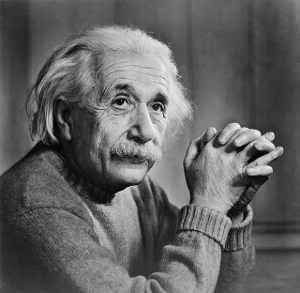
Albert-Einstein

Albert Einstein dies in Princeton, New Jersey (born in Ulm, Germany). As a child, Einstein lived in Munich, Milan and Zürich. He taught for a time at the polytechnic in Zürich. In 1914, having established a reputation, he accepted a position at the Prussian Academy of Sciences in Berlin. A life-long pacifist he opposed World War I and when Adolf Hitler came to power in 1933, at age 54, he rejected his German citizenship and immigrated to the United States. In America he accepted a research position at the Institute for Advanced Study in Princeton, New Jersey. Although he was a pacifist, he was so horrified by the Nazis that he urged armament for the other European nations to resist Germany. When he became aware of the work Hahn, Strassmann and Meitner were doing with nuclear fission, he urged President Roosevelt to immediate action in atomic research.

Back to Today in German History Calendar
You might also like:

  • Congress of Vienna and the Birth of the German Confederation
    The Congress of Vienna and the German Confederation
  • Germany in the 19th Century: Revolution, Reform, and Unification
    19th Century and German Unification
  • Frederick the Great of Prussia: Warrior and Reformer
    Frederick the Great of Prussia
  • The Franco-Prussian War - The Conflict That United Germany
    The Franco-Prussian War (1870–71)
  • Bismarck and Realpolitik: The Iron Chancellor Who United Germany
    Otto von Bismarck and Realpolitik
  • The Austro-Prussian War (1866) - The Conflict That Reshaped Germany
    The Austro-Prussian War (1866)
  • German Science and Culture in 18th Century
    German Science and Culture in 18th Century
  • The Peace of Westphalia: Ending the Thirty Years’ War
    The Peace of Westphalia (1648)

Recent Posts

Rules for Tourists in Germany

What Not to Do in Germany: Mistakes Tourists Make

Are German stereotypes true?

German Stereotypes: What’s True and What’s Not

German work culture has many strength

German Work Culture: What Makes It So Different?

Why is German culture so efficient

Why Is German Culture So Efficient? The Secrets Behind It

Modern Germany is one of the most diverse countries in Europe.

What Do Germans Think of Foreigners? The Truth Explained

Foundation of German Culture

German Values and Beliefs: What Shapes Daily Life

German friendliness just looks different.

Are Germans Friendly or Rude? Breaking the Stereotype

Why Germans value rules so highly

Why Do Germans Love Rules? Ordnung Explained

Copyright © 2026 · German Culture

Go to mobile version