German Culture

All about Germany

  • Home
  • Learn German
    • German Language Basics
    • German Grammar & Vocabulary
    • German Learning Tips
    • German Idioms & Expressions
    • German Quizzes & Exercises
  • Articles
    • Famous Germans
    • German Holidays
    • German Cuisine
    • How To In Germany
    • Daily Life in Germany
    • German Facts
    • German Traditions
  • Facts About Germany
  • German History
    • Early History of Germany
    • Middle Ages in German History
    • German Reformation Period
    • 19th Century and German Unification
  • German Recipes
    • German Baking Recipes
    • German Bread Recipes
    • German Christmas Recipes
    • Desserts
    • German Easter Recipes
    • Halloween Recipes
    • Main Dishes
    • German Salad Recipes
    • German Salads
    • Sauerkraut Recipes
  • Travel to Germany
  • Contact

February 18 in German History

February 18, 1803

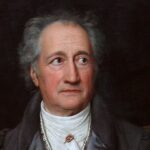
Gleim

Death of Johann Ludwig Gleim (1719-1803) in Halberstadt, Germany. Gleim was a German poet.He wrote a large number of imitations of Anacreon, Horace and the minnesingers, a didactic poem entitled Halladat oder das rote Buch (1774), and collections of fables and romances. Of higher merit are his Preussische Kriegslieder von einem Grenadier (1758).

February 18, 1807

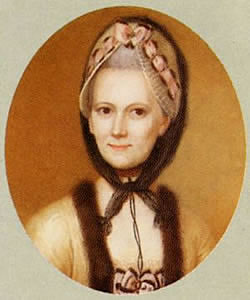
Sophie von La Roche

Death of Sophie von La Roche (1730-1807) (born Gutermann) in Offenbach, Germany. La Roche’s novel Geschichte des Fräuleins von Sternheim (1771) was the first German novel written by a woman. La Roche was the cousin of Christoph Martin Wieland and the grandmother of Bettina von Arnim and Clemens Brentano.

February 18, 1827

Birth of Heinrich Karl Brugsch in Berlin, Germany. Brugsch was a noted Egyptologist who was one of the pioneers in demotic, an Egyptian script. He was director of the School of Egyptology in Cairo and a professor at the University of Göttingen.

February 18, 1838

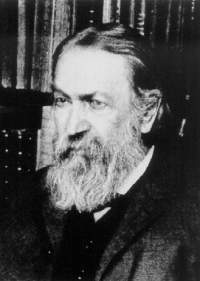
Ernst-mach

Birth of Ernst Mach (1838-1916) in Brno, now Czech Republic. He is the developer of the “Mach number” – the ratio of the speed of an object as related to the speed of sound, and “Mach’s principle” redefining the concept of inertia. His work led to and was cited by Einstein as leading to his theory of relativity. Mach died on the day after his birthday in 1916 in Haar, Germany.

February 18, 1850

Birth of George Henschel in Breslau, Germany (now in Poland). The musician, George Henschel studied in Leipzig and Berlin. He immigrated to England in 1877 where he became a leading orchestra conductor. He was the first conductor of the Boston Symphony Orchestra (1881-1884).

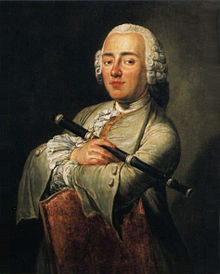
February 18, 1957

koch

Birth of Marita Koch in Wismar, Germany, a former German sprint track and field athlete. Competing for East German teams, Koch set 16 individual and team world records in outdoor sprints and 14 world records in indoor competition. She retired in 1987.
Back to Today in German History Calendar

You might also like:

  • evolution of the German language
    The Evolution of the German Language: From Old High…
  • German Easter Music
    German Easter Songs and Poems: The Music and Poetry…
  • Portrait of King Ludwig II of Bavaria in regal attire, symbolizing his royal status and romantic personality.
    The Real Story Behind Bavaria’s Mad King Ludwig II
  • Rote-Bete-Salat Recipe – Authentic German Beetroot Salad
    Rote-Bete-Salat – Traditional German Beetroot Salad Recipe
  • German Science and Culture in 18th Century
    German Science and Culture in 18th Century
  • Frederick the Great of Prussia: Warrior and Reformer
    Frederick the Great of Prussia
  • Lost German Kingdoms
    Lost German Kingdoms: Forgotten States and Their…
  • The Holy Roman Empire in the Late Middle Ages
    The Holy Roman Empire in the Late Middle Ages

Recent Posts

Are German stereotypes true?

German Stereotypes: What’s True and What’s Not

German work culture has many strength

German Work Culture: What Makes It So Different?

Why is German culture so efficient

Why Is German Culture So Efficient? The Secrets Behind It

Modern Germany is one of the most diverse countries in Europe.

What Do Germans Think of Foreigners? The Truth Explained

Foundation of German Culture

German Values and Beliefs: What Shapes Daily Life

German friendliness just looks different.

Are Germans Friendly or Rude? Breaking the Stereotype

Why Germans value rules so highly

Why Do Germans Love Rules? Ordnung Explained

Examples of German Directness

Why Are Germans So Direct? Understanding Blunt Communication

Copyright © 2026 · German Culture

Go to mobile version