German Culture

All about Germany

  • Home
  • Learn German
    • German Language Basics
    • German Grammar & Vocabulary
    • German Learning Tips
    • German Idioms & Expressions
    • German Quizzes & Exercises
  • Articles
    • Famous Germans
    • German Holidays
    • German Cuisine
    • How To In Germany
    • Daily Life in Germany
    • German Facts
    • German Traditions
  • Facts About Germany
  • German History
    • Early History of Germany
    • Middle Ages in German History
    • German Reformation Period
    • 19th Century and German Unification
  • German Recipes
    • German Baking Recipes
    • German Bread Recipes
    • German Christmas Recipes
    • Desserts
    • German Easter Recipes
    • Halloween Recipes
    • Main Dishes
    • German Salad Recipes
    • German Salads
    • Sauerkraut Recipes
  • Travel to Germany
  • Contact

February 21 in German History

February 21, 1866

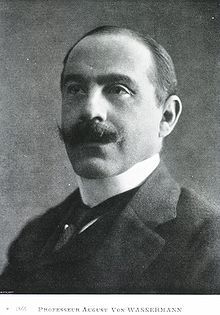
August_Wassermann

Birth of August von Wassermann (1866-1925) in Bamberg, Germany. Wassermann was the bacteriologist who discovered the blood-serum test for syphilis, the Wassermann test. He worked at the Robert Koch Institute of Infectious Diseases in Berlin.

February 21, 1867

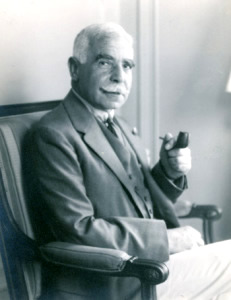
otto-kahn

Birth of Otto Hermann Kahn (1867-1934) in Mannheim, Germany. A banker, Kahn was stationed at the London branch of the Deutsche Bank. In 1893 he moved to the United States and became a partner in the firm of Kuhn, Loeb and Co. He became a key figure in railroad financial reorganization. When the Metropolitan Opera encountered financial difficulties, he became involved and was a heavy donor. It was he who brought Arturo Toscanini to the company.

February 21, 1916

The German Fifth Army attacks the area of Verdun. In spite of repeated attacks during the spring and summer, the French hold and by December 18 the lines are back to roughly the configuration before the assault. (World War I)

February 21, 1919

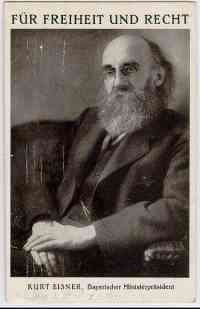
Kurt-Eisner

Death of Kurt Eisner (1867-1919) in Munich, Germany. Eisner was a journalist and member of the SPD. In 1918 he organized and led a revolt which overthrew the Bavarian monarchy and established the Bavarian Republic. Eisner became the first prime minister of the Bavarian Republic. He was assassinated in 1919 by a right-wing student.
Back to Today in German History Calendar

You might also like:

  • Famous German Scientists Who Changed the World (Beyond Einstein!)
    Famous German Scientists Who Changed the World (Beyond…
  • The 1848 Revolutions in the German States
    The 1848 Revolutions in the German States
  • The Unification of Germany: How Bismarck Built a Nation from Blood and Iron
    The Unification of Germany: How Bismarck Built a Nation from…
  • The Austro-Prussian War (1866)
    The Austro-Prussian War (1866)
  • Otto von Bismarck: The Iron Chancellor Who Forged a Nation
    Otto von Bismarck: The Iron Chancellor Who Forged a Nation
  • The Franco-Prussian War (1870–71)
    The Franco-Prussian War (1870–71)
  • German Quizzes & Exercises - Test and Improve Your Skills
    German Quizzes & Exercises - Test and Improve Your…
  • Otto von Bismarck and Realpolitik
    Otto von Bismarck and Realpolitik

Recent Posts

The History of Traditional German Clothing

The History of Traditional German Clothing

Krampus is the shadow to Saint Nicholas's light.

Krampus in Germany: Origins, Folklore, and Traditions

German Advent traditions, their history and customs.

Deep Guide to German Advent Traditions

How Lent Shaped German Culture

Lent in Germany: Traditions, History, and Rituals

Discover Spritzgebäck history, authentic ingredients, and step-by-step recipe

Spritzgebäck – A Traditional German Christmas Cookie

German Santa Claus - Weihnachtsmann

The German Santa Claus – Weihnachtsmann

Christkind tradition in Germany

Christkind in Germany

Kinderpunsch - The German Non-Alcoholic Holiday Punch

The Cozy Comfort of Kinderpunsch

Copyright © 2025 · German Culture

Go to mobile version