German Culture

All about Germany

  • Home
  • Learn German
    • German Language Basics
    • German Grammar & Vocabulary
    • German Learning Tips
    • German Idioms & Expressions
    • German Quizzes & Exercises
  • Articles
    • Famous Germans
    • German Holidays
    • German Cuisine
    • How To In Germany
    • Daily Life in Germany
    • German Facts
    • German Traditions
  • Facts About Germany
  • German History
    • Early History of Germany
    • Middle Ages in German History
    • German Reformation Period
    • 19th Century and German Unification
  • German Recipes
    • German Baking Recipes
    • German Bread Recipes
    • German Christmas Recipes
    • Desserts
    • German Easter Recipes
    • Halloween Recipes
    • Main Dishes
    • German Salad Recipes
    • German Salads
    • Sauerkraut Recipes
  • Travel to Germany
  • Contact

June 10 in German History

June 10, 1051

Death of St. Bardo in Paderborn, Germany. Bardo was a Benedictine monk in Fulda. He later became the abbot at the monasteries in Kaiserswerth and Hersfeld. In 1031 he became the Archbishop of Mainz. He was known for his piety and gentle nature. It was he who constructed the present Cathedral of Mainz. He died on a visit to Paderborn on June 10th, 1051. He was entombed in the cathedral in Mainz. His grave became a pilgrimage site and many miracles were attributed to him.

June 10, 1190

Death of Friedrich I (Friedrich Barbarossa).

June 10, 1493

Birth of Anton Fugger in Augsburg, Germany.


June 10, 1832
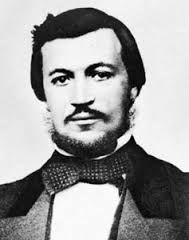
Birth of Nikolaus Otto (1832-1891) in Holzhausen, Germany. Otto was the German inventor of the first internal-combustion engine to efficiently burn fuel directly in a piston chamber. Though the concept of four strokes, with the vital compression of the mixture before ignition, had been invented and patented in 1861 by Alphonse Beau de Rochas, Otto was the first to make it practical.

June 10, 1844
hagenbeck

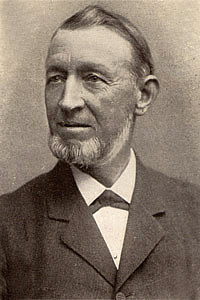
Birth of Carl Hagenbeck (1844-1913) in Hamburg, Germany. He was a German merchant of wild animals who supplied many European zoos, as well as P.T. Barnum. He created the modern zoo with animal enclosures without bars that were closer to their natural habitat. The transformation of the zoo architecture initiated by him is known as the Hagenbeck revolution. Hagenbeck founded Germany’s most successful privately owned zoo, the Tierpark Hagenbeck, which moved to its present location in Hamburg’s Stellingen quarter in 1907. He was a pioneer in displaying humans next to animals in as human zoos.

June 10, 1864

Archduke Maximilian of Austria becomes emperor of Mexico. His reign lasts until 1867 when he is assassinated by the left. He had been installed by France to rule their new colonial territory. (The French had already abandoned the “colony” when Maximilian was assassinated.)

June 10, 1865
Tristan-Egusquiza-L

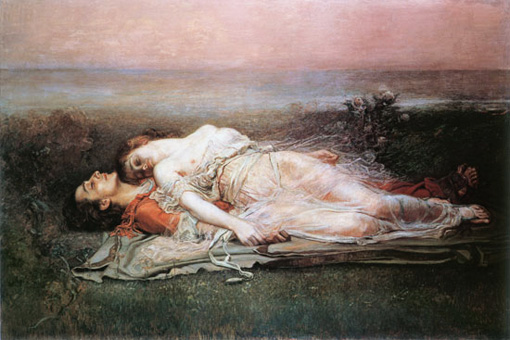
Richard Wagner’s Tristan und Isolde was first performed in Munich, Germany.

June 10, 1904

Birth of Frederick Loewe in Vienna. He moved to the USA in 1924 and joined efforts with Alan Lerner. Among his works are My Fair Lady, Brigadoon, Gigi and Camelot.

June 10, 1982

Death of the filmmaker Rainer Werner Fassbinder in Munich.

Back to Today in German History Calendar

You might also like:

  • German Pilgrimages and the Jakobsweg
    German Pilgrimages and the Jakobsweg
  • Frederick I (Barbarossa)
    Frederick Barbarossa
  • When to Visit German Wine Country
    When to Visit German Wine Country: Seasons,…
  • The Middle Ages in German History – Castles, Culture & Empire
    The Middle Ages in German History
  • The Holy Roman Empire
    The Holy Roman Empire
  • Henry the Lion and the Medieval Germany
    Henry the Lion: Power and Politics in Medieval Germany
  • German Medieval Universities
    German Medieval Universities
  • The Golden Bull of 1356: Germany’s Medieval Constitution
    The Golden Bull of 1356

Recent Posts

Are German stereotypes true?

German Stereotypes: What’s True and What’s Not

German work culture has many strength

German Work Culture: What Makes It So Different?

Why is German culture so efficient

Why Is German Culture So Efficient? The Secrets Behind It

Modern Germany is one of the most diverse countries in Europe.

What Do Germans Think of Foreigners? The Truth Explained

Foundation of German Culture

German Values and Beliefs: What Shapes Daily Life

German friendliness just looks different.

Are Germans Friendly or Rude? Breaking the Stereotype

Why Germans value rules so highly

Why Do Germans Love Rules? Ordnung Explained

Examples of German Directness

Why Are Germans So Direct? Understanding Blunt Communication

Copyright © 2026 · German Culture

Go to mobile version