Birth of Jocob Israel Emden in Altona, Germany. A Talmudic scholar whose disagreements with Rabbi Jonathan Eybesch split European Jewry.
June 4, 1875
Death of Eduard Mörike in Stuttgart, Germany. Mörike was one of the greatest German lyric poets. He also wrote novels and novellas. His best known novella is Mozart auf der Reise nach Prag.
June 4, 1877
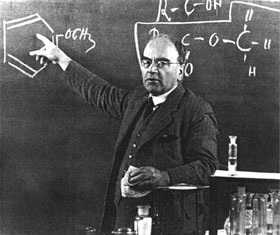
Birth of Heinrich Otto Wieland (1877-1957) in Pforzheim, Germany. He was a chemist who won the Nobel Prize in 1927 for research on bile acids.
June 4, 1889
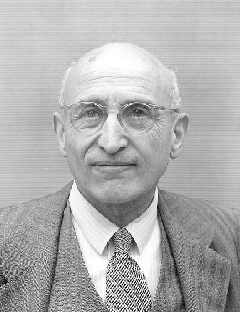
Birth of the seismologist Beno Gutenberg (1889-1960) in Darmstadt, Germany. He was a colleague and mentor of Charles Francis Richter at the California Institute of Technology and Richter’s collaborator in developing the Richter magnitude scale for measuring an earthquake’s magnitude.
June 4, 1916
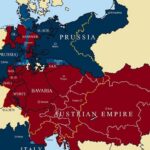
The Austrian spring offensive against Italy in WWI brings assistance from Russia in the form of an attack on Austria by the army of Russian general, Brusilov. The battles continued through September. Russian losses of 1,000,000 soldiers flame the resentments which will led to the revolution of 1917. Equal losses on the Austrian side will have direct effects on the collapse of the Habsburg Empire.
June 4, 1920
Hungary signs a peace treaty separate from those signed by Austria and Germany. The Austria-Hungarian Empire had disintegrated with the end of the war. The Treaty of Trianon reduced Hungary’s size to about 1/3. The Hungarian army was limited to 35,000 troops.
Death of Wilhelm II in Doorn, Netherlands (born in Potsdam, Germany). Wilhelm was the King of Prussia and the Emperor of Germany from 1888 to the end of World War I. He was the grandson of queen Victoria of England. In 1890 he removed 75 year old Otto von Bismarck from the office of chancellor. Among many factors which led to declining relations with Great Britain was the build up of the German navy under his secretary of the navy, Alfred von Tirpitz. Wilhelm’s ultimate undoing was precipitated by World War I. He supported Austria-Hungary in the initial conflicts which led to the war. In 1918, the war lost, he was forced to abdicate and seek asylum in the Netherlands.
June 4, 1945
Death of Georg Kaiser in Ascona, Switzerland (born in Magdeburg, Germany). Kaiser was a dramatist who began his artistic career in the period of Expressionism. Noted plays by him are Die Bürger von Calais (1914), Von Morgens bis Mitternachts (1916), Gas and Oktobertag (1928). He was banned by the Nazis because of his pacifism. At that time he fled to Switzerland and continued writing. He wrote over 60 plays.
June 4, 1970
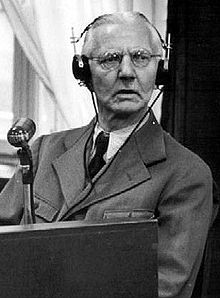
Death of Hjalmar Schlacht in Munich, Germany. A banker, Schlacht, was a key figure in German financial matters from the beginning of the century through World War I and the Weimar Republic into the National Socialist period. Schlacht had been the director of the Dresdner Bank from 1908. In 1916 he was named the director of the German National Bank. In 1923 he was currency commissioner in the finance ministry. In that position he headed a rigorous program to stop the inflation and stabilize the mark. Also in 1923 he was appointed head of the Reichsbank. From 1934 to 1937 he was the minister of economics.