German Culture

All about Germany

  • Home
  • Learn German
    • German Language Basics
    • German Grammar & Vocabulary
    • German Learning Tips
    • German Idioms & Expressions
    • German Quizzes & Exercises
  • Articles
    • Famous Germans
    • German Holidays
    • German Cuisine
    • How To In Germany
    • Daily Life in Germany
    • German Facts
    • German Traditions
  • Facts About Germany
  • German History
    • Early History of Germany
    • Middle Ages in German History
    • German Reformation Period
    • 19th Century and German Unification
  • German Recipes
    • German Baking Recipes
    • German Bread Recipes
    • German Christmas Recipes
    • Desserts
    • German Easter Recipes
    • Halloween Recipes
    • Main Dishes
    • German Salad Recipes
    • German Salads
    • Sauerkraut Recipes
  • Travel to Germany
  • Contact

September 3 in German History

September 3, 1757

Carl_August_of_WeimarBirth of Karl August, Archduke of Saxe-Weimar-Eisenach. He made an intellectual center of Weimar through his invitation and patronage of Goethe, Herder, Schelling, Hegel and Schiller.

September 3, 1846

Birth of Alfred Brandt in Hamburg, Germany. Brandt was a lead engineer in the building of the Simplon Tunnel. It is the longest tunnel in Switzerland and for many years was the longest in the world

September 3, 1860

Death of Martin Rathke in Königsberg, Prussia (now in Russia). Rathke was the anatomist who first identified the gill structures in the embryos of mammals. He concluded that they were the vestiges of gills at earlier stages of evolution. He also identified the embryonic structure from which the anterior lobe of the pituitary gland develops.

September 3, 1869

Birth of Fritz Pregl in Laibach, Austria. He won the Nobel Prize for Chemistry in 1923 for developing the system of microanalysis of organic compounds.

September 3, 1875

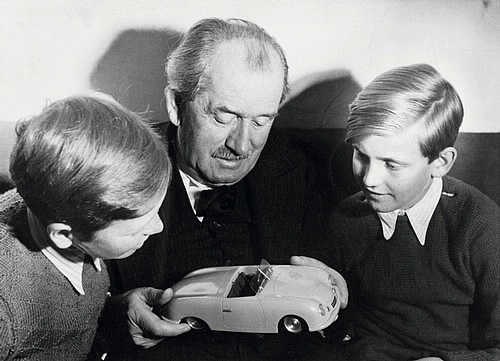
Ferdinand-Porsche

Birth of Ferdinand Porsche in Maffersdorf, Austria. Porsche worked for the Daimler Automobile Company in Stuttgart from 1923 to 1931 and then left to form his own company. He specialized in sports cars and racing cars. At the request of Hitler he designed a peoples’ car, Volkswagen, in 1934. The Porsche sports car was introduced in 1950.
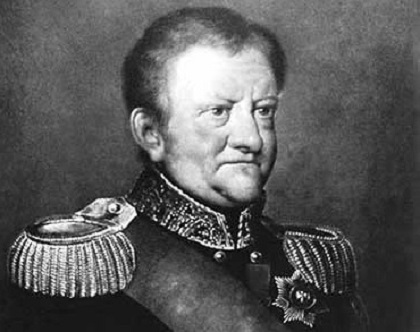
September 3, 1939

England and France declare war on Germany.

September 3, 1943

Allied forces invade Italy.

September 3, 1971

Signing of the Four Power Agreement on Berlin.

You might also like:

  • Georg Wilhelm Friedrich Hegel
    Georg Wilhelm Friedrich Hegel: Philosophy and Influence
  • Congress of Vienna and the Birth of the German Confederation
    The Congress of Vienna and the German Confederation
  • Kaiser Karl der Große
    German History: From the Holy Roman Empire to the Modern Era
  • Luther’s Language Legacy: How One Translation Shaped German
    Luther’s Language Legacy: How One Translation Shaped German
  • German Science and Culture in 18th Century
    German Science and Culture in 18th Century
  • German Literature
    The Rich Tapestry of German Literature: From the…
  • Test Your Knowledge of Oktoberfest Traditions
    Oktoberfest Origins: From Royal Wedding to Global Icon
  • The Franco-Prussian War - The Conflict That United Germany
    The Franco-Prussian War (1870–71)

Recent Posts

Are German stereotypes true?

German Stereotypes: What’s True and What’s Not

German work culture has many strength

German Work Culture: What Makes It So Different?

Why is German culture so efficient

Why Is German Culture So Efficient? The Secrets Behind It

Modern Germany is one of the most diverse countries in Europe.

What Do Germans Think of Foreigners? The Truth Explained

Foundation of German Culture

German Values and Beliefs: What Shapes Daily Life

German friendliness just looks different.

Are Germans Friendly or Rude? Breaking the Stereotype

Why Germans value rules so highly

Why Do Germans Love Rules? Ordnung Explained

Examples of German Directness

Why Are Germans So Direct? Understanding Blunt Communication

Copyright © 2026 · German Culture

Go to mobile version