German Culture

All about Germany

  • Home
  • Learn German
    • German Language Basics
    • German Grammar & Vocabulary
    • German Learning Tips
    • German Idioms & Expressions
    • German Quizzes & Exercises
  • Articles
    • Famous Germans
    • German Holidays
    • German Cuisine
    • How To In Germany
    • Daily Life in Germany
    • German Facts
    • German Traditions
  • Facts About Germany
  • German History
    • Early History of Germany
    • Middle Ages in German History
    • German Reformation Period
    • 19th Century and German Unification
  • German Recipes
    • German Baking Recipes
    • German Bread Recipes
    • German Christmas Recipes
    • Desserts
    • German Easter Recipes
    • Halloween Recipes
    • Main Dishes
    • German Salad Recipes
    • German Salads
    • Sauerkraut Recipes
  • Travel to Germany
  • Contact

Degenerate Art – “Entartete Kunst”

Degenerate-Art2

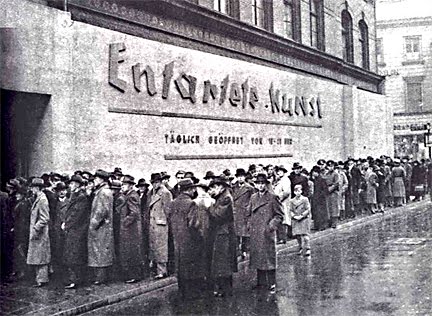
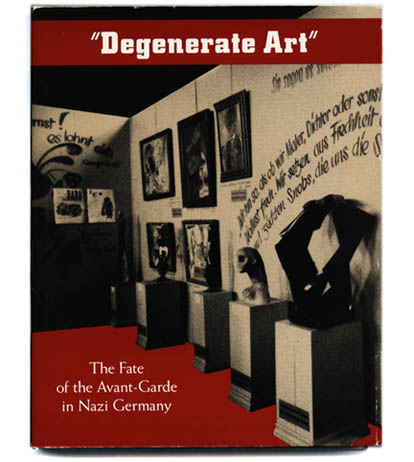
In 1937 in Munich the Nazis held an art exhibition of what they called Entartete Kunst, or Degenerate Art. The purpose of the exhibition was to let the Germans know that some forms and pieces of art were not accepted by the “highest race”, and this art is “degenerate”, also called as Jewish or Bolshevistic. During the “Entartete Kunst” campaign over 20 thousand works by more than 200 artists of that time were confiscated.

The grounds for choosing the “unworthy” pieces of art were quite simple and cruel: anything that was out of tune with Hitler’s way of thinking, was considered to be “degenerate”. Hitler believed the art must serve the purpose of exaltation of the Aryan way of life. In this case, with this great aim, art is perfect and eternal. To Hitler’s mind.

The authors of the banned works, mostly expressionists, were proclaimed mad. It would be curious to learn that most of those artists are known as the most prominent among their contemporaries, and are still admired. They are: Paul Klee, Wassily Kandinsky, Edvard Munch, many others, and the most degenerate artist of the world, Pablo Picasso.

degenerate_art_hc

This exhibition gave start to a series of art events in Germany of that time, and occurred to be a very powerful way of leading the overall opinion. The Nazis were good psychologists: instead of simply destroying the art works they thought inappropriate, they chose to do it publicly, in order not to create martyrs, so dearly loved by the people. In the way they did it, it worked, and the art of 1930s was labeled by the contemporaries as “incomprehensible and elitist”.


Related articles:
Nazi and Bauhaus School

You might also like:

  • Oktoberfest History Explained
    Oktoberfest Explained: History, Culture and Myths
  • How to Play Watten: Bavaria and Tyrol’s Bluffing Card Game
    How to Play Watten: Bluffing Card Game
  • Hallo, Guten Tag, or Hi? When to Use Formal and Informal German Greetings
    Hallo, Guten Tag, or Hi? When to Use Formal and…
  • martin-heidegger-1
    Martin Heidegger - Being, Time, and the Question of…
  • German compound words
    Why German Compound Words Are So Long
  • Coffee filter invention
    Coffee Filter Invention: Melitta Bentz’s Revolution
  • Mutzenmandeln are more than just a pastry - they’re a piece of German culinary heritage
    Mutzenmandeln - Traditional German Recipe
  • Rothenburg ob der Tauber
    Discover Timeless Wonders: The Imperial City Museum…

Recent Posts

German Breakfast Culture: What Germans Really Eat

Strange German Laws

Strange German Laws

Germany's bread culture

Why Do Germans Eat So Much Bread? Bread Culture Explained

Oktoberfest History Explained

Oktoberfest Explained: History, Culture and Myths

German Wedding Traditions: From Polterabend to Log Sawing

German Greeting Customs: Handshakes

German birthday culture

German Birthday Traditions: Surprising Customs

Personal Space in Germany: Cultural Boundaries Explained

Copyright © 2026 · German Culture

Go to mobile version