German Culture

All about Germany

  • Home
  • Learn German
    • German Language Basics
    • German Grammar & Vocabulary
    • German Learning Tips
    • German Idioms & Expressions
    • German Quizzes & Exercises
  • Articles
    • Famous Germans
    • German Holidays
    • German Cuisine
    • How To In Germany
    • Daily Life in Germany
    • German Facts
    • German Traditions
  • Facts About Germany
  • German History
    • Early History of Germany
    • Middle Ages in German History
    • German Reformation Period
    • 19th Century and German Unification
  • German Recipes
    • German Baking Recipes
    • German Bread Recipes
    • German Christmas Recipes
    • Desserts
    • German Easter Recipes
    • Halloween Recipes
    • Main Dishes
    • German Salad Recipes
    • German Salads
    • Sauerkraut Recipes
  • Travel to Germany
  • Contact

The Festive Charm of Stutenkerl

Stutenkerl is a symbol of German winter traditions

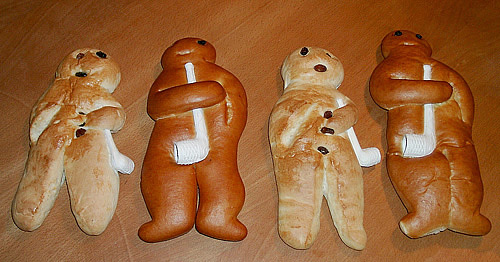
Few baked treats capture the warmth and wonder of a German holiday season like the Stutenkerl. These sweet, soft bread men – with raisin eyes, a cheerful shape, and often a little clay pipe tucked under one arm – fill bakeries across western and northern Germany every November and December. Soft like brioche, slightly sweet, and delicately scented with butter and milk, Stutenkerl is a childhood favorite for countless German families.

Though they may look playful and simple, Stutenkerle truly embody the spirit of German festive baking. They’re a symbol of warmth in the darkest weeks of the year, and making them at home has become a beloved tradition – especially for children who enjoy shaping the dough into little figures.

In this guide, you’ll learn the story behind Stutenkerl, explore the authentic ingredients that make this holiday bread so special, and follow clear step-by-step instructions to bake your own soft, golden Stutenkerle at home.

The Origins of Stutenkerl

The Stutenkerl, also known regionally as Weckmann, Kiepenkerl, Grättimaa, or Stutenmann, has deep roots in German and Alsatian tradition. While names vary, the concept remains the same: a human-shaped figure made from enriched yeast dough, baked to celebrate St. Martin’s Day (Martinstag, November 11) and St. Nicholas Day (Nikolaustag, December 6).

Originally, these bread figures were part of festive winter rituals symbolizing harvest, generosity, and the beginning of the Advent season. The figure’s iconic clay pipe – which still appears on some versions in North Rhine-Westphalia – dates back to the 18th century, added when smoking pipes briefly became fashionable symbols of status and good cheer.

Stutenkerl also played an important role in school traditions. Children received them as gifts during lantern processions for St. Martin or as treats from St. Nicholas. They were often paired with hot cocoa, mulled cider, or even a glass of fresh milk – a simple pleasure marking the start of holiday excitement.

Today, Stutenkerl remains a cherished tradition throughout Germany. Bakeries begin selling them in early November, and families across the country bake them at home as part of their holiday rituals. Whether shaped by skilled bakers or clumsily crafted by small hands, every Stutenkerl brings the same feeling of coziness and celebration.

Ingredients for Authentic Stutenkerl

Stutenkerl dough is similar to a rich sweet bread – soft, buttery, and lightly sweetened. The key to success is high-quality ingredients and proper rising time to ensure a fluffy texture.

Ingredients (makes 4-6 Stutenkerle):

  • 500 g (4 cups) all-purpose flour

  • 80 g (⅓ cup) granulated sugar

  • 1 packet (7 g) active dry yeast or 25 g fresh yeast

  • 250 ml (1 cup) lukewarm milk

  • 80 g (⅓ cup) unsalted butter, softened

  • 1 large egg

  • 1 tsp vanilla extract or 1 packet vanilla sugar

  • 1 pinch salt

  • Raisins or chocolate chips (for eyes and decoration)

  • Almonds or nuts (optional, for embellishment)

  • 1 egg yolk plus 1 tbsp milk (for brushing)

Optional Flavorings:

  • ½ tsp ground cardamom (for warmth)

  • 1 tsp lemon zest (for brightness)

  • ½ tsp ground cinnamon (for a wintery aroma)

Special Tools:

  • Baking sheet

  • Parchment paper

  • Bench scraper or sharp knife (for shaping arms and legs)

  • Pastry brush

Ingredient Notes:

  • Milk should be warm, not hot – around body temperature – to activate the yeast properly.

  • Butter must be soft to incorporate easily into the dough.

  • Vanilla sugar is very traditional in German sweet breads; if unavailable, vanilla extract works perfectly.

How to Make Stutenkerl (Step-by-Step Recipe)

Step 1: Prepare the Dough

In a large bowl, combine the flour, sugar, and salt. Make a small well in the center. Add yeast to the well and pour in the lukewarm milk. Let it stand for 5-10 minutes until the yeast becomes foamy.

Add the softened butter, egg, and vanilla. Mix everything together until a sticky dough forms.

Knead the dough by hand or with a stand mixer for 8-10 minutes until smooth, soft, and elastic. The dough should pull away from the sides of the bowl and feel supple.

Step 2: First Rise

Place the dough in a lightly greased bowl, cover it with a towel or plastic wrap, and allow it to rise in a warm, draft-free place for 1-1.5 hours, or until doubled in size.

A slow, gentle rise helps the Stutenkerle develop their signature light texture.

Step 3: Shape the Stutenkerle

Line a baking sheet with parchment paper. Turn the risen dough onto a lightly floured surface and divide it into 4-6 equal pieces.

To shape each Stutenkerl:

  • Roll one piece into a smooth oval.

  • Using a knife or bench scraper, cut a small slit at the bottom for legs and shape them gently.

  • Cut two small slits at the sides to form arms.

  • Adjust the body shape so it resembles a person.

  • Add raisin eyes, buttons, or a mouth by pressing raisins or chocolate chips firmly into the dough.

If you want a traditional Weckmann style, place a small wooden or clay pipe under one arm.

Step 4: Second Rise

Place the shaped figures on the baking sheet with some space between them. Cover lightly and let them rise again for 20-30 minutes. This ensures a fluffy crumb and prevents cracking during baking.

Meanwhile, preheat the oven to 180°C (350°F).

Step 5: Brush and Bake

Mix the egg yolk with 1 tablespoon of milk to create a shiny glaze. Brush each Stutenkerl gently for a golden finish.

Bake for 15-18 minutes, depending on size, until lightly golden and fragrant. Avoid overbaking to keep them soft.

Cool on a wire rack before serving – though they’re undeniably delicious while still warm.

How to Serve Stutenkerl

Stutenkerle are best enjoyed fresh on the day they’re baked. Their lightly sweet flavor and soft, pillowy texture make them ideal for breakfast, dessert, or an afternoon treat.

Traditional Serving Ideas:

  • With hot chocolate: A childhood favorite.

  • With coffee or tea: Perfect for adults enjoying a cozy moment.

  • With butter and jam: For a more indulgent breakfast.

  • With spiced winter drinks: Such as mulled wine (Glühwein) or spiced cider.

Many families gift Stutenkerle during St. Martin’s Day lantern parades or place them in children’s shoes on St. Nicholas Eve (December 5th) along with fruit, nuts, or chocolate.

If you’re planning a festive spread, consider pairing Stutenkerl with other holiday treats like homemade Eierlikör, German Christmas cookies, or Stollen.

Variations and Regional Twists

Different German regions have their own beloved versions of the Stutenkerl:

  • Weckmann (Rhineland and Westphalia): Almost always features a clay or wooden pipe.

  • Grättimaa (Switzerland): Often sweeter with more elaborate facial details.

  • Stutenmann (Northern Germany): Sometimes enriched with more butter for extra softness.

  • Dresdner Rübezahl: A larger, more decorative version resembling a folklore figure.

Modern bakers also experiment with:

  • Chocolate dough or chocolate chip additions

  • Almond slivers for hair or clothing details

  • Light icing for decorative touches

  • Spelt or whole-wheat versions for a rustic twist

Despite the variations, the essence remains unchanged: a tender, comforting sweet bread shaped with care.

Common Mistakes to Avoid

  • Using milk that’s too hot: This kills yeast and prevents rising.

  • Not kneading long enough: Proper kneading ensures softness and elasticity.

  • Overbaking: Leads to a dry, crumbly texture.

  • Skipping the second rise: Essential for a smooth shape and even bake.

Stutenkerl is more than a sweet bread – it’s a symbol of German winter traditions, family joy, and the magic of childhood celebrations. Baking these charming bread figures at home connects you to centuries of festive customs, bringing warmth and delight to your kitchen.

Whether you’re preparing them for St. Martin’s Day, Nikolaustag, or simply to enjoy a comforting seasonal treat, Stutenkerle invite creativity, togetherness, and a sense of tradition that never loses its charm.

So gather your flour, butter, and raisins, shape your dough with care, and let the aroma of freshly baked Stutenkerl fill your home with the unmistakable spirit of the German holiday season.

Craving more German holiday bakes?
Explore our authentic recipes for Stollen, German Christmas Cookies, Three Kings’ Cake, and Eierlikör – the classics of Germany’s winter kitchen.


You might also like:

  • Rosinenbrot (Raisin Bread) Recipe
    Rosinenbrot (Raisin Bread) Recipe
  • Three Kings’ Cake Recipe
    Three Kings’ Cake Recipe
  • Osterbrot – Traditional German Easter Bread Recipe
    Osterbrot – Traditional German Easter Bread Recipe
  • Weißbrot (White Bread) Recipe
    Weißbrot (White Bread) Recipe
  • Osterzopf – Traditional German Easter Braided Bread Recipe
    Osterzopf – Traditional German Easter Braided Bread Recipe
  • German Christmas Markets Quiz
    German Christmas Markets Quiz
  • Hefezopf Recipe – Traditional German Sweet Braided Bread
    Hefezopf Recipe – Traditional German Sweet Braided Bread
  • Quarkbrot (Quark Cheese Bread) Recipe
    Quarkbrot (Quark Cheese Bread) Recipe

Recent Posts

Kinderpunsch - The German Non-Alcoholic Holiday Punch

The Cozy Comfort of Kinderpunsch

Traditional Three Kings’ Cake Recipe

Three Kings’ Cake Recipe

Henry the Lion and the Medieval Germany

Henry the Lion: Power and Politics in Medieval Germany

Frederick I (Barbarossa)

Frederick Barbarossa

Making Flammkuchen at home requires only a handful of ingredients

Flammkuchen – Traditional German Flatbread Recipe

Discover the story behind this traditional German egg liqueur cake

Eierlikörtorte – Traditional German Egg Liqueur Cake Recipe

explore the fascinating history behind this traditional German egg liqueur

Eierlikör – Traditional German Egg Liqueur Recipe

Mutzenmandeln are more than just a pastry - they’re a piece of German culinary heritage

Mutzenmandeln – Traditional German Recipe

Copyright © 2025 · German Culture

Go to mobile version