German Culture

All about Germany

  • Home
  • Learn German
    • German Language Basics
    • German Grammar & Vocabulary
    • German Learning Tips
    • German Idioms & Expressions
    • German Quizzes & Exercises
  • Articles
    • Famous Germans
    • German Holidays
    • German Cuisine
    • How To In Germany
    • Daily Life in Germany
    • German Facts
    • German Traditions
  • Facts About Germany
  • German History
    • Early History of Germany
    • Middle Ages in German History
    • German Reformation Period
    • 19th Century and German Unification
  • German Recipes
    • German Baking Recipes
    • German Bread Recipes
    • German Christmas Recipes
    • Desserts
    • German Easter Recipes
    • Halloween Recipes
    • Main Dishes
    • German Salad Recipes
    • German Salads
    • Sauerkraut Recipes
  • Travel to Germany
  • Contact

April 13 in German History

April 13, 1111

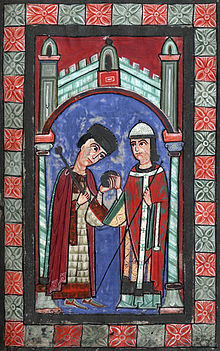
Heinrich V is crowned Emperor of the Holy Roman Empire by the Pope in Rome. He ruled starting from 1111 till 1125 and was the fourth and last ruler of the Salian dynasty. Henry’s reign coincided with the final phase of the great Investiture Controversy, which had pitted pope against emperor. By the settlement of the Concordat of Worms, he surrendered to the demands of the second generation of Gregorian reformers.

April 13, 1742
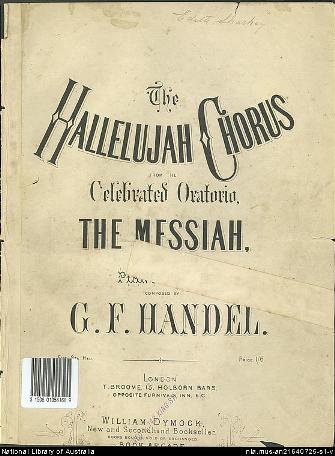
handel_messiah

Händel‘s Messiah is performed for the first time (in Dublin). Messiah (HWV 56) is an English-language oratorio composed in 1741 by George Frideric Handel, with a scriptural text compiled by Charles Jennens from the King James Bible, and from the Psalms included with the Book of Common Prayer. It was first performed in Dublin on April 13, 1742 and received its London premiere nearly a year later. After an initially modest public reception, the oratorio gained in popularity, eventually becoming one of the best-known and most frequently performed choral works in Western music.


April 13, 1881
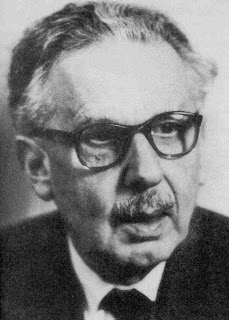
Binswanger

Birth of Ludwig Binswanger (1881-1966) in Kreuzlingen, Switzerland. Binswanger was a psychiatrist who brought the principles of existentialist phenomenology into psychotherapy. He based his diagnoses on self-image. Works by Kreuzlingen include Erinnerung an Sigmund Freud (1956) and Grundformen und Erkenntnis menschlichen Daseins (1962).

Back to Today in German History Calendar
You might also like:

  • Holy Roman Empire
    The Holy Roman Empire: An Epoch of European History
  • The Investiture Controversy: Church vs. Empire in Medieval Germany
    The Investiture Controversy
  • The Holy Roman Empire
    The Holy Roman Empire
  • Otto the Great and the Rise of the Ottonian Dynasty
    Otto the Great and the Rise of the Ottonian Dynasty
  • Charlemagne and the Carolingian Empire: Shaping Medieval Europe
    Charlemagne and the Carolingian Empire
  • The Rise of the Franks: From Tribes to Empire
    The Rise of the Franks
  • Henry the Lion and the Medieval Germany
    Henry the Lion: Power and Politics in Medieval Germany
  • Frederick I (Barbarossa)
    Frederick Barbarossa

Recent Posts

Are German stereotypes true?

German Stereotypes: What’s True and What’s Not

German work culture has many strength

German Work Culture: What Makes It So Different?

Why is German culture so efficient

Why Is German Culture So Efficient? The Secrets Behind It

Modern Germany is one of the most diverse countries in Europe.

What Do Germans Think of Foreigners? The Truth Explained

Foundation of German Culture

German Values and Beliefs: What Shapes Daily Life

German friendliness just looks different.

Are Germans Friendly or Rude? Breaking the Stereotype

Why Germans value rules so highly

Why Do Germans Love Rules? Ordnung Explained

Examples of German Directness

Why Are Germans So Direct? Understanding Blunt Communication

Copyright © 2026 · German Culture

Go to mobile version