German Culture

All about Germany

  • Home
  • Learn German
    • German Language Basics
    • German Grammar & Vocabulary
    • German Learning Tips
    • German Idioms & Expressions
    • German Quizzes & Exercises
  • Articles
    • Famous Germans
    • German Holidays
    • German Cuisine
    • How To In Germany
    • Daily Life in Germany
    • German Facts
    • German Traditions
  • Facts About Germany
  • German History
    • Early History of Germany
    • Middle Ages in German History
    • German Reformation Period
    • 19th Century and German Unification
  • German Recipes
    • German Baking Recipes
    • German Bread Recipes
    • German Christmas Recipes
    • Desserts
    • German Easter Recipes
    • Halloween Recipes
    • Main Dishes
    • German Salad Recipes
    • German Salads
    • Sauerkraut Recipes
  • Travel to Germany
  • Contact

December 2 in German History

December 2, 1817

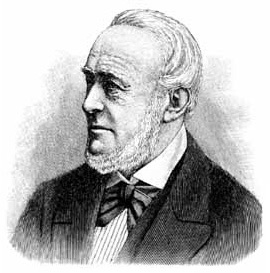
Heinrich_von_Sybel

Birth of Heinrich von Sybel in Düsseldorf, Germany. Sybel was a historian who had studied with Ranke in Berlin. His early books show the critical method of Ranke. He became deeply involved in politics, however, and came to view history as a means to educate for specific purposes. He came to be a firm believer in Prussia’s mission to unify and lead Germany. His views are clear in his later books.


December 2, 1833

Recklinghausen

Birth of Friedrich Daniel Recklinghausen in Gütersloh, Germany. Recklinghausen was a pathologist who diagnosed “Recklinghausen’s disease”, multiple neurofibromatosis and osteitis fibrosa cystica. He was a professor of pathology at the Universities of Königsberg, Würzburg and Strasbourg.

December 2, 1848

The aged and failing Ferdinand I, Emperor of the Austro-Hungarian Empire is replaced by 18 year old Franz Joseph I in the face of the attempted revolution. Events are largely controlled by Felix Fürst zu Schwarzenberg, the chancellor and prime minister.

December 2, 1881

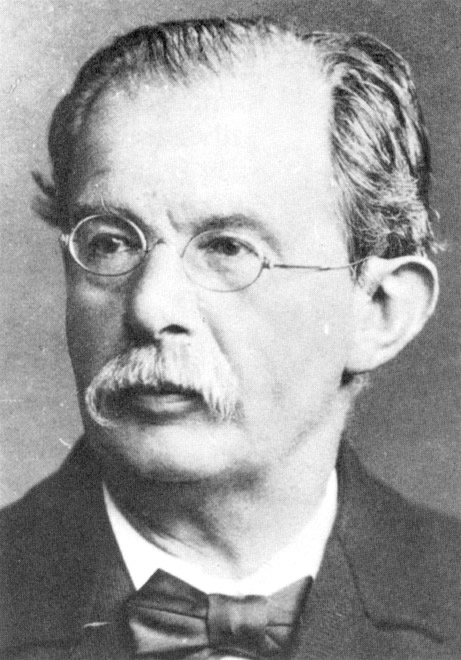
barkhausen2

Birth of Heinrich Georg Barkhausen (1881-1956) in Bremen, Germany. Barkhausen is known for the “Barkhausen effect” in physics, related to changes in magnetic properties of metal. Barkhausen was a professor at the Technical Academy in Dresden. In addition to magnetism he also did extensive research in acoustics, ultrahigh frequencies and shortwave radio transmission.

December 2, 1914

Austrian troops take Belgrade in WWI.

December 2, 1990

The first parliamentary elections take place after the reunification of Germany. The CDU-CSU-FDP coalition wins a 134 seat majority in the Bundestag. In the election the CDU/CSU gets 43.8% of the votes, the SPD 33.5%, the FDP 11%, the Greens, PDS and Bündnis90 all receive less than the required 5% for seating in the Bundestag. However with a special ruling for the East the PDS and Bündnis90 are allowed representatives in the Bundestag.

December 2, 1997

Pope John Paul II creates the archbishopric of Vaduz in Liechtenstein. Liechtenstein had been a part of the archbishopric of Chur since the 5th century. The first archbishop of Vaduz is Wolfgang Haas.
You might also like:

  • Georg Wilhelm Friedrich Hegel: Philosophy and Influence
    Georg Wilhelm Friedrich Hegel: Philosophy and Influence
  • Exploring the Depths of German Philosophy: A Journey Through Time and Thought
    Exploring the Depths of German Philosophy: A Journey Through…
  • Otto von Bismarck and Realpolitik
    Otto von Bismarck and Realpolitik
  • Martin Heidegger - Being, Time, and the Question of Existence
    Martin Heidegger - Being, Time, and the Question of…
  • Martin Luther and the 95 Theses
    Martin Luther and the 95 Theses
  • German Women in Relationships: What to Expect
    German Women in Relationships: What to Expect
  • Otto von Bismarck: The Iron Chancellor Who Forged a Nation
    Otto von Bismarck: The Iron Chancellor Who Forged a Nation
  • German History: From the Holy Roman Empire to the Modern Era
    German History: From the Holy Roman Empire to the Modern Era

Recent Posts

German wine culture means connecting to tradition

German Wine Culture

German potato soup (Kartoffelsuppe) represents the heart of traditional German home cooking.

German Potato Soup Recipe (Kartoffelsuppe)

Frederick the Great and the Potato

Frederick the Great and the Potato

Potatoes are one of the most beloved ingredients in German cuisine

Traditional German Potato Dishes

Traditional German potato dishes

Traditional German Potato Dishes You Should Know

Discover how potatoes in German culture shaped history

Potatoes in German Culture

The German Zeppelin represents far more than a transportation technology.

German Zeppelin: The Rise and Fall of Germany’s Giant Airships

Discover how the German Zeppelin worked

How the German Zeppelin Worked: Inside the Engineering of Airship Giants

Copyright © 2026 · German Culture

Go to mobile version