German Culture

All about Germany

  • Home
  • Learn German
    • German Language Basics
    • German Grammar & Vocabulary
    • German Learning Tips
    • German Idioms & Expressions
    • German Quizzes & Exercises
  • Articles
    • Famous Germans
    • German Holidays
    • German Cuisine
    • How To In Germany
    • Daily Life in Germany
    • German Facts
    • German Traditions
  • Facts About Germany
  • German History
    • Early History of Germany
    • Middle Ages in German History
    • German Reformation Period
    • 19th Century and German Unification
  • German Recipes
    • German Baking Recipes
    • German Bread Recipes
    • German Christmas Recipes
    • Desserts
    • German Easter Recipes
    • Halloween Recipes
    • Main Dishes
    • German Salad Recipes
    • German Salads
    • Sauerkraut Recipes
  • Travel to Germany
  • Contact

February 14 in German History

February 14, 1515

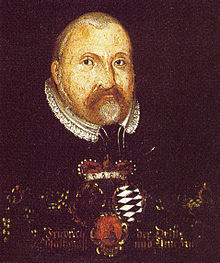
Friedrich_der_Fromme

Birth of Friedrich III (1515-1576) in Simmern, Germany. Friedrich was also called “Friedrich der Fromme”. He was the elector of the Palatine of the Rhine. He became a Protestant in 1546. He assisted the development of Protestantism in Germany, France and Holland.

February 14, 1722

Birth of Georg Christian Füchsel (1722-1773), a German physician and geologist, in Ilmenau, Germany. Füchsel originated the concept of stratigraphic formations in geology.

February 14, 1830

Birth of Richard Adelbert Lipsius in Gera, Germany. Lipsius was a Protestant theologian who identified the authorship of early Christian literature. He also worked with the history of the early papacy.

February 14, 1943

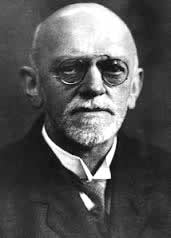
David Hilbert

Death of David Hilbert (1862-1943) in Göttingen, Germany. A mathematician, Hilbert completed his doctorate at the University of Königsberg. He later taught at the University of Königsberg and the University of Göttingen. Hilbert proved that all invariants can be expressed in terms of a finite number. He established a definitive set of axioms for Euclidean geometry. His work in integral equations led to the study of functional analysis. He also set the groundwork for “Hilbert space”.

February 14, 1990

The foreign ministers of the four Allied Powers of World War II and the foreign ministers of the two Germanys (the two plus four discussions) agree in Ottawa, Canada on questions of sovereignty for a united Germany.


Back to Today in German History Calendar

You might also like:

  • Exploring the Depths of German Philosophy: A Journey Through Time and Thought
    Exploring the Depths of German Philosophy: A Journey Through…
  • German Science and Culture in 18th Century
    German Science and Culture in 18th Century
  • Georg Wilhelm Friedrich Hegel: Philosophy and Influence
    Georg Wilhelm Friedrich Hegel: Philosophy and Influence
  • Martin Luther and the 95 Theses
    Martin Luther and the 95 Theses
  • The Holy Roman Empire
    The Holy Roman Empire
  • The Thirty Years’ War and Its Impact on Germany
    The Thirty Years’ War and Its Impact on Germany
  • The German Easter Bunny: The Origin of the Osterhase
    The German Easter Bunny: The Origin of the Osterhase
  • How German Philosophy Shaped the Modern World
    How German Philosophy Shaped the Modern World

Recent Posts

German potato soup (Kartoffelsuppe) represents the heart of traditional German home cooking.

German Potato Soup Recipe (Kartoffelsuppe)

Frederick the Great and the Potato

Frederick the Great and the Potato

Potatoes are one of the most beloved ingredients in German cuisine

Traditional German Potato Dishes

Traditional German potato dishes

Traditional German Potato Dishes You Should Know

Discover how potatoes in German culture shaped history

Potatoes in German Culture

The German Zeppelin represents far more than a transportation technology.

German Zeppelin: The Rise and Fall of Germany’s Giant Airships

Discover how the German Zeppelin worked

How the German Zeppelin Worked: Inside the Engineering of Airship Giants

Valentine’s Day in Germany: Love, History, and Traditions

Valentine’s Day in Germany: From American Import to Cultural Tradition

Copyright © 2026 · German Culture

Go to mobile version