German Culture

All about Germany

  • Home
  • Learn German
    • German Language Basics
    • German Grammar & Vocabulary
    • German Learning Tips
    • German Idioms & Expressions
    • German Quizzes & Exercises
  • Articles
    • Famous Germans
    • German Holidays
    • German Cuisine
    • How To In Germany
    • Daily Life in Germany
    • German Facts
    • German Traditions
  • Facts About Germany
  • German History
    • Early History of Germany
    • Middle Ages in German History
    • German Reformation Period
    • 19th Century and German Unification
  • German Recipes
    • German Baking Recipes
    • German Bread Recipes
    • German Christmas Recipes
    • Desserts
    • German Easter Recipes
    • Halloween Recipes
    • Main Dishes
    • German Salad Recipes
    • German Salads
    • Sauerkraut Recipes
  • Travel to Germany
  • Contact

January 21 in German History

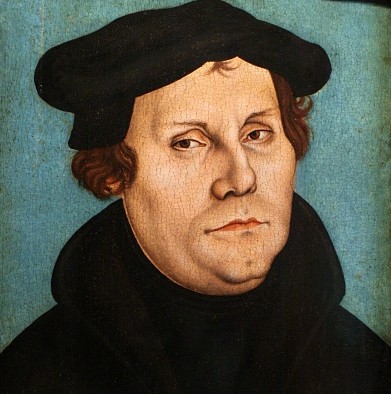
January 21, 1521

Martin-Luther

Martin Luther excommunicated by Roman Catholic Church.

January 21, 1794

Birth of Adolf Ludwig Follen (1794-1855) in Giessen, Germany. Follen was a romantic poet. Involved politically during his student years, he was expelled from the University of Giessen in 1815. In Heidelberg he became one of the founders of the fraternity, Teutonia. Banished from Germany for his political activities, he moved to Switzerland. His works include Harfen-Grüss aus Deutschland und der Schweiz (1823), Siegfrieds-Tod (1840) and Tristans Eltern (1857).

January 21, 1815

Death of Matthias Claudius in Hamburg, Germany. Claudius was a significant poet noted for his simplicity and religiosity.

January 21, 1831

Death of Achim von Arnim in Wiepersdorf, Germany. Von Arnim was one of the outstanding writers of the Romantic period of German literature. He studied at the University of Heidelberg. His best known work is a collection of folk poetry, Des Knaben Wunderhorn (1808).

January 21, 1867

Thoma

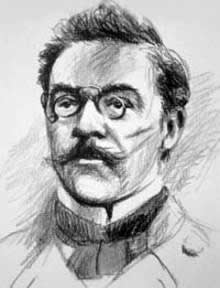
Ludwig Thoma (1867-1921) born in Oberammergau, Germany. Thoma wrote novellas, novels and plays. He is noted for his social criticism and humor. Among Thoma’s works are, Lausbubengeschichten (1905), Andreas Vöst (1905), Moral (1909) and Magdalena (1912).

January 21, 1912

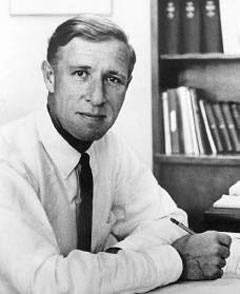
konrad-bloch

Birth of Konrad Emil Bloch (1912-2000) in Neisse, Germany. Bloch came to America in 1934. He taught at Columbia University, the University of Chicago and Harvard University. He won the 1964 Nobel Prize for Physiology or Medicine based on his work on the natural synthesis of cholesterol and fatty acids. He also developed a method for using radioisotopes (radioactive atoms) to trace the path of molecules in cells and living organisms, and later studied each of the 27 carbon atoms in the cholesterol molecule. Bloch’s research showed that all natural steroid-related substances in humans are derived from cholesterol, and established many of the steps involved in converting acetate into cholesterol.

January 21, 1990

The East German party, the SED, changes its name to the PDS. The SED (Socialist Unity Party of Germany) was the name of the communist party of East Germany until 1990. In preparation for unification, the party, wishing to continue as a political party in the unified state, but realizing the negative implications of its identity with East Germany, changed its name to the PDS (Party of Democratic Socialism). The PDS has had seats in parliament after each election since the unification.
Back to Today in German History Calendar

You might also like:

  • Kaiser Karl der Große
    German History: From the Holy Roman Empire to the Modern Era
  • Martin Luther and the 95 Theses
    Martin Luther and the 95 Theses
  • Unification of Germany: How Bismarck Built a Nation from Blood and Iron
    The Unification of Germany: How Bismarck Built a…
  • The Holy Roman Empire
    The Holy Roman Empire
  • Congress of Vienna and the Birth of the German Confederation
    The Congress of Vienna and the German Confederation
  • German Reformation and Early Modern Period
    German Reformation and Early Modern Period
  • The Peace of Westphalia: Ending the Thirty Years’ War
    The Peace of Westphalia (1648)
  • Otto von Bismarck: The Iron Chancellor
    Otto von Bismarck: The Iron Chancellor Who Forged a Nation

Recent Posts

Are German stereotypes true?

German Stereotypes: What’s True and What’s Not

German work culture has many strength

German Work Culture: What Makes It So Different?

Why is German culture so efficient

Why Is German Culture So Efficient? The Secrets Behind It

Modern Germany is one of the most diverse countries in Europe.

What Do Germans Think of Foreigners? The Truth Explained

Foundation of German Culture

German Values and Beliefs: What Shapes Daily Life

German friendliness just looks different.

Are Germans Friendly or Rude? Breaking the Stereotype

Why Germans value rules so highly

Why Do Germans Love Rules? Ordnung Explained

Examples of German Directness

Why Are Germans So Direct? Understanding Blunt Communication

Copyright © 2026 · German Culture

Go to mobile version