German Culture

All about Germany

  • Home
  • Learn German
    • German Language Basics
    • German Grammar & Vocabulary
    • German Learning Tips
    • German Idioms & Expressions
    • German Quizzes & Exercises
  • Articles
    • Famous Germans
    • German Holidays
    • German Cuisine
    • How To In Germany
    • Daily Life in Germany
    • German Facts
    • German Traditions
  • Facts About Germany
  • German History
    • Early History of Germany
    • Middle Ages in German History
    • German Reformation Period
    • 19th Century and German Unification
  • German Recipes
    • German Baking Recipes
    • German Bread Recipes
    • German Christmas Recipes
    • Desserts
    • German Easter Recipes
    • Halloween Recipes
    • Main Dishes
    • German Salad Recipes
    • German Salads
    • Sauerkraut Recipes
  • Travel to Germany
  • Contact

July 13 in German History

July 13, 1024

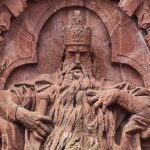
Death of St. Heinrich II in Göttingen. St. Heinrich II was born in 972 in Bad Abbach. He would become the Emperor of the Holy Roman Empire (often called the German Empire). He was the son of Heinrich, the Duke of Bavaria. After the death of his father, he became the Duke (Herzog) of Bavaria. In 1002 he became the King of Germany. After assisting the church in its struggles for unity in Italy, he was crowned “King of Italy” by Pope Benedict VIII. As was frequently the case, there were problems in Italy again later and the German King again crossed the Alps to restore order. On this occasion he was crowned emperor (February 14, 1014). During the 10 years of his reign as emperor, he worked continuously to consolidate the integrity of the empire and the church. Heinrich was entombed in the cathedral in Bamberg. The grave monument was created by Tilman Riemenschneider. (Heinrich had founded the Bishopric of Bamberg earlier.) Heinrich was canonized in 1146 by Pope Eugenius III. His feast day is July 13. Heinrich’s wife, Kunigunde, who was also canonized, lies next to him in the cathedral in Bamberg.

July 13, 1608
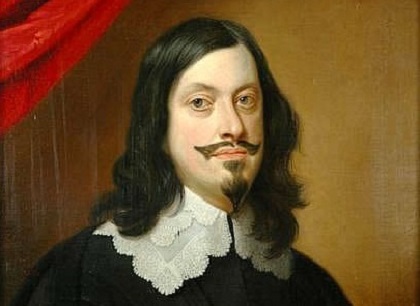
ferdinand_iiiBirth of the Habsburg Emperor Ferdinand III in Graz, Austria. He was the Emperor of the Holy Roman Empire during the 30 Years’ War. He agreed to the Peace of Westphalia which ended the war. He had 11 children from his 3 marriages.

You might also like:

  • The Holy Roman Empire
    The Holy Roman Empire
  • Otto the Great and the Rise of the Ottonian Dynasty
    Otto the Great and the Rise of the Ottonian Dynasty
  • The Holy Roman Empire: An Epoch of European History
    The Holy Roman Empire: An Epoch of European History
  • Charlemagne and the Carolingian Empire
    Charlemagne and the Carolingian Empire
  • The Rise of the Franks
    The Rise of the Franks
  • The Golden Bull of 1356
    The Golden Bull of 1356
  • Kaiser Wilhelm I: The First Emperor of a United Germany
    Kaiser Wilhelm I: The First Emperor of a United Germany
  • The Treaty of Verdun and the Division of Charlemagne’s Empire
    The Treaty of Verdun and the Division of Charlemagne’s…

Recent Posts

German Grammar & Vocabulary - Rules, Word Lists, and Usage

German Grammar & Vocabulary – Rules, Word Lists, and Usage

German Idioms and Expressions - Speak Naturally Like a Local

German Idioms & Expressions – Speak Naturally Like a Local

German Learning Tips - Strategies, Tools, and Motivation

German Learning Tips – Strategies, Tools, and Motivation

German Quizzes & Exercises – Test and Improve Your Skills

German Language Basics - Alphabet, Pronunciation, Key Rules

German Language Basics – Alphabet, Pronunciation, Key Rules

What to Expect in a German Kindergarten: A Parent’s Guide

What to Expect in a German Kindergarten: A Parent’s Guide

Explore what sets German family life

Family Life in Germany: Traditions, Structure, and Modern Reality

how German parents raise confident

German Forest Kindergarten & Parenting: How Freedom Builds Confidence

Copyright © 2025 · German Culture

Go to mobile version