German Culture

All about Germany

  • Home
  • Learn German
    • German Language Basics
    • German Grammar & Vocabulary
    • German Learning Tips
    • German Idioms & Expressions
    • German Quizzes & Exercises
  • Articles
    • Famous Germans
    • German Holidays
    • German Cuisine
    • How To In Germany
    • Daily Life in Germany
    • German Facts
    • German Traditions
  • Facts About Germany
  • German History
    • Early History of Germany
    • Middle Ages in German History
    • German Reformation Period
    • 19th Century and German Unification
  • German Recipes
    • German Baking Recipes
    • German Bread Recipes
    • German Christmas Recipes
    • Desserts
    • German Easter Recipes
    • Halloween Recipes
    • Main Dishes
    • German Salad Recipes
    • German Salads
    • Sauerkraut Recipes
  • Travel to Germany
  • Contact

July 22 in German History

July 22, 1784

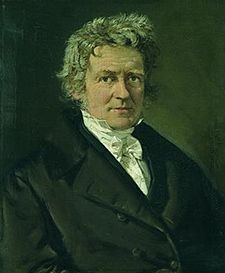
Birth of Friedrich Wilhelm Bessel (1784-1846) in Minden, Germany. An astronomer, Bessel measured the position of 50,000 stars and developed the first system of measuring the distance of stars. The asteroid 1552 Bessel was named in his honor.

July 22, 1809

Death of the poet, Detlev Liliencron in Alt-Rahlstedt (near Hamburg).

July 22, 1823

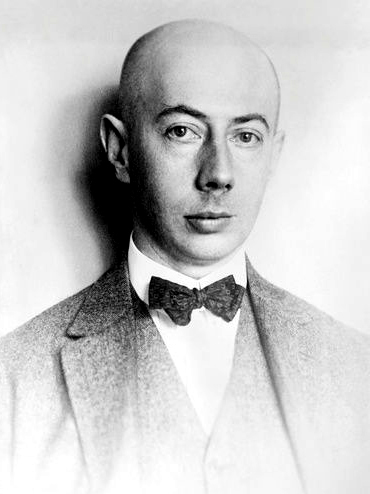
Ludwig-Bamberger

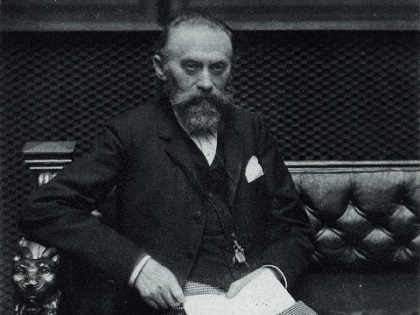
Birth of Ludwig Bamberger in Mainz, Germany. Bamberger was an economist with a specialization in currency problems. Working with Bismarck, he achieved the standardization of German coinage, the adoption of the gold standard and the founding of the Reichsbank.

July 22, 1887

Birth of Gustav Hertz (1887-1975) in Hamburg, Germany. Hertz was a nephew of Heinrich Hertz (after whom the unit of frequency is named). Gustav Hertz worked on ion energy exchange and gaseous ionization potentials. His studies of electron energy loss in collisions between electrons and atoms supported the quantum nature of Bohr’s model of the atomic structure. This work, done with James Franck, won him and Franck the 1925 Nobel Prize for Physics.

July 22, 1970

Death of Fritz Kortner (original name, Fritz Kohn) in Munich, Germany (born in Vienna, Austria). Kortner was a theater actor and director. Kortner established his reputation as a actor in Berlin on the stage and in films. He fled Germany when the Nazis came to power and spent the war years in the United States. He returned to Germany in 1949 and earned a reputation as an innovative theater director
You might also like:

  • Christmas Tree Cupcakes
    Christmas Tree Cupcakes
  • The Franco-Prussian War (1870–71)
    The Franco-Prussian War (1870–71)
  • The Austro-Prussian War (1866)
    The Austro-Prussian War (1866)
  • The Evolution of the German Language: A Cultural History
    The Evolution of the German Language: A Cultural History
  • Seasonal German Traditions You Should Experience At Least Once
    Seasonal German Traditions You Should Experience At Least…
  • Kaiser Wilhelm I: The First Emperor of a United Germany
    Kaiser Wilhelm I: The First Emperor of a United Germany
  • Social Welfare in Germany: Bismarck’s Lasting Legacy
    Social Welfare in Germany: Bismarck’s Lasting Legacy
  • Gottfried Wilhelm Leibniz: A Pioneering Polymath of the 17th Century
    Gottfried Wilhelm Leibniz: A Pioneering Polymath of the 17th…

Recent Posts

The History of Traditional German Clothing

The History of Traditional German Clothing

Krampus is the shadow to Saint Nicholas's light.

Krampus in Germany: Origins, Folklore, and Traditions

German Advent traditions, their history and customs.

Deep Guide to German Advent Traditions

How Lent Shaped German Culture

Lent in Germany: Traditions, History, and Rituals

Discover Spritzgebäck history, authentic ingredients, and step-by-step recipe

Spritzgebäck – A Traditional German Christmas Cookie

German Santa Claus - Weihnachtsmann

The German Santa Claus – Weihnachtsmann

Christkind tradition in Germany

Christkind in Germany

Kinderpunsch - The German Non-Alcoholic Holiday Punch

The Cozy Comfort of Kinderpunsch

Copyright © 2025 · German Culture

Go to mobile version