German Culture

All about Germany

  • Home
  • Learn German
    • German Language Basics
    • German Grammar & Vocabulary
    • German Learning Tips
    • German Idioms & Expressions
    • German Quizzes & Exercises
  • Articles
    • Famous Germans
    • German Holidays
    • German Cuisine
    • How To In Germany
    • Daily Life in Germany
    • German Facts
    • German Traditions
  • Facts About Germany
  • German History
    • Early History of Germany
    • Middle Ages in German History
    • German Reformation Period
    • 19th Century and German Unification
  • German Recipes
    • German Baking Recipes
    • German Bread Recipes
    • German Christmas Recipes
    • Desserts
    • German Easter Recipes
    • Halloween Recipes
    • Main Dishes
    • German Salad Recipes
    • German Salads
    • Sauerkraut Recipes
  • Travel to Germany
  • Contact

June 13 in German History

June 13, 1539

Birth of Jost Amman in Zürich, Switzerland. Amman was a leading painter and Printmaker of his age.

June 13, 1809

Birth of Heinrich Hoffmann in Frankfurt am Main. Hoffmann is most widely known as the author of Struwwelpeter, a classic children’s book.

June 13, 1885

Birth of Elisabeth Schumann in Merseburg, Germany. She was a soprano known for her interpretation of the music of Mozart and Richard Strauß.

June 13, 1886

Death of Ludwig II of Bavaria in the Starnberger See.

June 13, 1908

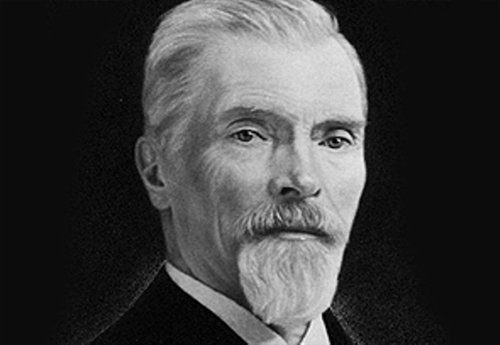
Henry_Lomb

Death of Henry Lomb in Pittsford, New York (born in Hesse-Kassel, Germany). Lomb immigrated to the United States in 1849 and found work as a cabinet maker. By 1854 he had befriended another immigrant from Germany, Johann Bausch, who operated an optical shop in Rochester, New York. In 1854 he loaned his friend, Bausch, $60 to use in growing his optical business against the promise that if Bausch’s optical business should grow to the point of needing a partner, it would be Lomb. In 1855 Lomb joined Bausch as a partner. Together they developed the business into Bausch and Lomb, one of the leading optical companies in the United States.

June 13, 1911

mueller

Birth of Erwin Wilhelm Müller (1911-1977) in Berlin. He was a German physicist who invented the Field Emission Electron Microscope, the Field Ion Microscope, and the Atom-Probe Field Ion Microscope. He was the first person to experimentally observe atoms.

June 13, 1944

The Germans launch the first of the V1 rockets in World War II.

June 13, 1965

Death of Martin Buber in Jerusalem (born in Vienna, Austria). Buber was a Jewish religious philosopher most noted for his interest in the relationships between beings, his book Ich und Du appeared in 1923. He earned his doctorate at the University of Vienna. Buber was influenced by Nicholas of Cusa, Jakob Böhme and Friedrich Nietzsche. From 1916 to 1924 he edited the intellectual monthly, Der Jude. In 1934 he became the head of Jewish adult education in Nazi Germany. When the Nazis forbade him to teach, he immigrated to Palestine.

June 13, 2004

European Parliament elections. In Germany SPD 21.5%, CDU CSU 44.5%, Greens 11.9%, PDS 6.1%, FDP 6.1%.

Back to Today in German History Calendar

You might also like:

  • Portrait of King Ludwig II of Bavaria in regal attire, symbolizing his royal status and romantic personality.
    The Real Story Behind Bavaria’s Mad King Ludwig II
  • Frederick I (Barbarossa)
    Frederick Barbarossa
  • German Classical Music
    The German Influence on Classical Music: Composers…
  • When to Visit German Wine Country
    When to Visit German Wine Country: Seasons,…
  • German Genealogical Terms
    Common Genealogical Terms for German Ancestry Research
  • German_Chocolate_Cake
    German Chocolate Cake: A Surprising History Beyond Borders
  • Spargelsalat Recipe – Classic German Asparagus Salad
    Spargelsalat – Traditional German Asparagus Salad Recipe
  • German names
    How German Names Work: Surnames, Meanings & Traditions

Recent Posts

Are German stereotypes true?

German Stereotypes: What’s True and What’s Not

German work culture has many strength

German Work Culture: What Makes It So Different?

Why is German culture so efficient

Why Is German Culture So Efficient? The Secrets Behind It

Modern Germany is one of the most diverse countries in Europe.

What Do Germans Think of Foreigners? The Truth Explained

Foundation of German Culture

German Values and Beliefs: What Shapes Daily Life

German friendliness just looks different.

Are Germans Friendly or Rude? Breaking the Stereotype

Why Germans value rules so highly

Why Do Germans Love Rules? Ordnung Explained

Examples of German Directness

Why Are Germans So Direct? Understanding Blunt Communication

Copyright © 2026 · German Culture

Go to mobile version