German Culture

All about Germany

  • Home
  • Learn German
    • German Language Basics
    • German Grammar & Vocabulary
    • German Learning Tips
    • German Idioms & Expressions
    • German Quizzes & Exercises
  • Articles
    • Famous Germans
    • German Holidays
    • German Cuisine
    • How To In Germany
    • Daily Life in Germany
    • German Facts
    • German Traditions
  • Facts About Germany
  • German History
    • Early History of Germany
    • Middle Ages in German History
    • German Reformation Period
    • 19th Century and German Unification
  • German Recipes
    • German Baking Recipes
    • German Bread Recipes
    • German Christmas Recipes
    • Desserts
    • German Easter Recipes
    • Halloween Recipes
    • Main Dishes
    • German Salad Recipes
    • German Salads
    • Sauerkraut Recipes
  • Travel to Germany
  • Contact

March 11 in German History

March 11, 1780

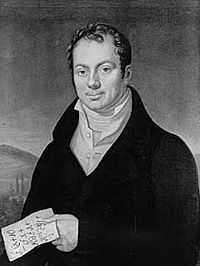
August_Leopold_Crelle

Birth of August Leopold Crelle (1780-1855) in Eichwerder, Germany. Crelle was a mathematician who founded the prestigious journal, Crelle’s Journal (original name: Journal für die reine und angewandte Mathematik) in 1826.

March 11, 1850

A constitution is adopted in Prussia.


March 11, 1894

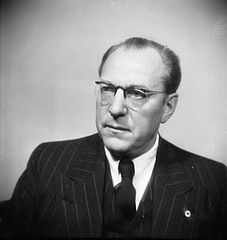
Otto_Grotewohl

Birth of Otto Grotewohl (1894-1964) in Braunschweig, Germany. He was a German politician and prime minister of the German Democratic Republic from 1949 until his death in 1964. According to Roth (2010), “He was a figurehead who led various economic commissions, lobbied the Soviets for increased aid, and conducted foreign policy tours in the attempt to break the country’s diplomatic isolation.”

He was awarded the Order of Karl Marx, the GDR’s highest decoration, in 1952 and also the Soviet Union’s Order of Lenin, the GDR’s Order of Merit for the Fatherland in gold and he was a freeman of the city of Dresden. After his death, the Wilhelmstrasse in East Berlin was renamed Otto-Grotewohl-Straße in his honor; the street retained this name until 1991, following German reunification. On 15 April 1986, the present-day Mohrenstraße U-Bahn station in eastern Berlin, then known as the Thälmannplatz station, was also renamed Otto-Grotewohl-Straße. The Third German School in Chapayesky Lane, Moscow, was named Otto Grotewohl School.

March 11, 1931

Death of F. W. Murnau (born Friedrich Wilhelm Plumpe) in Hollywood (born in Bielefeld, Germany). Murnau was one of the giants of early German film-making. Films by Murnau include Nosferatu (1922), Tartüff (1925), Faust (1926) and Tabu (1931).

March 11, 2002

Marion Gräfin Dönhof dies. She had worked with the newspaper, Die Zeit, (Hamburg) since 1946.
Back to Today in German History Calendar

You might also like:

  • Otto von Bismarck and Realpolitik
    Otto von Bismarck and Realpolitik
  • The 1848 Revolutions in the German States
    The 1848 Revolutions in the German States
  • Frederick Barbarossa
    Frederick Barbarossa
  • The Franco-Prussian War (1870–71)
    The Franco-Prussian War (1870–71)
  • German History: From the Holy Roman Empire to the Modern Era
    German History: From the Holy Roman Empire to the Modern Era
  • German Easter Markets: The Best Easter Celebrations in Germany
    German Easter Markets: The Best Easter Celebrations in…
  • 19th Century and German Unification
    19th Century and German Unification
  • The History of the Autobahn: From Bismarck to the Bundesautobahn
    The History of the Autobahn: From Bismarck to the…

Recent Posts

German Advent traditions, their history and customs.

Deep Guide to German Advent Traditions

How Lent Shaped German Culture

Lent in Germany: Traditions, History, and Rituals

Discover Spritzgebäck history, authentic ingredients, and step-by-step recipe

Spritzgebäck – A Traditional German Christmas Cookie

German Santa Claus - Weihnachtsmann

The German Santa Claus – Weihnachtsmann

Christkind tradition in Germany

Christkind in Germany

Kinderpunsch - The German Non-Alcoholic Holiday Punch

The Cozy Comfort of Kinderpunsch

Traditional Three Kings’ Cake Recipe

Three Kings’ Cake Recipe

Henry the Lion and the Medieval Germany

Henry the Lion: Power and Politics in Medieval Germany

Copyright © 2025 · German Culture

Go to mobile version