German Culture

All about Germany

  • Home
  • Learn German
    • German Language Basics
    • German Grammar & Vocabulary
    • German Learning Tips
    • German Idioms & Expressions
    • German Quizzes & Exercises
  • Articles
    • Famous Germans
    • German Holidays
    • German Cuisine
    • How To In Germany
    • Daily Life in Germany
    • German Facts
    • German Traditions
  • Facts About Germany
  • German History
    • Early History of Germany
    • Middle Ages in German History
    • German Reformation Period
    • 19th Century and German Unification
  • German Recipes
    • German Baking Recipes
    • German Bread Recipes
    • German Christmas Recipes
    • Desserts
    • German Easter Recipes
    • Halloween Recipes
    • Main Dishes
    • German Salad Recipes
    • German Salads
    • Sauerkraut Recipes
  • Travel to Germany
  • Contact

May 25 in German History

May 25, 1521

The Emperor of the Holy Roman Empire, Charles V officially declares Martin Luther a criminal and heretic for refusing to recant at the Diet of Worms.

May 25, 1848

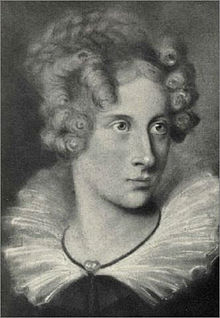
Annnete von Droste-Hülshoff dies in Meersburg, Germany. She is one of the leading writers of the 19th Century. She is most noted for her poetry, Gedichte (1838) and Das geistliche Jahr (1851). Her novella, Die Judenbuche (1842) is also highly respected.


May 25, 1901

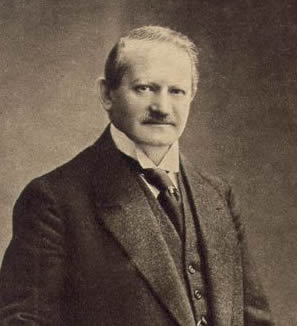
Carl Wagner

Birth of Carl Wagner (1901-1977) in Leipzig, Germany. Wagner was a physical chemist and metallurgist who advanced knowledge in the chemistry of solid state materials.

May 25, 1913

Suicide of Alfred Redl in Vienna, Austria. Redel was head of Austrian army intelligence from 1907 to 1912. Unfortunately for Austria, he had been a spy for the Russian tsar since 1902. During that period Austria had few military secrets from Russia. Redel’s activities were discovered in 1913. He took his own life shortly thereafter.

May 25, 1921

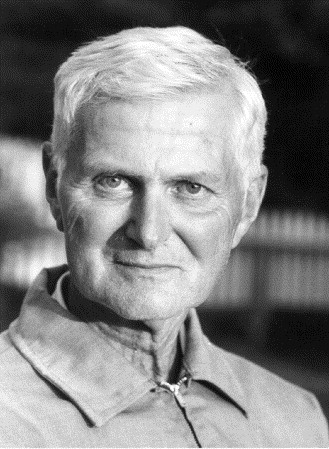
Birth of Jack Steinberger. Steinberger immigrated to the United States in 1934 and studied physics at the University of Chicago. He was a professor of physics at Columbia University. In 1988 he got the Nobel Prize in physics for his work on neutrinos.

May 25, 1923

Hans Goldschmidt

Death of Hans Goldschmidt (1861-1923) in Baden-Baden, Germany. Goldschmidt was a chemist who invented the Goldschmidt reduction process (the alumino-thermic process) which is used in welding along with other applications. He is principally noted as the inventor of thermite and co-inventor of sodium amalgam. The thermite (or aluminothermic) reaction is one in which aluminum metal is oxidized by an oxide of another metal, usually iron oxide, producing great heat in the process.
Back to Today in German History Calendar

You might also like:

  • The Holy Roman Empire
    The Holy Roman Empire
  • Martin Luther and the 95 Theses
    Martin Luther and the 95 Theses
  • Holy Roman Empire
    The Holy Roman Empire: An Epoch of European History
  • Napoleon’s Impact on Germany: The Confederation of the Rhine
    The Napoleonic Wars and the Confederation of the Rhine
  • The Golden Bull of 1356: Germany’s Medieval Constitution
    The Golden Bull of 1356
  • Rise of Brandenburg-Prussia - Military Powerhouse
    Rise of Brandenburg-Prussia
  • German Reformation and Early Modern Period
    German Reformation and Early Modern Period
  • Congress of Vienna and the Birth of the German Confederation
    The Congress of Vienna and the German Confederation

Recent Posts

10 Things That Shock Foreigners About German Culture

German Culture vs American Culture: What’s Different?

Germany vs UK Culture: Key Differences

German Beer Culture: More Than Just Oktoberfest

German Breakfast Culture: What Germans Really Eat

Strange German Laws

Strange German Laws

Germany's bread culture

Why Do Germans Eat So Much Bread? Bread Culture Explained

Oktoberfest History Explained

Oktoberfest Explained: History, Culture and Myths

Copyright © 2026 · German Culture

Go to mobile version