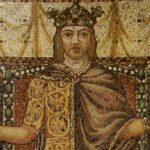
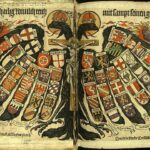
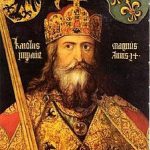
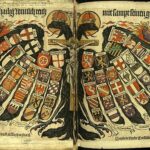
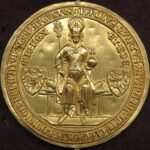
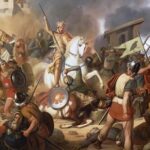
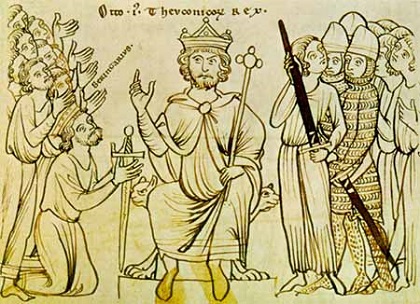
Birth of Otto I in Germany. Otto became the German King in 936 and the Holy Roman Emperor in 962. He brought order to the empire, which was greatly fragmented, strengthened the position of the church, and made possible a period of prosperity and development of culture referred to as the “Ottonian Renaissance”.
November 23, 1826
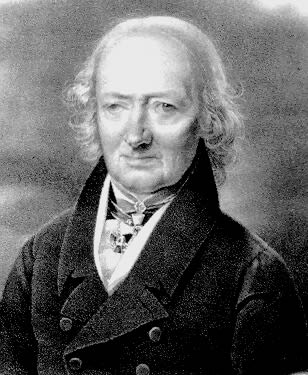
Death of Johann Elert Bode in Berlin, Germany. Bode was an astronomer, the director of the Berlin Observatory. Through his enunciation of observations made by Daniel Titius, the law of mathematical expression of the relative mean distances between the relative mean distance from the sun to the planets became known as Bode’s Law.
November 23, 1920
Birth of the poet, Paul Celan (Paul Antschel). Celan was a German-speaking Jew who was born in Eastern Europe, suffered in concentration camps during World War II, began writing poetry in Vienna after the war and spent the rest of his life in France, but continued to write poetry in German. Volumes of poetry by Celan include Der Sand aus den Urnen (1948), Mohn und Gedächtnis (1952) and Lichtzwang (1970).
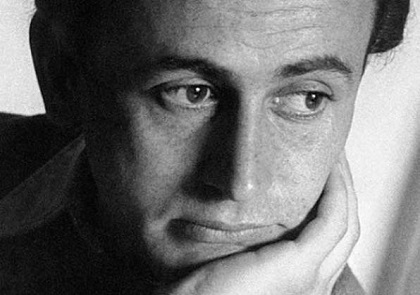 Birth of the poet, Paul Celan (Paul Antschel). Celan was a German-speaking Jew who was born in Eastern Europe, suffered in concentration camps during World War II, began writing poetry in Vienna after the war and spent the rest of his life in France, but continued to write poetry in German. Volumes of poetry by Celan include Der Sand aus den Urnen (1948), Mohn und Gedächtnis (1952) and Lichtzwang (1970).