German Sweets and Snacks: Haribo, Lakritz and Ritter Sport
Walk down the sweets aisle of any German supermarket and you’ll notice two things. The first is the sheer length of it. The second is that many of the brands on the shelves have been around for a century or more, run by the same families, and still make the products their founders invented.
That makes German confectionery a good subject for a souvenir shopping trip and an even better window into the country’s habits. Here’s a guide to what’s worth trying, how it started, and what to put in your suitcase.
Haribo: The Gummy Bear That Conquered the World
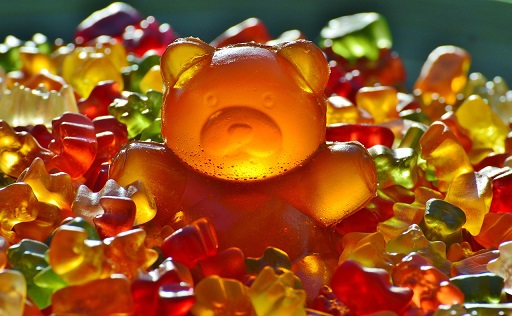
You almost certainly know this one. Haribo was founded in Bonn on 13 December 1920 by Hans Riegel, a trained candy maker who started in a small home kitchen with a sack of sugar, a marble slab, and a copper pot. The name is an acronym: HAns RIegel BOnn. His wife, Gertrud, was the first employee, and in the early days she reportedly delivered the day’s production by bicycle.
In 1922, Riegel invented a chewy fruit-gum figure called the Tanzbär (“dancing bear”), inspired by the dancing bears that were a popular fairground attraction in the 19th century. It was larger and slimmer than today’s version, but it’s the ancestor of the Goldbär (Gold Bear), now one of the best-known sweets in the world. Licorice followed in 1925.
The numbers are remarkable. According to the company, around 160 million Goldbears are made every day, and Haribo sells in more than 100 countries. In Germany, Haribo’s market share in fruit gum and licorice is reported to fluctuate between about 56 and 60 percent. In 1995, a product designer reportedly smuggled in the first smiling bears.
A tip for visitors: classic gummy bears are made with gelatin, so they aren’t vegetarian. If that matters to you, check the label for a vegetarian or vegan version.
Lakritz: The Divisive Classic
Licorice (Lakritz) is a serious business in Germany, particularly in the north, and it comes in more varieties than most visitors expect. There’s the sweet kind, such as the famous licorice snails, and the salty kind (Salzlakritz), flavored with ammonium chloride, which tends to divide tourists sharply. Many German sweets shops sell mixed bags that include both, so you can find out which camp you belong to. Haribo, Katjes, and several smaller makers all produce licorice.
Ritter Sport: Square, Practical, Good
The story of Ritter Sport begins in Stuttgart, and a woman, Clara Ritter. In 1932, she suggested making a chocolate bar that would fit into the pocket of a sports jacket without breaking. The result was the square bar, divided into 16 squares in a four-by-four grid, and a slogan that has become a German classic: “Quadratisch. Praktisch. Gut.” (“Square. Practical. Good.”).
Ritter Sport is known for its wide range of flavors, from plain milk and dark chocolate to marzipan, hazelnut, and yogurt. It’s a good, affordable souvenir, and a bar costs little to carry home.
Marzipan: A City Built on Almonds
Germany takes marzipan seriously, and its center is Lübeck, a Hanseatic city in the north. The city’s name is synonymous with the sweet almond paste, and its best-known maker, Niederegger, has been producing it for more than two centuries. Lübeck marzipan is traditionally high in almonds, and it comes as loaves, chocolate-covered bars, and figures. It also appears at Christmas in many forms, including the Christmas Stollen with a marzipan core. You can read more about that bread in our guide to Dresden Stollen.
Biscuits: Bahlsen and the Leibniz
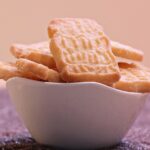
German biscuit culture is a treat in its own right. In Hanover, Hermann Bahlsen founded his company in 1889, and two years later launched the Leibniz Butterkeks, a rectangular butter biscuit named after the city’s famous philosopher, Gottfried Wilhelm Leibniz. It’s a staple of German pantries, and a plain, buttery biscuit that goes well with coffee. It also plays a role in the afternoon ritual described in our guide to Kaffee und Kuchen.
Seasonal Sweets
German sweets follow the calendar. Many of them appear in supermarkets as early as September, which surprises visitors.
Lebkuchen. Spiced gingerbread, especially associated with Nuremberg. See our Lebkuchen recipe.
Spekulatius. Thin, crisp spiced biscuits, a traditional Advent treat.
Printen. A hard, spiced gingerbread from Aachen.
Dominosteine. Small cubes of gingerbread layered with jelly and marzipan, covered in chocolate.
One of Germany’s most charming candy traditions is the Schultüte or Zuckertüte (“sugar cone”). On a child’s first day of school, parents give them a big decorated cardboard cone filled with sweets, small toys, and school supplies. It’s a custom that dates back to the 19th century and is still very much alive, and it’s often the centerpiece of the first-day photos.
Sweets and Halloween
Germans are serious about gummy candy. In a survey commissioned by Haribo, about 75 percent of respondents said gummy candy was the best-fitting treat for Halloween, and Haribo was the most popular brand to give out at the door. See our page on Halloween in Germany statistics for more, and keep in mind the sponsor.
What to Bring Home
Item
Why
Where to find it
Haribo Goldbären
The original, in a classic bag
Any supermarket
Salzlakritz or a mixed licorice bag
A taste test for friends
Supermarkets and sweet shops
Ritter Sport bars
Easy to pack, many flavors
Supermarkets and drugstores
Niederegger marzipan
A classic gift
Lübeck, department stores, online
Leibniz Butterkeks
A pantry staple to share
Supermarkets
Lebkuchen or Spekulatius
Seasonal treats in autumn and winter
Supermarkets and Christmas markets
Stollen
Best bought in autumn and left to mature
Bakeries and Christmas markets
Practical Tips
Shop in supermarkets and drugstores. Chains like Rewe, Edeka, dm, and Rossmann carry most of the big brands at normal prices, cheaper than airport shops. See our guide to German supermarkets.
Check ingredients. Gelatin, nuts, and alcohol appear in many sweets, so read the labels if you have dietary needs.
Mind the shelf life. Seasonal items are best bought close to when you’ll eat them.
Expect seasonal pricing. Prices go up in the Christmas season.
Keep chocolate cool if you’re traveling in summer.