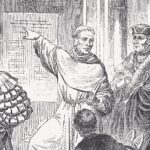
Death of Johann Fust, a financial backer of Johannes Gutenberg.
October 30, 1882
Birth of Günther von Kluge in Posen, Germany (now Poland). Kluge was a WWII German general who fought in Russia from 1941-1943 and replaced von Rundstedt on the Western Front in 1944. Suspected of being involved in the assassination attempt on Hitler, von Kluge was relieved of command on August 17 and committed suicide on August 18, 1944.
October 30, 1945
Death of Leopold Jessner in Los Angeles (born in Königsberg, Germany (now in Russia). Jessner was a theater director, most noted for his production of Expressionist plays. He became a director of the Berlin State Theater. In 1933 he fled Nazi Germany and immigrated to the United States. He worked in Hollywood until his death.
October 30, 1952
Dr. Albert Schweitzer wins the Nobel Prize for Peace. Schweitzer was doctor and surgeon in the hospital in Lambaréné, pastor of a congregation, administrator of a village, superintendent of buildings and grounds, writer of scholarly books, commentator on contemporary history, musician, host to countless visitors. The honors he received were numerous, including the Goethe Prize of Frankfurt and honorary doctorates from many universities emphasizing one or another of his achievements. The Nobel Peace Prize for 1952, having been withheld in that year, was given to him on December 10, 1953. With the $33,000 prize money, he started the leprosarium at Lambaréné.
October 30, 1996
On his 5,144th day in office Helmut Kohl surpasses Konrad Adenauer’s record as the longest serving post-war chancellor.
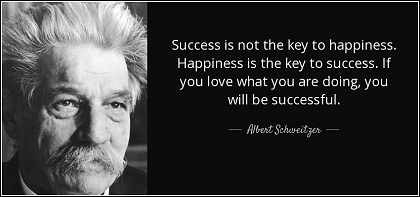 Dr. Albert Schweitzer wins the Nobel Prize for Peace. Schweitzer was doctor and surgeon in the hospital in Lambaréné, pastor of a congregation, administrator of a village, superintendent of buildings and grounds, writer of scholarly books, commentator on contemporary history, musician, host to countless visitors. The honors he received were numerous, including the Goethe Prize of Frankfurt and honorary doctorates from many universities emphasizing one or another of his achievements. The Nobel Peace Prize for 1952, having been withheld in that year, was given to him on December 10, 1953. With the $33,000 prize money, he started the leprosarium at Lambaréné.