Do Germans Celebrate Halloween? What’s Real in 2026
The short answer: yes, but on a smaller and different scale than in the United States. Halloween in Germany is mostly an urban, youth-driven, party-focused event. Children in some neighborhoods go door to door shouting “Süßes oder Saures!”, adults dress up for club nights, and supermarkets fill with pumpkins in October. Outside the cities, plenty of Germans ignore it completely, and a good number actively dislike it.
That mixed picture is the honest one. Halloween is neither universally embraced nor rejected here. It sits somewhere in the middle, still young enough that many Germans remember a time before it existed.
Where Halloween Came From in Germany
Halloween has no roots in German folk tradition. It arrived in the 1990s through American films, television, and a very deliberate marketing push. After carnival season was cancelled in 1991 because of the Gulf War, costume and party suppliers took a hard financial hit. Dieter Tschorn, a PR consultant working for the toy industry’s carnival division, helped promote Halloween as a second costume season. By his own account, it was close to unknown in 1994 and turned into a real seasonal market within a few years. The full story is told in our article on how Halloween came to Germany.
According to data from the Handelsverband Deutschland (HDE), the German retail association, annual Halloween sales in Germany have climbed past €500 million to €540 million, behind only Christmas and Easter.
What Halloween Looks Like in Germany
Trick-or-treating exists, but it’s patchy. Children say “Süßes oder Saures!” (sweets or sour), the German version of trick-or-treat, yet it’s mostly seen in cities and suburbs. In apartment buildings, a pumpkin or decoration outside the door is the usual signal that you’re welcome to knock. In villages and rural areas, unexpected knocking on doors can still get a cool reception.
Adults celebrate in bars and clubs. For many Germans in their twenties and thirties, Halloween means a costume party, often a ticketed event at a club or venue rather than a house party. It works as a second costume season alongside Karneval, which is why German Halloween outfits often look more elaborate than the store-bought ones common in the US.
Costumes lean scary. Cute costumes are more of a carnival thing. At Halloween, witches, vampires, zombies, and skeletons dominate, and funny or pop-culture outfits are saved for February.
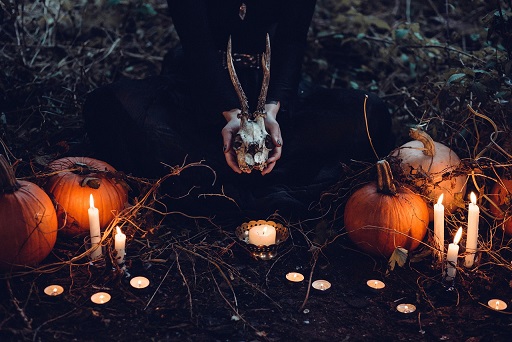
Pumpkins have a new job. Germans have long eaten pumpkin (soup, pickled, or in cakes), but carving them is a more recent habit. You’ll now see carved pumpkins on balconies and windowsills, and a growing number of Halloween recipes built around them.
Theme parks and castles join in. Europa-Park, Phantasialand, and other parks run Halloween seasons, and Burg Frankenstein near Darmstadt hosts a well-known annual event. Check current dates before planning a trip.
What Else Happens on October 31 and 1 November
This is why Halloween doesn’t dominate the way it does elsewhere. October 31 is Reformationstag (Reformation Day), commemorating Martin Luther’s 95 Theses in 1517. It’s a public holiday in nine states. November 1 is Allerheiligen (All Saints’ Day), a public holiday in five mostly Catholic states, when families visit cemeteries and light candles. For people observing those days, a night of fake blood and cobwebs can feel out of place.
Then there’s Martinstag on November 11, when children carry handmade lanterns in processions. Many parents see this as the “real” German autumn tradition for kids, and some families blend the two, with children in costumes carrying lanterns. See our guide to St. Martin’s Day.
Who Celebrates and Who Doesn’t
Most likely to celebrate: children in cities, students, and young adults in places like Berlin, Hamburg, Cologne, and Munich.
Less likely: rural communities, older generations, and religious households, especially in Catholic regions where All Saints’ Day is solemn.
In between: many families who carve a pumpkin and hand out candy, but don’t call it a real holiday.
There’s no single reliable percentage for how many Germans celebrate, and survey results vary a lot depending on how the question is asked.
Tips if You’re in Germany for Halloween
Don’t assume your neighborhood participates. Look for pumpkins or decorations before knocking.
Dress to scare if you’re heading to a party, and buy tickets ahead for popular venues.
In 2026, October 31 falls on a Saturday. In the nine states where it’s a holiday, most shops will be closed, so stock up on candy and costumes by Friday.
Be mindful of quiet hours (Ruhezeiten) if you’re hosting at home.
Do Germans celebrate Halloween like Americans do? Not quite. It’s smaller, more party-oriented, and concentrated in cities. Trick-or-treating exists but isn’t universal.
What do Germans say instead of “trick or treat”? “Süßes oder Saures!”, which literally means “sweets or sour.”
When did Halloween start in Germany? Mainly in the 1990s, driven by American media and a marketing push from the costume and toy industry.
Is Halloween popular in rural Germany? Less so. Many villages favor traditional autumn events like Erntedankfest and Martinstag, and unexpected trick-or-treaters may not be welcome.