German Culture

All about Germany

  • Home
  • Learn German
    • German Language Basics
    • German Grammar & Vocabulary
    • German Learning Tips
    • German Idioms & Expressions
    • German Quizzes & Exercises
  • Articles
    • Famous Germans
    • German Holidays
    • German Cuisine
    • How To In Germany
    • Daily Life in Germany
    • German Facts
    • German Traditions
  • Facts About Germany
  • German History
    • Early History of Germany
    • Middle Ages in German History
    • German Reformation Period
    • 19th Century and German Unification
  • German Recipes
    • German Baking Recipes
    • German Bread Recipes
    • German Christmas Recipes
    • Desserts
    • German Easter Recipes
    • Halloween Recipes
    • Main Dishes
    • German Salad Recipes
    • German Salads
    • Sauerkraut Recipes
  • Travel to Germany
  • Contact

Bavarian Leberkäse

Bavarian Leberkäse

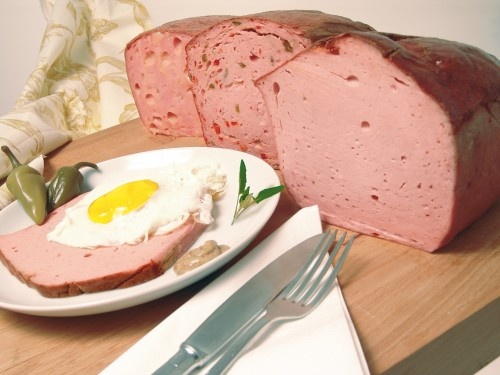
Literally translated, Leberkäse means “liver cheese” in German, even though in Bavaria it does not contain any liver or cheese at all. Leberkäse is a special sausage meat and is very popular in the South of Germany, Bavaria.
It is said that the meatloaf was invented in 1776 by the cook of Charles Theodore, Elector of Bavaria, although this story has been heavily contested. It is baked in the oven like a loaf until there is a brown crust. It’s best warm as a sandwich.

Ingredients:

  • 400 g lean beef
  • 400 g pork
  • 200 g bacon (with rind removed)
  • 250 ml iced water
  • 1 tsp salt
  • 1 tsp freshly ground white pepper
  • 1 medium onion
  • 1 dessert spoon marjoram
  • Butter to grease the tin

Directions:

  1. All meat must be well cooled before preparation begins. Cut meat into chunks and mince on a fine setting.
  2. Mix together both meats and add salt, pepper and the iced water until smooth. Mince the bacon on a medium setting and mix with the meat.
  3. Peel and grate the onion and add to the mixture together with the marjoram. Place in the fridge to cool. Put the mixture into a greased loaf tin.
  4. Smooth the surface and, using the blade of a knife, make a diamond-shaped pattern across the top (about 5 mm deep). Bake in the center of a preheated oven (180°C) for about an hour (fan oven: approx. 160°C, gas mark 2 – 2.5).




You might also like:

  • Strange German Foods Tourists Don’t Understand
    Strange German Foods Tourists Don’t Understand
  • Wurstsalat – Traditional German Recipe
    Wurstsalat – Traditional German Recipe
  • Bavarian Cuisine: Pretzels, Pork, and Beer Culture
    Bavarian Cuisine: Pretzels, Pork, and Beer Culture
  • Krautsalat – Traditional German Recipe
    Krautsalat – Traditional German Recipe
  • Kartoffelsalat – Traditional German Recipe
    Kartoffelsalat – Traditional German Recipe
  • Original Laugenbrot Recipe: A Taste of Bavarian Tradition
    Original Laugenbrot Recipe: A Taste of Bavarian Tradition
  • German Blutwurst Recipe: A Traditional Delight
    German Blutwurst Recipe: A Traditional Delight
  • What Is Blutwurst? Traditional German Blood Sausage
    What Is Blutwurst? Traditional German Blood Sausage

Recent Posts

German wine culture means connecting to tradition

German Wine Culture

German potato soup (Kartoffelsuppe) represents the heart of traditional German home cooking.

German Potato Soup Recipe (Kartoffelsuppe)

Frederick the Great and the Potato

Frederick the Great and the Potato

Potatoes are one of the most beloved ingredients in German cuisine

Traditional German Potato Dishes

Traditional German potato dishes

Traditional German Potato Dishes You Should Know

Discover how potatoes in German culture shaped history

Potatoes in German Culture

The German Zeppelin represents far more than a transportation technology.

German Zeppelin: The Rise and Fall of Germany’s Giant Airships

Discover how the German Zeppelin worked

How the German Zeppelin Worked: Inside the Engineering of Airship Giants

Copyright © 2026 · German Culture

Go to mobile version