Späti, Kiosk and Büdchen: Germany’s Corner-Shop Culture
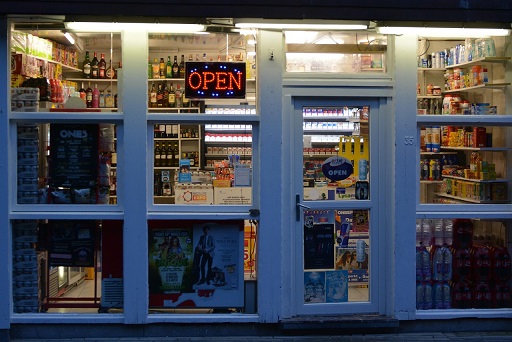
Germany is famous for shops that close early. Most supermarkets close in the evening, almost everything stays dark on Sundays, and the first-time visitor learns to plan their groceries like a military operation. And then, at midnight on a Tuesday in Berlin, you turn a corner and find a small shop glowing like a lighthouse. Inside, someone is buying a bottle of water and a bag of chips. Outside, a handful of people are sitting on an upturned crate, drinking beer and talking.
That shop is a Späti, and it’s one of the most characteristic things about Berlin. But the idea of a small neighborhood kiosk, which Germans call different names in different regions, is far older and far wider than a single city. This guide explains what a Späti is, what the rules are, and how the same tradition looks in Berlin, the Ruhr region, and Frankfurt.
What Is a Späti?
Späti is short for Spätkauf (“late purchase”) or Spätverkaufsstelle (“late sales outlet”), a small shop that stays open after regular shops close. According to Berlin’s city portal, the term goes back to East Germany, where late-sales outlets supplied shift workers after normal closing time. After reunification, the word spread into the western half of the city, where similar shops had been known as a Kiosk.
A Späti is not a legal category. Berlin’s shop opening law doesn’t use the word at all, and legally, a Späti is simply a normal shop. What makes it special is that the law allows any shop in Berlin to open around the clock from Monday to Saturday, a rule that has applied since 2006.
What You’ll Find Inside
A Späti is a convenience store, and its stock reflects that. Typical items include:
Drinks. Water, soft drinks, beer, wine, and spirits, often chilled.
Snacks. Chips, candy, chocolate, and ice cream.
Basics. Milk, bread, and toilet paper for the moment when you’ve run out after the supermarket has closed.
Newspapers, magazines, and tobacco.
Prices are usually higher than in a supermarket, which is the cost of convenience. For the weekly shop, see our guide to German supermarkets.
The Rules: Hours, Sundays, and Alcohol
Opening hours. From Monday to Saturday, shops in Berlin may open 24 hours a day. Shops that stay open round the clock are expected to register with the district office.
Sundays. This is where it gets complicated. In general, Berlin’s law keeps shops closed on Sundays and public holidays, and a 2019 ruling by Berlin’s administrative court, confirmed in 2020, held that Spätis with a mixed range of goods must stay closed on Sundays. The exceptions are narrow: shops at long-distance train stations and airports, petrol stations, and shops that sell only certain goods meant for tourists or for immediate consumption, which may open for limited hours on Sundays. How strictly the rules are enforced varies by district, and some Spätis open on Sundays anyway and risk fines.
The Berlin Späti association, founded in 2016, announced in May 2026 that it plans a referendum to allow Spätis to open on Sundays like petrol stations. As of autumn 2026, the rule hasn’t changed, so check current rules if you’re planning around it.
Alcohol. Selling alcohol at night is legal, and many Spätis sell beer and wine around the clock. Sales to minors are prohibited at all hours.
How many are there? Estimates vary, but sources put the number somewhere between about 1,000 and 1,500 in Berlin today, down from around 2,000 in the past. They’re densest in Friedrichshain-Kreuzberg, followed by Neukölln and Prenzlauer Berg.
The Older Tradition: Trinkhalle, Büdchen, and Wasserhäuschen
The corner kiosk didn’t start in Berlin, and the Späti is only one of its modern forms. The older tradition is the Trinkhalle (“drinking hall”), a small street stand that first appeared in the middle of the 19th century in industrial cities like Barmen, Düsseldorf, and Aachen.
Despite the name, early Trinkhallen sold mineral water and soft drinks, not alcohol. They were set up partly to give workers an alternative to cheap schnapps and beer, an aim that suited both factory owners and municipal authorities. The design of the octagonal, ornate stand, associated with the Berlin architect Martin Gropius in 1859, was copied in cities such as Paris, Frankfurt, and Hamburg. In the 1870s, factory-bottled carbonated water, which was popularly called “Selterswasser,” gave the Trinkhalle its breakthrough. The glass bottles were sealed by a marble in the neck, which gave the drink the nickname “Knickerwasser.”
Over time, the stands began selling sweets, newspapers, cigarettes, and eventually beer, and they turned into the social hubs they are today. Different regions use different names:
Region
Common names
Berlin
Späti, Spätkauf, Kiosk
Ruhr region
Trinkhalle, Bude, Büdchen, Seltersbude
Frankfurt
Wasserhäuschen (a name used almost exclusively in and around Frankfurt)
Elsewhere
Kiosk is the general term
The Ruhr and Frankfurt Today
The Ruhr region has more kiosks than any other part of Germany. Around 1900, there were already over 600 alcohol-free Trinkhallen in the region, and after the First World War many were run by war-disabled veterans and widows, who used them to supplement their pensions. Today they’re regarded as part of the region’s industrial heritage and neighborhood life, and since 2016, an annual Tag der Trinkhallen (Day of the Trinkhallen) celebrates the culture. In 2024, more than 20,000 people took part in “kiosk tours” across the region.
In Frankfurt, the Wasserhäuschen has been part of city life for over 150 years. In the 1970s, the city had around 800 of them, and today about 200 remain. The city holds an annual Wasserhäusje-Tag to celebrate them (in 2026 it took place on 12 September), and they’re described as neighborhood meeting places and social anchors, much like the Ruhr’s Büdchen.
Researchers often describe these shops as a “third place,” a spot that is neither home nor work, where neighbors meet and talk. That’s much of why they’ve survived the arrival of supermarkets and delivery apps.
How to Use a Späti or Kiosk
Bring cash. Many Spätis prefer cash, especially at night and for small purchases under about five euros. Cards are accepted in some places, so check the sign.
Be quick and polite. Greet the owner, say what you want, and don’t linger at the counter.
Check the bottle deposit. Drinks in bottles and cans carry Pfand, but not every Späti has a return machine. See our guide to Pfand.
Drinking outside. It’s common to sit near a Späti with a drink, but rules for public drinking can vary by city or zone, so check local signs.
Keep the noise down. Late-night crowds outside shops can disturb neighbors, and quiet hours apply. See our guide to quiet hours in Germany.
Don’t expect fresh groceries. A Späti is for emergencies and snacks, not a full supermarket.
On Sundays, don’t rely on a Späti. Shops at major train stations and petrol stations are your safest options. See our guide to Sunday closing in Germany.
Where to Experience Kiosk Culture
Berlin. Spätis are everywhere, with a particularly dense scene in Kreuzberg, Neukölln, and Friedrichshain. See our overview of Berlin.
Dortmund and the Ruhr. Guided “Trinkhallen tours” explore the kiosks in neighborhoods like the Unionviertel. Look out for the Tag der Trinkhallen in August.
Frankfurt. The Wasserhäuschen are scattered around the city, and the annual Wasserhäusje-Tag celebrates them (check the date, which was 12 September in 2026).
FAQ
What does Späti mean? It’s Berlin slang for Spätkauf or Spätverkaufsstelle, a small shop that stays open late, a concept with roots in East Germany.
Are Spätis open on Sundays in Berlin? Generally not. Berlin’s law keeps most shops closed on Sundays, and courts have confirmed this for Spätis with a mixed range, though enforcement varies and some open anyway.
Can you buy alcohol at a Späti at night? Yes, in Berlin it’s legal, though sales to minors are always prohibited.
What is a Büdchen? A small kiosk or street-side stand, known as Trinkhalle, Bude, or Büdchen in the Ruhr region and Wasserhäuschen in Frankfurt.