German Culture

All about Germany

  • Home
  • Learn German
    • German Language Basics
    • German Grammar & Vocabulary
    • German Learning Tips
    • German Idioms & Expressions
    • German Quizzes & Exercises
  • Articles
    • Famous Germans
    • German Holidays
    • German Cuisine
    • How To In Germany
    • Daily Life in Germany
    • German Facts
    • German Traditions
  • Facts About Germany
  • German History
    • Early History of Germany
    • Middle Ages in German History
    • German Reformation Period
    • 19th Century and German Unification
  • German Recipes
    • German Baking Recipes
    • German Bread Recipes
    • German Christmas Recipes
    • Desserts
    • German Easter Recipes
    • Halloween Recipes
    • Main Dishes
    • German Salad Recipes
    • German Salads
    • Sauerkraut Recipes
  • Travel to Germany
  • Contact

June 17 in German History

June 17, 1810

Birth of the poet, Ferdinand Freiligrath, in Detmold, Germany. Freiligrath’s political/social engagement was reflected increasingly in his poetry to the extent that his work was banned and he was forced to leave Germany. Freiligrath died in 1876.

June 17, 1885

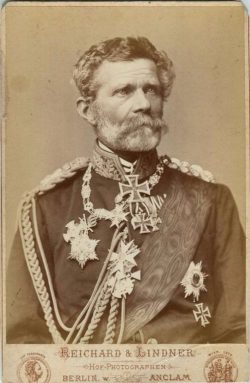
Death of Edwin Freiherr von Manteufel in Carlsbad, Austria-Hungary (born in Dresden, Germany). Manteufel was a general in the Prussian army. He served as aide-de-camp to Friedrich Wilhelm during the uprisings of 1848. In 1861 he was made chief of the Prussian military cabinet. He served with noted success in the Franco-Prussian war of 1870-71. From 1871-1873 he commanded the Prussian occupation forces in France. In addition to his military duties, he undertook a number of diplomatic missions.

June 17, 1900

Birth of Hermann Reutter in Stuttgart, Germany. Hermann Reutter was a German composer and pianist. He was born in Stuttgart. The compositions of Hermann Reutter are not well known, though his musical career was one of great excellence and long duration.

June 17, 1953

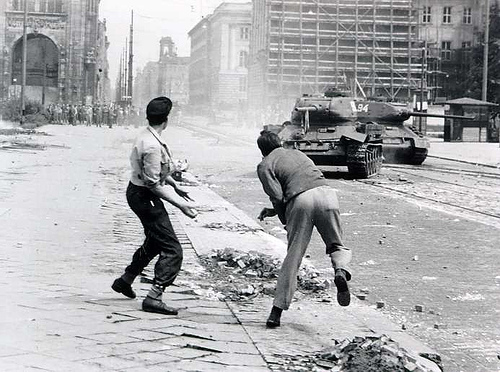
uprising1953

After a rise in bread prices, demonstrations by striking workers in the streets of East Berlin were crushed by Soviet tanks.
The uprising of 1953 in East Germany started with a strike by East Berlin construction workers on June 16. It turned into a widespread uprising against the German Democratic Republic government the next day. The uprising in Berlin was violently suppressed by tanks of the Group of Soviet Forces in Germany and the Volkspolizei. In spite of the intervention of Soviet troops, the wave of strikes and protests was not easily brought under control. Even after June 17, there were demonstrations in more than 500 towns and villages.

June 17

Former national day in West Germany, “Tag der deutschen Einheit”. (The date of the East German riots against the Soviets.)
Back to Today in German History Calendar

You might also like:

  • The Austro-Prussian War (1866) - The Conflict That Reshaped Germany
    The Austro-Prussian War (1866)
  • Kaiser Wilhelm I: Germany’s First Emperor of Unity
    Kaiser Wilhelm I: The First Emperor of a United Germany
  • The Franco-Prussian War - The Conflict That United Germany
    The Franco-Prussian War (1870–71)
  • The 1848 Revolutions in Germany
    The 1848 Revolutions in the German States
  • Otto von Bismarck: The Iron Chancellor
    Otto von Bismarck: The Iron Chancellor Who Forged a Nation
  • Prussia Before Germany: The Military State That Shaped a Nation
    Prussia Before Germany: The Military State That…
  • Socialism and the SPD in 19th-Century Germany
    Socialism and the SPD in the 19th Century
  • The Proclamation of the German Empire - Birth of a Nation
    The Proclamation of the German Empire

Recent Posts

German Breakfast Culture: What Germans Really Eat

Strange German Laws

Strange German Laws

Germany's bread culture

Why Do Germans Eat So Much Bread? Bread Culture Explained

Oktoberfest History Explained

Oktoberfest Explained: History, Culture and Myths

German Wedding Traditions: From Polterabend to Log Sawing

German Greeting Customs: Handshakes

German birthday culture

German Birthday Traditions: Surprising Customs

Personal Space in Germany: Cultural Boundaries Explained

Copyright © 2026 · German Culture

Go to mobile version