German Culture

All about Germany

  • Home
  • Learn German
    • German Language Basics
    • German Grammar & Vocabulary
    • German Learning Tips
    • German Idioms & Expressions
    • German Quizzes & Exercises
  • Articles
    • Famous Germans
    • German Holidays
    • German Cuisine
    • How To In Germany
    • Daily Life in Germany
    • German Facts
    • German Traditions
  • Facts About Germany
  • German History
    • Early History of Germany
    • Middle Ages in German History
    • German Reformation Period
    • 19th Century and German Unification
  • German Recipes
    • German Baking Recipes
    • German Bread Recipes
    • German Christmas Recipes
    • Desserts
    • German Easter Recipes
    • Halloween Recipes
    • Main Dishes
    • German Salad Recipes
    • German Salads
    • Sauerkraut Recipes
  • Travel to Germany
  • Contact

July 25 in German History

July 25, 975

Birth of Dietmar in Hildesheim, Germany. The Saxon Dietmar was an important chronicler of his age and his works are important documentation to the period.

July 25, 1564

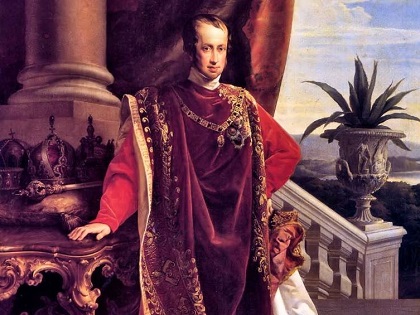
Ferdinand-I

Death of Ferdinand I in Vienna, Austria. The Spanish-born Habsburg, Ferdinand became the Holy Roman Emperor, and the king of Bohemia and Hungary. In the “Peace of Augsburg” of 1555 he agreed to the right of regional princes to determine the religion of their own territories. The key events during his reign were the contest with the Ottoman Empire, whose great advance into Central Europe began in the 1520s, and the Protestant Reformation, which resulted in several wars of religion.

Ferdinand’s motto was “Fiat iustitia, et pereat mundus”, meaning “Let justice be done, though the world perish”.

July 25, 1830

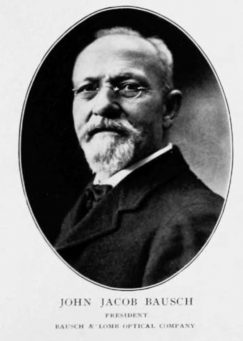
Birth of Johann (John) Jakob Bausch in Groß Suessin, Germany. Bausch Moved to Bern, Switzerland in 1848 and found work in an optical shop. In 1849 he immigrated to the United States. In 1853 he opened an optical shop in Rochester, New York. Most of the products he sold, he imported from Germany. In 1855 another immigrant from Germany, Henry Lomb, joined the business. Together they built one of America’s leading optical companies, Bausch and Lomb. Bausch died in 1926.

July 25, 1950

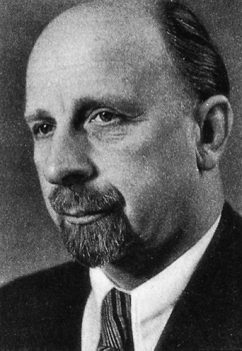
Walter Ulbricht becomes the General Secretary of the Central Committee of the Socialist Unity Party of East Germany. He played a leading role in the creation of the Weimar-era Communist Party of Germany (KPD) and later (spending the years of Nazi rule in exile in the Soviet Union) in the early development and establishment of East Germany (the German Democratic Republic). He was first secretary of the Socialist Unity Party, and as such the de facto leader of East Germany, from 1950 to 1971. From President Wilhelm Pieck’s death in 1960 he was the East German head of state until his own death in 1973.

July 25, 2002

Kardinal Joachim Degenhardt, Archbishop of Paderborn, dies at age 76.
You might also like:

  • The Thirty Years’ War
    The Thirty Years’ War and Its Impact on Germany
  • The Peace of Westphalia: Ending the Thirty Years’ War
    The Peace of Westphalia (1648)
  • Holy Roman Empire
    The Holy Roman Empire: An Epoch of European History
  • The Holy Roman Empire
    The Holy Roman Empire
  • Napoleon’s Impact on Germany: The Confederation of the Rhine
    The Napoleonic Wars and the Confederation of the Rhine
  • Martin Luther and the 95 Theses
    Martin Luther and the 95 Theses
  • German Reformation and Early Modern Period
    German Reformation and Early Modern Period
  • Rise of Brandenburg-Prussia - Military Powerhouse
    Rise of Brandenburg-Prussia

Recent Posts

Are German stereotypes true?

German Stereotypes: What’s True and What’s Not

German work culture has many strength

German Work Culture: What Makes It So Different?

Why is German culture so efficient

Why Is German Culture So Efficient? The Secrets Behind It

Modern Germany is one of the most diverse countries in Europe.

What Do Germans Think of Foreigners? The Truth Explained

Foundation of German Culture

German Values and Beliefs: What Shapes Daily Life

German friendliness just looks different.

Are Germans Friendly or Rude? Breaking the Stereotype

Why Germans value rules so highly

Why Do Germans Love Rules? Ordnung Explained

Examples of German Directness

Why Are Germans So Direct? Understanding Blunt Communication

Copyright © 2026 · German Culture

Go to mobile version