German Culture

All about Germany

  • Home
  • Learn German
    • German Language Basics
    • German Grammar & Vocabulary
    • German Learning Tips
    • German Idioms & Expressions
    • German Quizzes & Exercises
  • Articles
    • Famous Germans
    • German Holidays
    • German Cuisine
    • How To In Germany
    • Daily Life in Germany
    • German Facts
    • German Traditions
  • Facts About Germany
  • German History
    • Early History of Germany
    • Middle Ages in German History
    • German Reformation Period
    • 19th Century and German Unification
  • German Recipes
    • German Baking Recipes
    • German Bread Recipes
    • German Christmas Recipes
    • Desserts
    • German Easter Recipes
    • Halloween Recipes
    • Main Dishes
    • German Salad Recipes
    • German Salads
    • Sauerkraut Recipes
  • Travel to Germany
  • Contact

Rügen Island

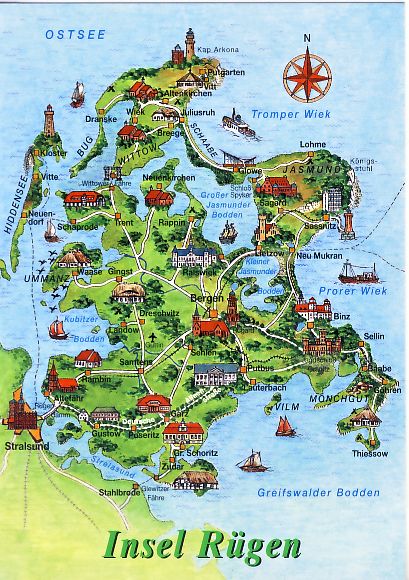
Rügen is Germany’s largest island by area. It is located off the Pomeranian coast in the Baltic Sea and belongs to the state of Mecklenburg-Western Pomerania.

rugen-3

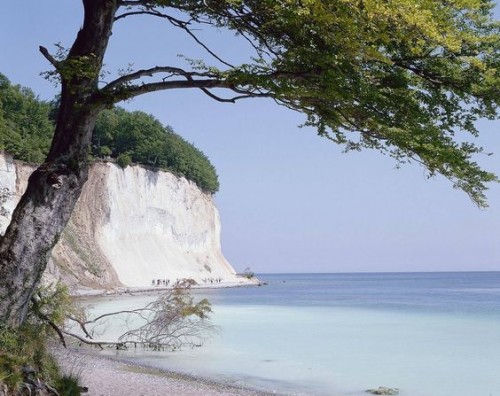
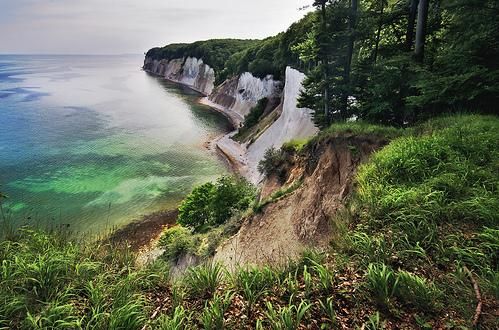
Rügen has a maximum length of 51.4 km (from north to south), a maximum width of 42.8 km in the south and an area of 926 km². The coast is characterized by numerous sandy beaches, lagoons (Bodden) and open bays (Wieke), as well as projecting peninsulas and headlands. In June 2011, UNESCO awarded the status of a World Heritage Site to the Jasmund National Park, famous for its vast stands of beeches and chalk cliffs like King’s Chair, the main landmark of Rügen island.

rugen-1

The island of Rügen is part of the district of Vorpommern-Rügen, with its county seat in Stralsund. The towns on Rügen are: Bergen, Sassnitz, Putbus and Garz. In addition, there are the Baltic seaside resorts of Binz, Baabe, Göhren, Sellin and Thiessow.

rugen-8
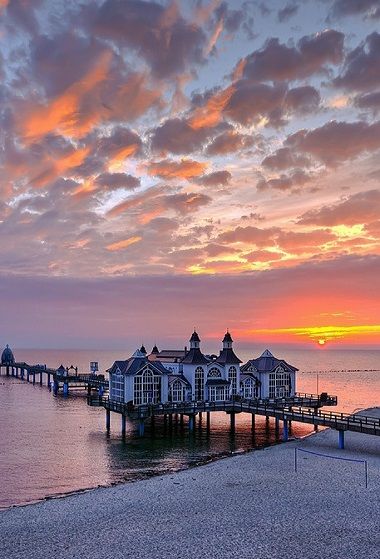
Sunrise at the pier in spa town of Sellin on the Island of Rügen

Rügen is very popular as a tourist destination because of its resort architecture, the diverse landscape and its long, sandy beaches.

rugen-4

The “gateway” to Rügen island is the Hanseatic city of Stralsund, where it is linked to the mainland by road and railway via the Rügen Bridge and Causeway.

rugen-stral
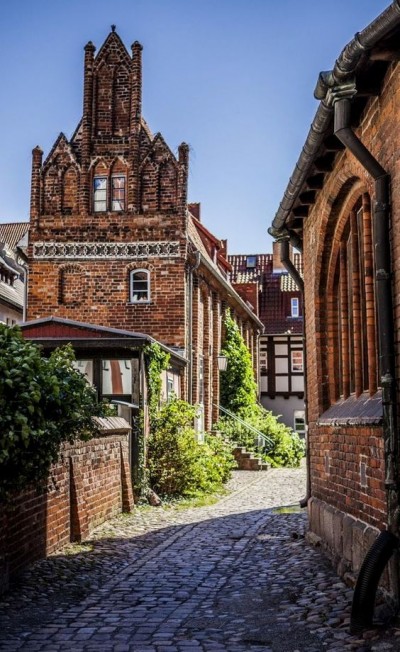
Alley in Stralsund, Mecklenburg-Vorpommern

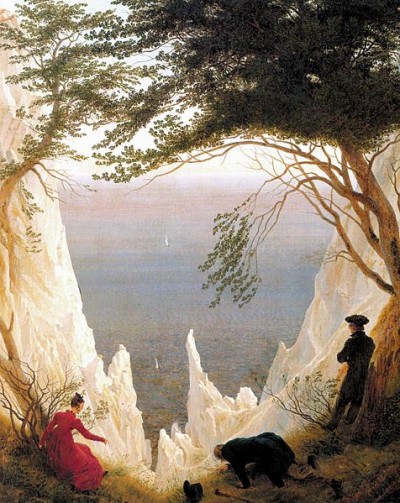
rugen-7-paint
Chalk Cliffs on Rügen, 1818
by Caspar David Friedrich (1774–1840)


You might also like:

  • Touring Germany via the Autobahn: Must-See Stops and Scenic Routes.
    Touring Germany via the Autobahn: Must-See Stops and Scenic…
  • Summer in Germany: Lakes, Beer Gardens, and Open-Air Cinemas
    Summer in Germany: Lakes, Beer Gardens, and Open-Air Cinemas
  • All Facts About Germany: A Comprehensive Guide to the Country
    All Facts About Germany: A Comprehensive Guide to the…
  • The German Diaspora: Where to Find German Culture Worldwide
    The German Diaspora: Where to Find German Culture Worldwide
  • Where Germans Retire: Cities, Countryside, and Coastal Dreams
    Where Germans Retire: Cities, Countryside, and Coastal…
  • Lost German Kingdoms: Forgotten States and Their Cultural Influence
    Lost German Kingdoms: Forgotten States and Their Cultural…
  • Hidden Villages in Germany That Look Like a Fairytale
    Hidden Villages in Germany That Look Like a Fairytale
  • Blumenau: A German Town in Brazil – Culture, History, and Identity
    Blumenau: A German Town in Brazil – Culture, History, and…

Recent Posts

How Lent Shaped German Culture

Lent in Germany: Traditions, History, and Rituals

Discover Spritzgebäck history, authentic ingredients, and step-by-step recipe

Spritzgebäck – A Traditional German Christmas Cookie

German Santa Claus - Weihnachtsmann

The German Santa Claus – Weihnachtsmann

Christkind tradition in Germany

Christkind in Germany

Kinderpunsch - The German Non-Alcoholic Holiday Punch

The Cozy Comfort of Kinderpunsch

Traditional Three Kings’ Cake Recipe

Three Kings’ Cake Recipe

Henry the Lion and the Medieval Germany

Henry the Lion: Power and Politics in Medieval Germany

Frederick I (Barbarossa)

Frederick Barbarossa

Copyright © 2025 · German Culture

Go to mobile version