Berliner, Pfannkuchen or Krapfen? German Food Words
Here’s a small experiment you can run on any German bakery counter. Ask for a Berliner in Berlin and you’ll get a puzzled look. Ask for a Pfannkuchen in Munich and you’ll be served something that, in your own head, looks nothing like a pancake. Ask for a Brötchen in Bavaria, and a particular kind of shop assistant will inform you, with some pride, that “das heißt hier Semmel.”
Welcome to one of the most delightful quirks of the German language. The country has one standard written language and a huge number of regional food words, and they pop up exactly where you least expect them: at the bakery, the butcher, and the breakfast table. This guide is your phrasebook.
The Great Doughnut Dispute
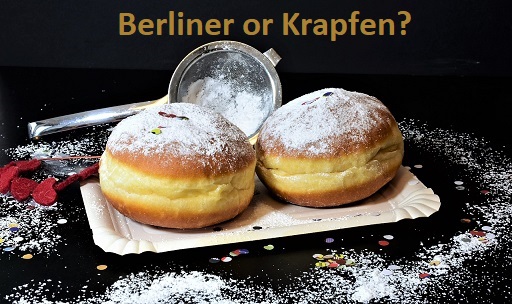
Let’s start with the word that causes the most trouble. The thing in question is a round, yeast-dough pastry fried in fat and filled with jam, and Germans eat huge quantities of it, especially around carnival season. The Central Association of the German Bakers’ Trade says more than 350 million of them are sold in Germany every year. Nobody agrees on what to call it:
Word
Where you’ll hear it
Berliner
Much of western and northern Germany, including the Rhineland
Pfannkuchen
Berlin and the surrounding area
Krapfen (or Faschingskrapfen)
Bavaria, Austria, and South Tyrol
Kreppel (or Kräppel, Krebbel)
Hesse and parts of neighboring regions
Fastnachtsküchle
Parts of Baden-Württemberg, the Palatinate, and Saarland
Berliner Ballen, Puffel
Used by some bakers in the east
In a language survey from 2007, researchers found that nearly half of respondents said “Berliner,” about a third said “Krapfen” or “Kräppel,” and around 17 percent said “Pfannkuchen.” Depending on how you count, there are up to ten different words for the same pastry.
The history makes the confusion a little more understandable. “Krapfen” is a medieval word, and it comes from an Old High German term thought to mean “claw.” In Berlin, people called the pastry a Pfannkuchen because it was baked in a pan, and the name “Berliner” stuck elsewhere because it left the city under that name. “Berliner” and “Pfannkuchen” are both short for “Berliner Pfannkuchen.” There’s even a close cousin in Jewish cooking: the sufganiyot eaten at Hanukkah.
The practical rule: if you’re not sure, look at the display. And in carnival season, the Fastnacht tradition explains why these pastries are everywhere. See our guide to Karneval in Germany.
But Then, What Do You Call a Real Pancake?
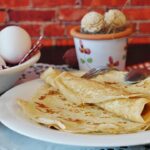
This is where it gets worse. A thin, flat pancake is usually called a Pfannkuchen, but in the places where Pfannkuchen already means the doughnut, speakers need another word:
Eierkuchen is used in Berlin and much of eastern Germany.
Plinse (or Plinz) is the Sorbian-origin word used in parts of Saxony and Brandenburg.
Palatschinken appears in southern Germany and Austria.
So if a Berliner makes you Pfannkuchen for breakfast, you’ll get a doughnut. If you want something flat with maple syrup, ask for Eierkuchen.
The Bread Roll Wars
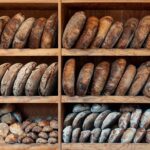
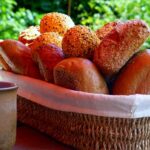
The next battlefield is the small white bread roll, and the regional names read like a map of the country. The standard word is Brötchen. But:
In Berlin, it’s a Schrippe. The word is said to come from the roll’s torn or “geschrippte” crust, and it has been used since the late 18th century.
In Bavaria, it’s a Semmel.
In Freiburg and much of Baden-Württemberg, it’s a Weckle or Weck.
In Hamburg, it’s a Rundstück.
A Freiburg visitor asking for a Weckle in a Berlin bakery might get the answer “Wat denn? Eine Schrippe meenen Se?” You can read more about the culture behind it in our guide to German bread.
More Words That Change at the Border
The butcher.Metzger in the south and west, Fleischer in Berlin and the east, Schlachter in parts of the north.
The meatball.Frikadelle in much of Germany, Bulette in Berlin, Fleischpflanzerl in Bavaria.
A sweet. In northern Germany, a hard candy may be called a Klümpchen.
The cream.Sahne in Germany, Obers or Schlagobers in Austria.
These regional differences are strongest in the language of everyday life, particularly for fruit, vegetables, and specific foods, according to linguists. A useful resource for the curious is the Atlas of Everyday German (Atlas zur deutschen Alltagssprache), a research project that maps these differences across Germany and Austria.
A Quick Austria Cheat Sheet
German is also an official language in Austria, where food words often diverge from those used in Germany:
Germany
Austria
Aprikose
Marille
Tomate
Paradeiser
Kartoffel
Erdapfel
Quark
Topfen
Sahne
Obers
Berliner/Krapfen
Krapfen
How to Order Without Embarrassing Yourself
Listen first. Look at what the locals ask for, or check the sign in the window.
Point, then name. If you aren’t sure, point at the item and say the standard word. Nobody minds.
Smile if you’re corrected. The correction is usually friendly, and often comes with local pride.
Don’t take it personally. A few Germans take their word for the doughnut very seriously.
What is the difference between a Berliner and a Krapfen? Nothing, apart from the name. Both are fried yeast-dough pastries, usually filled with jam. The word depends on the region, with “Berliner” in much of the north and west, “Krapfen” in Bavaria and Austria, and “Pfannkuchen” in Berlin.
What do Germans call a bread roll? Brötchen in most of the country, Semmel in Bavaria, Schrippe in Berlin, Weckle or Weck in the southwest, and Rundstück in Hamburg.
What is an Eierkuchen? A thin pancake, the word used in Berlin and eastern Germany where “Pfannkuchen” means a doughnut.
Why does Germany have so many regional food words? German developed from many regional dialects, and the everyday words for foods and drinks are where that variety has survived best in standard German.