German Clubs: Vereine, Stammtisch and How to Join One
Germany has roughly 629,000 registered associations. That’s one for every 130 or so residents, and it means that, whatever you enjoy, from football to folk dancing, beekeeping to bell ringing, somebody has already founded a club for it, registered it with a court, and printed a membership form.
If Germany has a hidden social infrastructure, this is it. The Verein (plural Vereine) is where many Germans meet friends, play sports, make music, and volunteer. It’s also where an outsider who wants to make friends in Germany will find the most open door. Here’s how the system works, what to expect, and how to join one.
What Is a Verein?
A Verein is a club or association: a group of people who organize themselves around a shared interest, with written rules, elected officers, and membership dues. Many are registered at the local court, which gives them the suffix e.V. (eingetragener Verein, or “registered association”). Registered clubs are a legal entity, so they can own property, sign contracts, and apply for public funding. Founding one requires a minimum number of members, usually given as seven, plus a set of statutes (Satzung).
The right to form associations is protected in the German constitution, in Article 9 of the Basic Law, and the country has made good use of it. In March 2026, researchers at ZiviZ, the civil society research center at the Stifterverband, counted 628,992 registered associations, and 2024 saw 13,534 new foundations, the highest figure in almost ten years.
The Numbers
Sports clubs. The German Olympic Sports Confederation (DOSB) reported a record of about 29.3 million memberships in organized sport at the start of 2025, in what its recent counts put at roughly 86,000 sports clubs. Because people can belong to more than one, that’s not the same as 29 million people, but the DOSB calls it the country’s largest civic movement.
Size. The average sports club has around 260 members. About a third have fewer than 100, and only a small percentage have more than 1,000.
Volunteering. Studies of civil society conclude that voluntary engagement in a Verein is the norm, not an outdated model.
The Cast of Clubs
Almost any activity has a club. Some of the best-known types:
Type
What it is
Sportverein
The big one: football, gymnastics (Turnverein), handball, swimming, and dozens more
Schützenverein
Marksmen’s club, with a shooting tradition and an annual Schützenfest in many towns
Karnevalsverein
Carnival club that organizes the season’s parades and sessions (see our guide to Karneval)
Gesangverein or Chor
Choir, often with a history stretching back more than a century
Kleingartenverein
Allotment garden club, the home of the famous Schrebergarten
Heimatverein
Local heritage association
Alpenverein
Mountaineering and hiking clubs, the German Alpine Club among the largest
Förderverein
A support association for a school, kindergarten, or museum
Vereinsmeierei: When Clubs Get Serious
The German language has a word for taking club life a little too seriously: Vereinsmeierei. It refers to the stereotype of club members obsessed with rules, procedure, and who gets to sit on the committee. The jokes are affectionate, but there’s some truth in them. Clubs typically have a board (Vorstand), a treasurer (Kassenwart), minutes of every meeting (Protokoll), and an annual general meeting (Jahreshauptversammlung) where members vote, discuss the accounts, and elect officers. If you’ve ever wondered where Germans learn to run a meeting efficiently, this is it.
Stammtisch: The Regulars’ Table
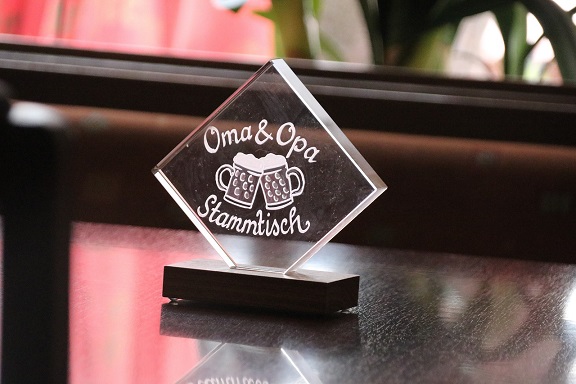
If the Verein is the formal side of German social life, the Stammtisch is the informal one. The word means “regulars’ table,” and it refers to a table in a pub or restaurant reserved for a group that meets there regularly, often weekly or monthly. Traditionally, a sign marks the table, and in a classic village inn, strangers know not to sit there.
The Stammtisch has a second meaning, too. A Stammtischparole is a loud, simplistic opinion of the kind you might hear in a bar after a few drinks, as in “that’s just Stammtisch talk.” It’s a reminder that the table has long been a place for opinions and debate.
Today, Stammtische have spread far beyond the village pub. You’ll find them for professionals, hobbyists, language learners, and expats. If you’re new to a city, searching for an English-speaking or hobby-based Stammtisch is one of the easiest ways to meet people.
How to Join a Verein
Joining is usually straightforward, though it comes with some German formality.
Find one. Check your town’s website, notice boards, the local newspaper, or ask colleagues and neighbors. Sports federations and city portals often list clubs.
Try it first. Many clubs offer a trial session (Probetraining or Schnupperkurs), so you can see whether it suits you before committing.
Ask about the paperwork. You’ll be asked to complete a membership form and agree to pay annual or monthly dues (Mitgliedsbeitrag), which vary widely depending on the club and activity.
Check the notice period. Memberships often renew automatically, with a set cancellation deadline, a bit like other contracts in Germany.
Expect to be asked to help. Many clubs rely on volunteers, so you may be invited to take a shift at the festival, join a working day, or sit on the committee, usually without pressure.
Be on time. The meeting starts when it says it does.
Why It Matters
Clubs are one of the reasons small German towns can sustain a rich cultural life, with brass bands, village festivals, and sports teams run mostly by volunteers. For newcomers, they offer a structured and welcoming way to make friends, practice German, and become part of a community. They’re also where the country’s famed Feierabend free time often goes, as described in our guide to Feierabend. Not every club is thriving, and many struggle to attract young volunteers, but the basic idea has proven remarkably durable.
If you want to understand German social life, don’t just visit a museum or a market. Go to a Verein’s open day, or take a seat (not the reserved one) at a Stammtisch.
FAQ
What does e.V. mean? Eingetragener Verein: a registered association, a club entered in the register at the local court, which gives it legal status.
How many Vereine are there in Germany? About 629,000 registered associations as of March 2026, according to ZiviZ, plus roughly 86,000 sports clubs counted by the DOSB.
What is a Stammtisch? A regulars’ table in a pub or restaurant where a group meets regularly, and the word is also used for casual meetups, such as expat or hobby groups.
Can foreigners join a German club? Yes. Most clubs welcome new members regardless of nationality, and joining is a popular way for newcomers to meet people and practice German.