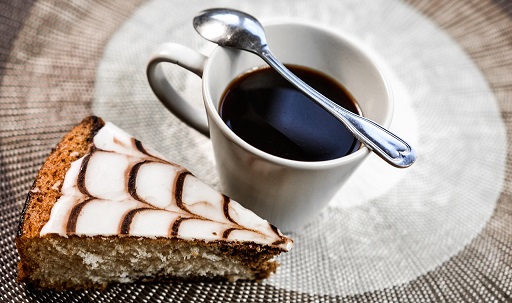
Kaffee und Kuchen: Germany’s Sacred Afternoon Break
There’s a particular hour in Germany that the rest of the world hasn’t quite worked out. Lunch is long gone. Dinner is nowhere near. It’s around three o’clock, the light is turning gold, and a surprising number of people are suddenly, urgently thinking about cake.
This isn’t snacking. Snacking is something you do at your desk, alone, with one hand. What happens at three o’clock in Germany has a name, a schedule, and its own china. It’s called Kaffee und Kuchen, “coffee and cake,” and if you spend any time here, you’ll be invited to it. You should say yes.
A Meal That Pretends to Be a Snack
Here’s the thing that surprises newcomers: Germans don’t treat cake as dessert. Dessert comes after a meal. Kaffee und Kuchen is the meal, or at least a meal’s worth of occasion, somewhere in the window between about three and five o’clock. On Sundays especially, the classic day for it, you’ll often be invited “zum Kaffee” instead of to lunch or dinner. That means coffee, but it means so much more than coffee: a table, a plate of cake, a pot of the good stuff, and a few hours with no particular agenda.
The British have teatime, and the comparison comes up constantly, but the feel is different. Teatime is a ritual of etiquette. Kaffee und Kuchen is a ritual of settling in. People talk about it less as a custom and more as a mood, the German word Gemütlichkeit doing a lot of work in the background.
How a Country Fell for Coffee (After Being Told Not To)
The story starts in the 17th century. The first coffeehouse on German soil opened in Bremen in 1673, followed by Hamburg in 1677. Coffee was a luxury for the well-off, and the rulers noticed. Frederick the Great of Prussia decided the money flowing out of his kingdom for coffee beans was a problem, so he put the trade under a state monopoly in the 1760s, banned private roasting around 1780, and sent out inspectors known as Kaffeeschnüffler, or “coffee sniffers,” to follow the smell of roasting beans to illegal kitchens. (Yes, this is real. No, it didn’t last.)
By the middle of the 19th century, industrialization had made coffee something ordinary people could afford. It became the Volksgetränk, the people’s drink. At the same time, the middle classes had developed the Kaffeekränzchen, small circles of friends who took turns hosting each other at home. Originally associated with women, these gatherings were the social alternative to the men’s regulars’ table, and they’re the reason the German language still uses Kaffeeklatsch for a good chat over coffee. Cake was the obvious companion, and the combination stuck.
Today, Germans are among the world’s heavy coffee drinkers. Depending on the year and the source, consumption runs at roughly 150 to 170 liters per person per year, about four cups a day on average according to the German Coffee Association, and coffee ranks ahead of mineral water and beer as the nation’s favorite drink.
The Cast of Cakes
If you want to understand German cake culture, start by learning the difference between Kuchen and Torte. A Kuchen is the everyday cake: baked in a tin or on a tray, often topped with crumbs or fruit. A Torte is the grander, layered cousin, usually with cream or filling and plenty of decoration. Both turn up at Kaffee und Kuchen, and a good Konditorei will offer dozens.
A few names you’ll meet again and again:
Streuselkuchen. Tray-baked yeast cake with a crumbly butter topping. The comfort classic.
Käsekuchen. German cheesecake, made with quark and much lighter than its American cousin.
Bienenstich. “Bee sting cake,” a yeast cake with a caramelized almond topping and a cream filling.
Schwarzwälder Kirschtorte. Black Forest cake, with chocolate, cherries, cream, and a kick of cherry brandy.
Donauwelle. A marbled, two-layer cake with cherries and a chocolate glaze, known in the former East Germany as the Schneewittchenkuchen.
Marmorkuchen and Gugelhupf. Marble cake and the ring-shaped classic, simple and good with coffee.
The seasons matter too. Summer brings fresh plum cake (Pflaumenkuchen) and strawberry tarts, while winter calls for Christstollen and fruit bread.
How It Actually Goes
At a private Kaffee und Kuchen, expect a table set with proper plates, cake forks, and cups, often the china that doesn’t come out for anything else. Coffee arrives in a pot. Cake is cut and passed around, and there’s often a bowl of whipped cream (Schlagsahne) next to it, because cake without cream is somehow considered a little sad. The host will urge you to take another piece. It’s polite to accept.
Then comes the part that makes it worthwhile: nobody hurries. The conversation wanders, the coffee gets topped up, and by the time you stand to leave, an entire afternoon has quietly disappeared. Don’t be surprised if dinner is light afterward. In many households, the evening meal is simply bread, cold cuts, and cheese, which you can read about in our guide to German bread culture.
Doing It in a Café
You don’t need to be invited to a home to take part. Germany’s cake shops, known as Konditoreien, and many bakeries have a café attached, and Sunday afternoon is when they’re at their busiest. Cafés and restaurants are generally open on Sundays even when the shops are shut, a pleasant exception to the country’s closing rules. Our guide to Sunday closing in Germany explains the rest.
A few phrases will take you far:
“Ein Stück Käsekuchen, bitte.” One slice of cheesecake, please.
“Mit Sahne, bitte.” With whipped cream, please.
“Ein Kännchen Kaffee, bitte.” A small pot of coffee, please. In many cafés this gets you two to three cups, which is both cheaper and more civilized than ordering by the cup.
“Zusammen oder getrennt?” Together or separately? This is how the waiter asks about the bill, and it’s the standard way to pay in Germany.
Not Everyone Drinks Coffee
A small footnote for the north: in Hamburg and above all in East Frisia, the afternoon ritual is traditionally more likely to involve tea than coffee, with its own elaborate customs. The cake stays the same.
Why It Endures
In a country with a reputation for efficiency, Kaffee und Kuchen is a deliberately inefficient ritual, and that’s the point. It’s a protected pause, a scheduled moment when work stops and people sit together without devices or deadlines. The same instinct appears at the office, where a coffee break with cake is a normal way to mark a birthday or a farewell. Cell phones may have changed the details, but the idea has outlasted every modern attempt to make the afternoon more productive.
So if a German acquaintance says “Kommst du zum Kaffee?”, the answer is yes. Bring an appetite and no plans for the rest of the afternoon.
FAQ
What time is Kaffee und Kuchen in Germany? Usually between about three and five in the afternoon, with Sunday as the classic day for it.
What is the difference between Kuchen and Torte? Kuchen is an everyday cake, often baked in a tin or on a tray, while Torte is a layered, filled, and decorated cake.
Is cake a dessert in Germany? Not in the Kaffee und Kuchen tradition. It’s eaten in the afternoon as an occasion in its own right, not after a meal.
What is a Kännchen? A small pot of coffee served in a café, usually holding two to three cups.