German Culture

All about Germany

  • Home
  • Learn German
    • German Language Basics
    • German Grammar & Vocabulary
    • German Learning Tips
    • German Idioms & Expressions
    • German Quizzes & Exercises
  • Articles
    • Famous Germans
    • German Holidays
    • German Cuisine
    • How To In Germany
    • Daily Life in Germany
    • German Facts
    • German Traditions
  • Facts About Germany
  • German History
    • Early History of Germany
    • Middle Ages in German History
    • German Reformation Period
    • 19th Century and German Unification
  • German Recipes
    • German Baking Recipes
    • German Bread Recipes
    • German Christmas Recipes
    • Desserts
    • German Easter Recipes
    • Halloween Recipes
    • Main Dishes
    • German Salad Recipes
    • German Salads
    • Sauerkraut Recipes
  • Travel to Germany
  • Contact

April 11 in German History

April 11, 1370

Birth of Friederich I (also called Friedrich der Streitbare) in Saxony. Friedrich became the elector of Saxony in the Holy Roman Empire. He assisted the emperor, Sigismund in a campaign against the Bohemian adherents of Jan Hus in 1420.

April 11, 1741

Birth of Johann Heinrich Merck in Darmstadt, Germany. Merck supported Christoph Friedrich Nicolai, Christoph Wieland, Johann von Herder and Johann Wolfgang von Goethe, young Sturm und Drang writers. He was one of the founders of the Frankfurter Gelehrte Anzeigen in which some of Goethe’s early works were published and he contributed to the Allgemeine deutsche Bibliothek and Der teutsche Merkur.

April 11, 1819

Birth of Sir Charles Halle (original name Carl Halle) in Hagen, Germany. Halle studied music in Darmstadt and Paris. In Paris he became friends with Frederic Chopin, Franz Liszt and Hector Berlioz. During the revolution of 1848 he fled to England. in 1858 he founded the famed Halle orchestra which he conducted for the remainder of his life. He was knighted in 1888.

April 11, 1825

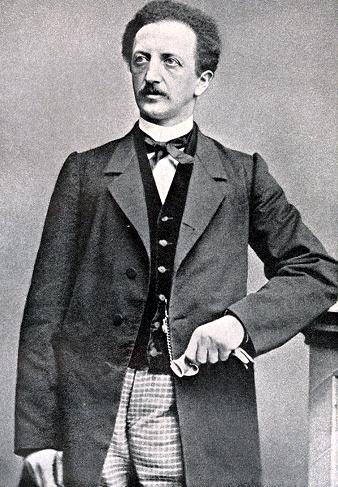
lassalle

Birth of Ferdinand Lasalle (1825-1864) in Breslau, Germany (now in Poland). Lasalle was a follower of Karl Marx and one of the founders of the German labor movement. Unlike Marx, however, Lasalle promoted an evolution of workers rights rather than Marx’s revolutionary approach. Lasalle studied at the University of Berlin where he was exposed to the ideas of Friedrich Hegel and Ludwig Feuerbach. During study-abroad in Paris he made the acquaintance of the poet Heinrich Heine. He was in Germany again by 1848 and participated in the revolution. He lived in Düsseldorf from 1848-1857. He then moved to Berlin where he worked as a political journalist. In 1863 he was involved in the founding of the “Allgemeiner Deutscher Arbeiterverein” in Leipzig and was elected its president.

April 11, 1875

Schwabe

Death of Samuel Heinrich Schwabe (1789-1875) in Dessau, Germany. Schwabe was a hobby astronomer who was the first to observe that sunspots pass through a cycle of 10 years. He made his observations public in 1843. Schwabe also drew the first known, detailed image of the Great Red Spot of Jupiter.

April 11, 1876

Friedrich Nietzsche proposes marriage to Mathilde Trampedach. (She declines, for she is in love with her piano teacher.)

April 11, 1968

Rudi Dutschke is shot. Dutschke was a leader of the Students for a Democratic Society and later active in the Green Party.

April 11, 1996

A construction accident leads to the burning of the Düsseldorf airport.
Back to Today in German History Calendar

You might also like:

  • The Rich Tapestry of German Literature: From the Brothers Grimm to Contemporary Authors
    The Rich Tapestry of German Literature: From the Brothers…
  • From Poets to Politicians: German’s Role in Identity
    From Poets to Politicians: German’s Role in Identity
  • German Science and Culture in 18th Century
    German Science and Culture in 18th Century
  • The Congress of Vienna and the German Confederation
    The Congress of Vienna and the German Confederation
  • All Facts About Germany: A Comprehensive Guide to the Country
    All Facts About Germany: A Comprehensive Guide to the…
  • The Evolution of the German Language: From Old High German to Modern Dialects
    The Evolution of the German Language: From Old High German…
  • The Holy Roman Empire
    The Holy Roman Empire
  • German Language: A Journey Through Linguistic Heritage, Structure, and Influence
    German Language: A Journey Through Linguistic Heritage,…

Recent Posts

German potato soup (Kartoffelsuppe) represents the heart of traditional German home cooking.

German Potato Soup Recipe (Kartoffelsuppe)

Frederick the Great and the Potato

Frederick the Great and the Potato

Potatoes are one of the most beloved ingredients in German cuisine

Traditional German Potato Dishes

Traditional German potato dishes

Traditional German Potato Dishes You Should Know

Discover how potatoes in German culture shaped history

Potatoes in German Culture

The German Zeppelin represents far more than a transportation technology.

German Zeppelin: The Rise and Fall of Germany’s Giant Airships

Discover how the German Zeppelin worked

How the German Zeppelin Worked: Inside the Engineering of Airship Giants

Valentine’s Day in Germany: Love, History, and Traditions

Valentine’s Day in Germany: From American Import to Cultural Tradition

Copyright © 2026 · German Culture

Go to mobile version