German Culture

All about Germany

  • Home
  • Learn German
    • German Language Basics
    • German Grammar & Vocabulary
    • German Learning Tips
    • German Idioms & Expressions
    • German Quizzes & Exercises
  • Articles
    • Famous Germans
    • German Holidays
    • German Cuisine
    • How To In Germany
    • Daily Life in Germany
    • German Facts
    • German Traditions
  • Facts About Germany
  • German History
    • Early History of Germany
    • Middle Ages in German History
    • German Reformation Period
    • 19th Century and German Unification
  • German Recipes
    • German Baking Recipes
    • German Bread Recipes
    • German Christmas Recipes
    • Desserts
    • German Easter Recipes
    • Halloween Recipes
    • Main Dishes
    • German Salad Recipes
    • German Salads
    • Sauerkraut Recipes
  • Travel to Germany
  • Contact

April 23 in German History

April 23, 1500

Birth of Johannes Stumpf in Bruchsal, Germany. Stumpf was one of the leading Swiss chroniclers of his age. His Gemeiner loblicher Eydgnoschafft Stetten, Landen und Völckeren chronikwirdiger Thaaten Beschreybung of 1547 to 1548 gives detailed information on that period in Switzerland.

April 23, 1708

Birth of Friedrich von Hagedorn in Hamburg, Germany. Hagedorn was an Anacreontic poet. His collections of Poems include Versuch in poetischen Fabeln und Erzählungen (1738) and Oden und Lieder (3 vols. 1742-1752).

April 23, 1796

Death of Theodor Gottlieb von Hippel in Königsberg, Germany (now in Russia). Hippel was the mayor of Königsberg and a novelist. Among his works are Lebensläufe nach aufsteigender Linie (1781) and Über die Ehe (1774). Hippel was devoted to the ideas of Immanuel Kant.

April 23, 1828

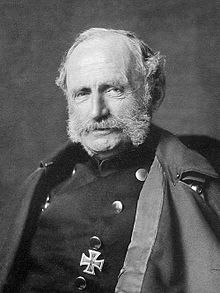
Birth of Albert of Saxony in Dresden, Germany. Albert was the king of Saxony from 1873-1902. He was trained and experienced as an army officer when he came to power and continued to take an active role in military affairs. He was actively involved in the war with the Danes, the Seven Weeks’ War and the Franco-Prussian war.

April 23, 1858

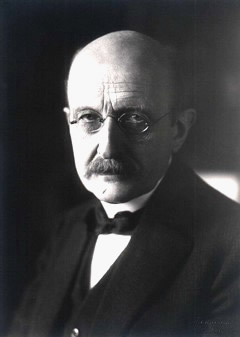
planck

Birth of Max Planck (1858-1947) in Kiel, Germany. Planck was a German theoretical physicist who originated quantum theory, which won him the Nobel Prize in Physics in 1918.

Planck made many contributions to theoretical physics, but his fame rests primarily on his role as originator of the quantum theory. This theory revolutionized human understanding of atomic and subatomic processes, just as Albert Einstein’s theory of relativity revolutionized the understanding of space and time. Together they constitute the fundamental theories of 20th-century physics. Both have led humanity to revise some of its most cherished philosophical beliefs, and have brought about industrial and military applications that affect many aspects of modern life.

April 23, 1907

Birth of Fritz Wotruba in Vienna, Austria. Wotruba was a minimalist abstract sculptor working in Vienna.

April 23, 1990

In an election in Karl-Marx-Stadt over 75% of the voters vote to change the name of the city back to Chemnitz. The name had been changed on May 5, 1953 in honor of the 135th birthday of Karl Marx.
Back to Today in German History Calendar

You might also like:

  • Common Genealogical Terms for German Ancestry Research
    Common Genealogical Terms for German Ancestry Research
  • Authentic Königsberger Klopse Recipe: A Taste of German Tradition
    Authentic Königsberger Klopse Recipe: A Taste of German…
  • The Rich Tapestry of German Literature: From the Brothers Grimm to Contemporary Authors
    The Rich Tapestry of German Literature: From the Brothers…
  • The Evolution of the German Language: From Old High German to Modern Dialects
    The Evolution of the German Language: From Old High German…
  • Amalie Emmy Noether: The Revolutionary Mathematician Who Changed the World of Physics
    Amalie Emmy Noether: The Revolutionary Mathematician Who…
  • German Pilgrimages and the Jakobsweg
    German Pilgrimages and the Jakobsweg
  • German Reformation and Early Modern Period
    German Reformation and Early Modern Period
  • How to Say Happy Easter in German – Common Easter Greetings
    How to Say Happy Easter in German – Common Easter Greetings

Recent Posts

The German Zeppelin represents far more than a transportation technology.

German Zeppelin: The Rise and Fall of Germany’s Giant Airships

Discover how the German Zeppelin worked

How the German Zeppelin Worked: Inside the Engineering of Airship Giants

Valentine’s Day in Germany: Love, History, and Traditions

Valentine’s Day in Germany: From American Import to Cultural Tradition

"Kinder, Küche, Kirche" functions primarily as a historical artifact and cautionary phrase

“Kirche, Küche, Kinder”: Germany’s Three K’s

Women and German Military Traditions

Women in German Army: Historical Evolution

Hindenburg disaster

The Death of the Hindenburg: The Catastrophe That Ended the Airship Era

German wedding Tracht represents the most meaningful ways modern couples honor their cultural heritage.

German Wedding Tracht: History and Cultural Meaning

The History of Traditional German Clothing

The History of Traditional German Clothing

Copyright © 2026 · German Culture

Go to mobile version