German Culture

All about Germany

  • Home
  • Learn German
    • German Language Basics
    • German Grammar & Vocabulary
    • German Learning Tips
    • German Idioms & Expressions
    • German Quizzes & Exercises
  • Articles
    • Famous Germans
    • German Holidays
    • German Cuisine
    • How To In Germany
    • Daily Life in Germany
    • German Facts
    • German Traditions
  • Facts About Germany
  • German History
    • Early History of Germany
    • Middle Ages in German History
    • German Reformation Period
    • 19th Century and German Unification
  • German Recipes
    • German Baking Recipes
    • German Bread Recipes
    • German Christmas Recipes
    • Desserts
    • German Easter Recipes
    • Halloween Recipes
    • Main Dishes
    • German Salad Recipes
    • German Salads
    • Sauerkraut Recipes
  • Travel to Germany
  • Contact

December 27 in German History

December 27, 1571

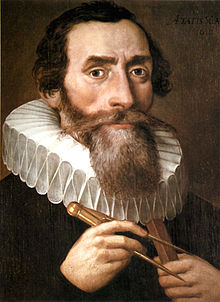
Johannes_Kepler_1610

Birth of Johannes Kepler in Weil der Stadt, Germany, in 1571. He studied at the University of Tübingen. While a student he became convinced that Copernicus had been correct in his astronomical system. Early on he rejected the idea that the stars and planets can influence human lives. He developed the idea that the planets moved in elliptical orbits around the sun. In 1620 during the witch hunting craze, Kepler’s mother was accused of witchcraft. Fortunately he was able to use his influence and position to save her from torture and death.

December 27, 1896

Birth of Karl Zuckmayer in Nackenheim, Germany. The writer, Karl Zuckmayer won the Kleist Prize for Der fröhliche Weinberg (1923) and the Goethe prize in 1952 for his collected works. Other works by Zuckmayer include Der Hauptmann von Köpenick (1931), Des Teufels General (1946) and Das Kalte Licht (1955). Zuckmayer fled Germany in 1939 and lived in the United States until 1946. Thereafter he resided in Switzerland.


December 27, 1901

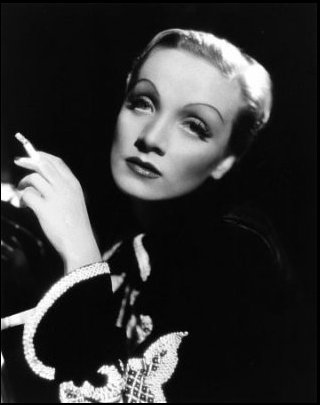
Marlene-Dietrich2

Birth of Marlene Dietrich (1901-1992) (born Marie Magdalene Dietrich) in Berlin, Germany. “Ich bin, Gott sei Dank, Berlinerin” is the title of her autobiography. She had been a small time player in German films for seven years before she was suddenly a superstar with Der blaue Engel (1930). Director, Josef von Sternberg then brought her to America, where she continued to make pictures through the 70’s. During WWII she entertained Allied troops on over 500 occasions. Among her films are Shanghai Express, The Devil is a Woman, Witness for the Prosecution, and Judgment at Nuremberg.

December 27, 1936

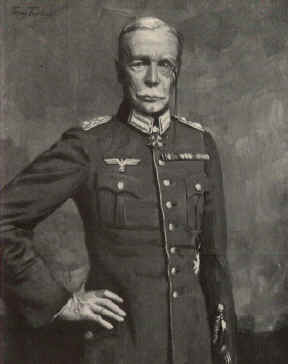
Hans von Seeckt

Death of Hans von Seeckt in Berlin, Germany. General von Seeckt was the head of the German army from 1920-1926 during the time of the Weimar Republic. Although the Versailles Treaty forbade Germany an up-to-date army, through an agreement to train Russian troops, von Seeckt was able to have his own personnel experiment with up to date weapons. He resigned from the army in 1926 and became a member of the Parliament.

December 27, 1950

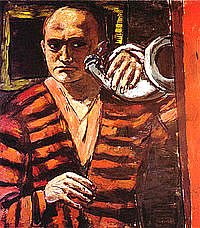
Max_Beckmann

Max Beckmann, Self-portrait with Horn, 1938-1940

Death of Max Beckmann in New York City (born in Leipzig, Germany). Beckmann was an Expressionist painter. He moved to Berlin in 1904 and joined the “Berlin Secession”. In 1906 he met the Norwegian painter, Edvard Munch, who made a lasting impression on him and his art. His work was declared degenerate by the Nazis. He fled to Amsterdam in 1937 and then to the United States. For a time he taught at Washington University in St. Louis. Some of his titles are “The Descent from the Cross”, “The Night”, “The Actors”, and “Argonauts”.
Back to Today in German History Calendar

You might also like:

  • The German Witch Hunts: A Dark Chapter in European History
    The German Witch Hunts: A Dark Chapter in European History
  • The German Influence on Classical Music: Composers Who Shaped the World
    The German Influence on Classical Music: Composers Who…
  • The Holy Roman Empire: An Epoch of European History
    The Holy Roman Empire: An Epoch of European History
  • Georg Wilhelm Friedrich Hegel: Philosophy and Influence
    Georg Wilhelm Friedrich Hegel: Philosophy and Influence
  • Martin Heidegger - Being, Time, and the Question of Existence
    Martin Heidegger - Being, Time, and the Question of…
  • Famous German Scientists Who Changed the World (Beyond Einstein!)
    Famous German Scientists Who Changed the World (Beyond…
  • The Rise of Monastic Winemaking in Germany: German Medieval Wine Culture
    The Rise of Monastic Winemaking in Germany: German Medieval…
  • Germanic Mythology and Pagan Beliefs
    Germanic Mythology and Pagan Beliefs

Recent Posts

Are German stereotypes true?

German Stereotypes: What’s True and What’s Not

German work culture has many strength

German Work Culture: What Makes It So Different?

Why is German culture so efficient

Why Is German Culture So Efficient? The Secrets Behind It

Modern Germany is one of the most diverse countries in Europe.

What Do Germans Think of Foreigners? The Truth Explained

Foundation of German Culture

German Values and Beliefs: What Shapes Daily Life

German friendliness just looks different.

Are Germans Friendly or Rude? Breaking the Stereotype

Why Germans value rules so highly

Why Do Germans Love Rules? Ordnung Explained

Examples of German Directness

Why Are Germans So Direct? Understanding Blunt Communication

Copyright © 2026 · German Culture

Go to mobile version