German Culture

All about Germany

  • Home
  • Learn German
    • German Language Basics
    • German Grammar & Vocabulary
    • German Learning Tips
    • German Idioms & Expressions
    • German Quizzes & Exercises
  • Articles
    • Famous Germans
    • German Holidays
    • German Cuisine
    • How To In Germany
    • Daily Life in Germany
    • German Facts
    • German Traditions
  • Facts About Germany
  • German History
    • Early History of Germany
    • Middle Ages in German History
    • German Reformation Period
    • 19th Century and German Unification
  • German Recipes
    • German Baking Recipes
    • German Bread Recipes
    • German Christmas Recipes
    • Desserts
    • German Easter Recipes
    • Halloween Recipes
    • Main Dishes
    • German Salad Recipes
    • German Salads
    • Sauerkraut Recipes
  • Travel to Germany
  • Contact

July 5 in German History

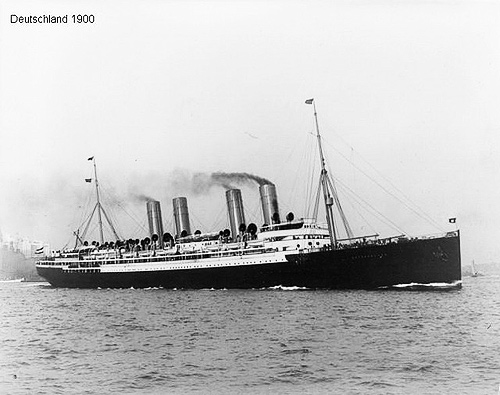
July 5, 1900

deutschland1900

The German passenger ship, Deutschland, wins the Blue Ribbon (Blue Riband), the award for the fastest crossing of the North Atlantic. Deutschland reached 23.06 knots (42.71 km/h) on one of her 1900 Blue Riband voyages. At this time in history the fastest crossing of the Atlantic had come to have enormous national and corporate prestige. The Titanic was attempting to set the record when it collided with the iceberg and sank.

July 5, 1914

German Emperor William II and Chancellor Theobald von Bethmann Hollweg take the decision to support Austria-Hungary in the conflict with Serbia and Russia. In the escalation, the decision would bring Germany into World War I and, in the end, disaster.

July 5, 1920

Death of Max Klinger in Naumburg, Germany. Klinger was a painter, sculptor and engraver. He is noted for his often morbid and grotesque images and his rejection of convention.

July 5, 1942

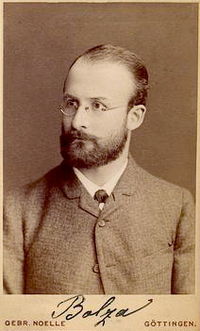
Death of Oskar Bolza in Freiburg, Germany. Bolza was a mathematician who contributed to the calculus of variations, Lectures on the Calculus of Variations (1904), he developed the “problem of Bolza”. Bolza was educated at the University of Göttingen. From 1893 to 1910 he taught at the University of Chicago. In 1910 he returned to Germany and taught at the University of Freiburg.

July 5, 1955

West Germany regains sovereignty, granted by the Allied powers of World War II.

July 5, 1969

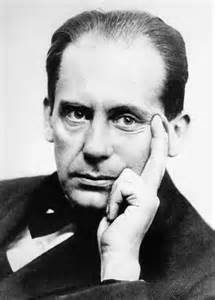
Death of Walter Gropius in Boston, MA (born in Berlin, Germany). An architect who was director of the Bauhaus in Weimar and Dessau from 1919-1928 Gropius designed buildings at the Bauhaus complex in Dessau, the Harvard University Graduate Center and the U. S. Embassy in Athens. Gropius studied in Munich and Berlin. He pioneered the prefabrication of building components. During World War I he served with the German cavalry. In 1915 he married Alma Schindler, who at various times also married several other European notables including Gustav Mahler and Franz Werfel. Gropius left Germany in 1934 and in 1937 accepted a position at Harvard University in the United States.

July 5, 2001

Hannelore Kohl, the wife of the former chancellor, Helmut Kohl, committed suicide on this date. She suffered from a rare, incurable and increasingly painful allergy to light. She had not been able to leave a completely darkened room in their home for 15 months prior to her death. Mr. and Mrs. Kohl had been married since 1960 and had celebrated their 41 anniversary just days before.
Back to Today in German History Calendar

You might also like:

  • The German Zeppelin represents far more than a transportation technology.
    German Zeppelin: The Rise and Fall of Germany’s…
  • Hindenburg disaster
    The Death of the Hindenburg: The Catastrophe That…
  • Prussia Before Germany: The Military State That Shaped a Nation
    Prussia Before Germany: The Military State That…
  • The Franco-Prussian War - The Conflict That United Germany
    The Franco-Prussian War (1870–71)
  • Kaiser Wilhelm I: Germany’s First Emperor of Unity
    Kaiser Wilhelm I: The First Emperor of a United Germany
  • Rise of Brandenburg-Prussia - Military Powerhouse
    Rise of Brandenburg-Prussia
  • The Thirty Years’ War
    The Thirty Years’ War and Its Impact on Germany
  • Rise of the Hanseatic League: Medieval Germany’s Merchant Powerhouse
    The Rise of the Hanseatic League

Recent Posts

Are German stereotypes true?

German Stereotypes: What’s True and What’s Not

German work culture has many strength

German Work Culture: What Makes It So Different?

Why is German culture so efficient

Why Is German Culture So Efficient? The Secrets Behind It

Modern Germany is one of the most diverse countries in Europe.

What Do Germans Think of Foreigners? The Truth Explained

Foundation of German Culture

German Values and Beliefs: What Shapes Daily Life

German friendliness just looks different.

Are Germans Friendly or Rude? Breaking the Stereotype

Why Germans value rules so highly

Why Do Germans Love Rules? Ordnung Explained

Examples of German Directness

Why Are Germans So Direct? Understanding Blunt Communication

Copyright © 2026 · German Culture

Go to mobile version