German Culture

All about Germany

  • Home
  • Learn German
    • German Language Basics
    • German Grammar & Vocabulary
    • German Learning Tips
    • German Idioms & Expressions
    • German Quizzes & Exercises
  • Articles
    • Famous Germans
    • German Holidays
    • German Cuisine: A Guide to Dishes, Regions and Food Traditions
    • How To In Germany
    • Daily Life in Germany
    • German Facts
    • German Traditions
  • Facts About Germany
  • German History
    • Early History of Germany
    • Middle Ages in German History
    • German Reformation Period
    • 19th Century and German Unification
  • German Recipes
    • German Baking Recipes
    • German Bread Recipes
    • German Christmas Recipes
    • Desserts
    • German Easter Recipes
    • Halloween Recipes
    • Main Dishes
    • German Salad Recipes
    • German Salads
    • Sauerkraut Recipes
  • Travel to Germany
  • Contact

November 6 in German History

November 6, 1672

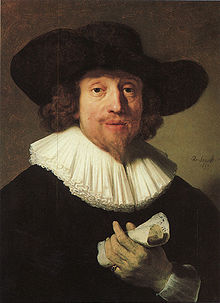
Heinrich_Schutz_by_Rembrandt

Death of Heinrich Schütz in Dresden, Germany. One of the most talented early German composers, Schütz was given the position of court composer in Dresden. Works by Schütz include Dafne, Musikalische Exequien, and Kleine geistliche Konzerte.

November 6, 1771

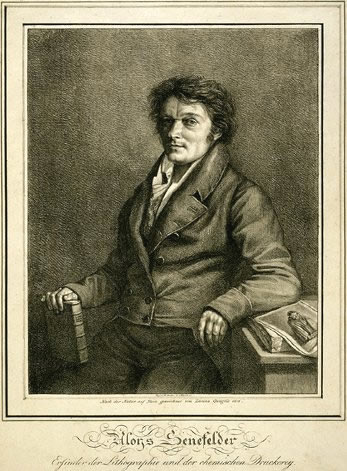
Senefelder

Lithograph of Senefelder, from Specimens of Polyautography

Birth of Alois Senefelder in Prague, then Imperial city (Reichsstadt) of the Holy Roman Empire of the German Nation. Senefelder studied at the University of Ingolstadt and aspired to be an actor and writer. The death of his father in 1791 forced him to leave his studies to support his mother and eight siblings, and he became an actor and wrote a successful play Connoisseur of Girls. In attempting to do some other things to supplement his lack of income from his chosen career, he quite accidentally invented lithography.

Problems with the printing of his play Mathilde von Altenstein caused him to fall into debt, and unable to afford to publish a new play he had written, Senefelder experimented with a novel etching technique using a greasy, acid resistant ink as a resist on a smooth fine-grained stone of Solnhofen limestone. He then discovered that this could be extended to allow printing from the flat surface of the stone alone, the first planographic process in printing. Ultimately he earned a nice living from it but never did fulfill his original dreams.


November 6, 1931

Birth of Mike Nichols (Michael Peschkowsky) in Berlin, Germany. Peschkowsky was only 7 when his family immigrated to the United States. He studied at the University of Chicago and then formed a performing group, “Second City”. There he began his work with Elaine May. On Broadway he performed in Barefoot in the Park, and The Odd Couple. He directed the films, Who’s Afraid of Virginia Woolf, The Graduate, Catch-22, Silkwood, and Postcards from the Edge.

November 6, 1945

The War Crimes Trials start in Nürnberg.

November 6, 1978

Franz Josef Strauß becomes the Ministerpräsident (governor) of Bavaria.
You might also like:

  • The Holy Roman Empire
    The Holy Roman Empire
  • The Holy Roman Empire in the Late Middle Ages
    The Holy Roman Empire in the Late Middle Ages
  • The Golden Bull of 1356: Germany’s Medieval Constitution
    The Golden Bull of 1356
  • The Treaty of Verdun: How Charlemagne’s Empire Split and Europe Was Redrawn
    The Treaty of Verdun and the Division of…
  • Sophie Scholl
    Sophie Scholl: The White Rose Student Who Defied the Nazis
  • Stille Feiertage explained
    Stille Feiertage: Germany's Quiet Days and Dance Ban
  • Lost German Kingdoms
    Lost German Kingdoms: Forgotten States and Their…
  • How Germany Marks Schicksalstag
    9 November: Germany's Day of Fate (Schicksalstag)

Recent Posts

German Meal Times: What Germans Eat and When

Feierabend: How Germans End the Workday and Why It Matters

German Clubs: Vereine, Stammtisch and How to Join One

Kohlfahrt: Germany’s Kale Walk and Grünkohl Guide

Untranslatable German Words: 18 You’ll Actually Use

Berliner

Berliner, Pfannkuchen or Krapfen? German Food Words

German Street Food: Döner, Currywurst and More

Kaffee und Kuchen

Kaffee und Kuchen: Germany’s Sacred Afternoon Break

Copyright © 2026 · German Culture

Go to mobile version