Halloween in Germany, Austria and Switzerland Compared
Imagine three neighbors, all speaking German, all looking at the same calendar page. In Hamburg, October 31 is a quiet public holiday because of Martin Luther. In Vienna, the shops are open, but by the next day everything will be closed for Allerheiligen. In a Zurich suburb, children are already planning to carve turnips, not pumpkins, a couple of weeks from now.
Halloween arrived in all three countries in the 1990s, and it hasn’t replaced the older traditions that were already in place. Instead, each country has absorbed it differently. If you’re traveling through the German-speaking world in late October, or just curious about how the same holiday can mean different things, here’s how Halloween in Germany, Austria and Switzerland compares.
The Calendar at a Glance
Germany
Austria
Switzerland
October 31
Public holiday (Reformationstag) in 9 states
Not a general public holiday
Not a national holiday
November 1
Public holiday (Allerheiligen) in 5 states
Public holiday nationwide
Public holiday in Catholic-majority cantons
Lantern tradition
Martinstag processions (Nov 11)
Martinstag processions
Räbeliechtli (early to mid November)
Halloween arrived
1990s
1990s
Mid-1990s
Austria also has its own national holiday on October 26, which often falls in the same week as the Halloween season. Rules for Swiss holidays vary by canton, so check local calendars if you’re traveling.
Germany: A Late-Arriving Party
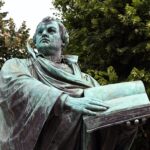
Halloween in Germany began in the 1990s, driven by American media and a push from the costume industry. It’s most visible in cities, at parties, and in family neighborhoods, and it shares October 31 with Reformationstag, the Protestant commemoration of Martin Luther. In 2026, October 31 falls on a Saturday and November 1 on a Sunday.
In Austria, November 1 is a nationwide public holiday, and the religious meaning of the day, visiting graves and lighting candles, still carries weight. Allerseelen (All Souls’ Day) follows on November 2. In many regions, the season also has food traditions tied to All Saints’, including a braided sweet yeast loaf traditionally given to children by their godparents, though customs vary by region.
At the same time, Halloween has found a solid place. A 2025 survey by KMU Forschung Austria for the Vienna Chamber of Commerce found that about 7 in 10 Viennese families celebrate, and in Carinthia about 57 percent of 15- to 29-year-olds planned to take part, with 30 percent of parents saying their children would go door to door. More numbers are in our page on Halloween in Germany statistics.
Austria also has strong pumpkin traditions, especially in Styria, the home of the dark green pumpkin seed oil that Germans use in autumn soups. See our German pumpkin recipes.
Switzerland: Turnips Instead of Pumpkins
Switzerland has the most distinctive twist. According to the folklorist Konrad Kuhn, Halloween came to the French-speaking part of the country first, then spread to the German-speaking regions, and before the mid-1990s it was hardly a topic at all. A big boost came from farmers who discovered a new market for pumpkins.
But Switzerland already had its own carved-lantern tradition: the Räbeliechtli. Children carve patterns into hollowed-out autumn turnips (Räben), place a candle inside, and walk through the dark in processions while singing. The processions take place in early to mid-November, particularly in the cantons of Zurich, Aargau, Solothurn, Bern, and Basel, and the custom is said to go back roughly 150 years to women who used turnip lanterns to light the way to evening church services.
The biggest event is the Räbechilbi in Richterswil on Lake Zurich, held on the second Saturday in November, which in 2026 should be November 14. In 2025, more than 45 designs made from around 30 tonnes of turnips lit up the town, and thousands of visitors attended. An earlier edition made it into the Guinness Book of Records, with 24 tonnes of turnips and 40,000 candles in 1998. Confirm the program and any entry requirements, such as the festival badge, before you go.
Trick-or-Treating Across the Three Countries
In all three countries, the phrase for trick-or-treat is similar: “Süßes oder Saures!” In Switzerland, where the letter ß is not used, it’s written “Süsses oder Saures.” Participation is uneven everywhere, with more activity in cities and suburbs and less in rural areas. Our full guide to trick-or-treating in Germany explains the etiquette, and most of it applies across the border.
Each country also has older door-to-door and lantern customs that overlap with Halloween. Germany and Austria have St. Martin’s processions, where children carry lanterns, and Switzerland has its Räbeliechtli parades. Many families treat these as the “real” autumn tradition for children, and in some households, both are celebrated.
Travel Tips for Late October
Check holidays by region. November 1 closes shops in Austria and in some German states and Swiss cantons, but not in others.
Look for pumpkin and lantern events. Austria and southern Germany have pumpkin festivals in autumn, and Switzerland’s Räbeliechtli season starts in November.
Stock up before holidays. Many shops close on public holidays in all three countries.
Book early for big events. Whether it’s a Halloween park in Germany or the Richterswil Räbechilbi, accommodation fills up fast.
Expect quiet in Catholic regions on November 1. It’s a day of remembrance, with candles and visits to cemeteries.
Is Halloween celebrated in Austria and Switzerland? Yes. It arrived in both countries in the 1990s and is most popular with children, teenagers, and young adults in cities.
Is November 1 a holiday in Austria? Yes. Allerheiligen (All Saints’ Day) is a public holiday across Austria.
What are Räbeliechtli? Carved turnip lanterns that Swiss children carry in November processions. The largest event is the Räbechilbi in Richterswil on the second Saturday of November.
Is Halloween more popular in Germany, Austria, or Switzerland? There’s no direct comparison, because surveys differ by country and region, but all three have adopted Halloween as a modest, urban, youth-oriented celebration alongside much older autumn customs.