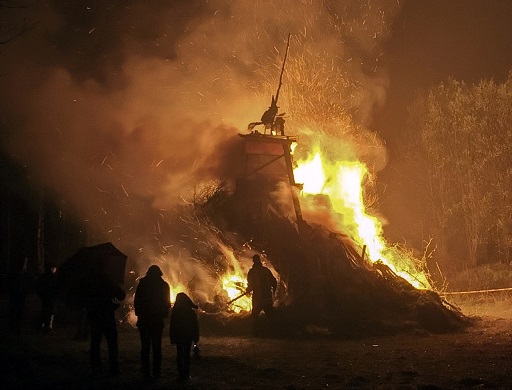
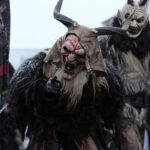
Schierke, a village in the Harz mountains, has fewer than 500 residents. On the night of April 30, thousands of people in pointed hats, horned masks, and homemade broomsticks squeeze through its streets, following a procession of costumed witches and devils toward bonfires, music, and mulled wine in the spring cold. Nobody in the crowd thinks they’re doing anything unusual. This is Walpurgisnacht, and it’s the closest thing Germany has to a Halloween of its own.
The two festivals share a love of witches, fire, and fancy dress, but the similarities end there. Halloween is an autumn import from the United States. Walpurgisnacht is a spring tradition with German roots, a mountain-top legend behind it, and a famous literary pedigree.
What Is Walpurgisnacht?
Walpurgisnacht (Walpurgis Night) falls on the night of April 30 to May 1. The date is named after Saint Walburga, an eighth-century abbess whose feast day is on May 1, which means the evening before it, April 30, was the eve of her celebration. Over time, the church honored her as a protector against superstition and magic, which makes the witch-themed festivities of today a bit ironic.
The word “Walpurgisnacht” itself only appears in German in the 18th century. The idea that the night was once a pagan festival is popular, but according to historians, there’s no firm evidence that pre-Christian rituals took place on the mountain at the center of the legend. Much of what people think of as ancient is much younger than it seems.
The Legend of the Brocken
The heart of the Walpurgisnacht story is a mountain. The Brocken, at 1,141 meters the highest peak in the Harz range, is also known in folklore as the Blocksberg. According to the legend, witches gather there on the night of April 30 to dance with the devil. They are said to travel from smaller dance sites, like the Hexentanzplatz (Witches’ Dance Floor), a rocky plateau near the town of Thale at roughly 450 meters, before flying up to the summit.
The mountain’s weather helps. The Brocken is often wrapped in fog, wind, and sudden storms, and it can produce the Brocken spectre (Brockengespenst), an optical illusion in which a hiker’s shadow appears enormous and ringed with light on a bank of mist. It’s easy to see why people once thought the place was haunted. Rock formations on the summit even carry names like the “Hexenaltar” (Witches’ Altar) and “Teufelskanzel” (Devil’s Pulpit).
Goethe Made the Brocken Famous
If one person is responsible for fixing Walpurgisnacht in the German imagination, it’s Johann Wolfgang von Goethe. He climbed the Brocken in 1777, and when Faust I was published in 1808, it included the famous Walpurgis Night scene, in which Faust is whisked away to a wild gathering of witches and demons on the mountain.
That literary scene did more than any folk custom to tie the Harz, witches, and April 30 together in the collective mind. It also helped turn the region into a tourist destination, and a century later the festival began to be organized for visitors.
How Walpurgisnacht Became a Festival
The first organized Walpurgis celebration for tourists took place on the Brocken in 1896. Today more than 20 Harz towns host their own events on April 30, including Schierke, Thale, Braunlage, Altenau, Bad Grund, Hahnenklee, Stolberg, St. Andreasberg, and Bad Sachsa. The celebrations were revived on the Brocken after German reunification and have grown steadily since.
Each town has its own flavor. In 2026, for example:
Schierke: a medieval-style spectacle and a witch procession through the village.
Thale (Hexentanzplatz): a large open-air show with live music, lasers, and fireworks, staged against the Bode Valley’s dramatic rocks.
Braunlage: the “Hexenflug,” in which costumed witches fly over the spa park pond.
Walpurgisnacht isn’t confined to the Harz. In parts of Upper Lusatia in eastern Germany, large bonfires burn on the night, and variations of the tradition have spread to other regions. In Sweden, the same night is celebrated as Valborg with huge bonfires, and it’s often connected with the arrival of spring. In Germany, it also merges with Tanz in den Mai (“dance into May”), the custom of parties that carry on past midnight into May Day.
Not Everyone Loves the Witches
There’s another side to the festival. Some historians argue that turning witches into a party theme sits uneasily with the history of the early modern witch trials, in which many thousands of people, mostly women, were persecuted and executed in the German lands. One museum director in Thuringia has publicly said that witches should be left out of Walpurgisnacht in light of that history.
Most organizers see it differently, treating the costumes as playful folklore. It’s a debate you’ll sometimes hear in Germany, and it’s worth being aware of if you plan to join in.
Walpurgisnacht vs. Halloween
The two festivals look alike, but they work differently.
Walpurgisnacht
Halloween
Date
April 30
October 31
Season
Spring
Autumn
Origin
German folklore, Goethe, 19th-century tourism
American import, 1990s
Where
Mainly Harz mountain towns
Mainly cities, clubs, parks
Focus
Fire, witches, spring celebration
Costumes, candy, horror
Next day
May 1 is a public holiday
Not a holiday anywhere
That last point matters. Because May 1 is Labor Day and a public holiday across Germany, Walpurgisnacht parties can run late without an alarm clock waiting. For a look at Halloween’s own calendar, see whether Halloween is a public holiday in Germany, or read our full guide to Halloween in Germany.
Tips for Visiting the Harz on Walpurgisnacht
Book early. Small towns have limited accommodation, and rooms near Thale and Schierke sell out months ahead.
Dress in layers. April nights in the mountains are cold, and the Brocken can be foggy and windy even in spring.
Wear a costume. Witch hats, capes, and masks make you part of the crowd.
Plan transport. Roads and parking get crowded, so check local shuttle options and train schedules. The narrow-gauge steam railway to the Brocken summit is a popular way to reach the mountain, but confirm its schedule for the night.
Check each town’s program. Events differ by village and change from year to year.
Remember the date. In 2027, April 30 falls on a Friday, and May 1 on a Saturday.
FAQ
What is Walpurgisnacht? It’s the night of April 30 to May 1, celebrated in Germany with witch costumes, bonfires, and parties, especially in the Harz mountains.
Why is it called Walpurgisnacht? It’s named after Saint Walburga, an eighth-century abbess whose feast day is May 1, making April 30 the eve of her celebration.
What does Goethe have to do with Walpurgisnacht? His play Faust (1808) includes a famous Walpurgis Night scene on the Brocken, which helped cement the connection between witches, the Harz, and April 30.
Is Walpurgisnacht the German Halloween? Not exactly. It also features witches and costumes, but it takes place in spring, has German roots, and is concentrated in the Harz rather than being a nationwide celebration.