German Culture

All about Germany

  • Home
  • Learn German
    • German Language Basics
    • German Grammar & Vocabulary
    • German Learning Tips
    • German Idioms & Expressions
    • German Quizzes & Exercises
  • Articles
    • Famous Germans
    • German Holidays
    • German Cuisine
    • How To In Germany
    • Daily Life in Germany
    • German Facts
    • German Traditions
  • Facts About Germany
  • German History
    • Early History of Germany
    • Middle Ages in German History
    • German Reformation Period
    • 19th Century and German Unification
  • German Recipes
    • German Baking Recipes
    • German Bread Recipes
    • German Christmas Recipes
    • Desserts
    • German Easter Recipes
    • Halloween Recipes
    • Main Dishes
    • German Salad Recipes
    • German Salads
    • Sauerkraut Recipes
  • Travel to Germany
  • Contact

Labskaus

Labskaus

Labskaus is a Hamburg specialty. It is a dish the sailors cooked on the fishing ships when they were out in the sea for weeks and months. Because there were no fridges or cooling systems on these ships, they had to use long-lasting ingredients such as pickles, red beet, eggs, potatoes, onions and beef that was cured in brine and is called corned beef. Nowadays we find this beef canned in supermarkets. But originally it is beef preserved with salt. The combination of these ingredients makes the dish called Labskaus which is served with potatoes and fried eggs, herring and pickles.

Ingredients:

1 can corned beef (200-300g)
750 g potatoes
3 pickles
2 smaller onions
pickled red beets
salt, pepper to taste
1 dash ground all spice
butter for frying
some pickle liquid
4 eggs
4 herring filets (Matjesfilets, Bismarckheringe or Rollmöpse)

Directions:

  1. Peel potatoes, cut in halves, boil them in salt water.
  2. Peel onions and chop onions fine, saute in butter until they are transparent.
  3. Add corned beef, saute covered for 3 min.
  4. Cut pickles in cubes, add to beef with some pickle liquid. Spice to taste.
  5. You can add chopped red pickled beet or serve it aside.
  6. Let simmer for about 10 min.
  7. Mash the boiled potatoes roughly (not fine like you do for mashed potatoes). Combine with the beef mix. If the mix is too firm add some more pickle liquid.
  8. Place on plates and serve with fried eggs, and herring of your choice.
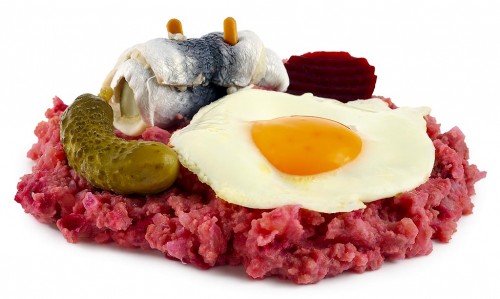


(Photo via www.marions-kochbuch.com)

You might also like:

  • Northern German Dishes: Herring, Kale, and Maritime Flavors
    Northern German Dishes: Herring, Kale, and Maritime Flavors
  • Traditional German Beef Rouladen Recipe
    Traditional German Beef Rouladen Recipe
  • Rindfleischsalat – Traditional German Beef Salad Recipe
    Rindfleischsalat – Traditional German Beef Salad Recipe
  • German Salad Recipes
    German Salad Recipes
  • Heringssalat – Traditional German Herring Salad Recipe
    Heringssalat – Traditional German Herring Salad Recipe
  • Schwäbischer Kartoffelsalat – Traditional German Recipe
    Schwäbischer Kartoffelsalat – Traditional German Recipe
  • Traditional Sauerbraten Recipe: A German Classic That Stands the Test of Time
    Traditional Sauerbraten Recipe: A German Classic That Stands…
  • Kartoffelsalat – Traditional German Recipe
    Kartoffelsalat – Traditional German Recipe

Recent Posts

German potato soup (Kartoffelsuppe) represents the heart of traditional German home cooking.

German Potato Soup Recipe (Kartoffelsuppe)

Frederick the Great and the Potato

Frederick the Great and the Potato

Potatoes are one of the most beloved ingredients in German cuisine

Traditional German Potato Dishes

Traditional German potato dishes

Traditional German Potato Dishes You Should Know

Discover how potatoes in German culture shaped history

Potatoes in German Culture

The German Zeppelin represents far more than a transportation technology.

German Zeppelin: The Rise and Fall of Germany’s Giant Airships

Discover how the German Zeppelin worked

How the German Zeppelin Worked: Inside the Engineering of Airship Giants

Valentine’s Day in Germany: Love, History, and Traditions

Valentine’s Day in Germany: From American Import to Cultural Tradition

Copyright © 2026 · German Culture

Go to mobile version